Related TTA posts: Sensor-based monitoring coming to an iPhone near you? / Wearable technology – so much choice, so much data to sell? / Turn up, tune in but don’t drop out with health monitoring earphones



Related TTA posts: Sensor-based monitoring coming to an iPhone near you? / Wearable technology – so much choice, so much data to sell? / Turn up, tune in but don’t drop out with health monitoring earphones
Rounding up the 10 Ring Vegas Circus-Circus, it’s time for ‘best and worst lists’: hopping with the Kiwi tracker, no one’s kind to Mother, in the kitchen with 3D printers and what may be up with Google, FDA and contact lenses.
[grow_thumb image=”https://telecareaware.com/wp-content/uploads/2014/01/02-itoi-620×400.jpg” thumb_width=”150″ /]ZDNet rounds up its Friday coverage with a Best of CES selection. It’s always interesting to get the broader non-healthcare techie view of ‘what’s hot’–they spotted fitness bands early when even diehard QSers were skeptical– and to then see if their picks make it into the broader market. Their health tech picks are the Mimo Baby onesie + detachable turtle monitor from Rest Devices (sure to be a hit at your next baby shower; TTA 10 Sept], movement profiler Notch(see Thursday; it also made The Guardian’s roundup), MakerBot’s home 3D Replicator Mini (Wednesday) and the Epson Moverio BT200 digital content projection smart glasses (in-market March, @ $699.99 a bargain for what use?). Au contraire, see 11 born-to-fail worst gadgets which includes being mean to Sen.se’s Mother and, in worst design, an iPad video ‘periscope’ from iTOi which looked like it was stolen off the set of the 1956 space opera Forbidden Planet. For today’s market, it definitely could have used a steampunk vibe to carry off its ‘Blue Blazes’ design.
Yet one of their writers gives Mother, a/k/a the “M2M Mollycoddle”, “part-Russian doll and part-Doctor Who monster”, a more thoughtful once-over. (more…)
It is usually the large scale telehealth and telecare projects that hit the news, be it for their successes or, indeed, failures. So as the new year starts, let’s celebrate a couple of smaller scale projects which have made progress recently.
From Coldwater, Michigan, we have a student telehealth scheme opening this month. With significant funding from the Michigan Department of Community Health, clinics will be opened in two schools in Branch County to provide primary healthcare services from a central Adolescent and Pediatric Center which has four physicians and a nurse practioner. A school based nurse provides physical assessment of students in need and, if appropriate, links via video to the Center to consult a physician or the nurse practitioner. Diagnostic equipment at the schools are also networked so the Center staff have access to these in real time. Prescriptions, if needed are sent direct to a convenient pharmacy. The state funding provides the majority of costs for equipment, a nurse at each school and operation for 3 years. See Branch County CHC website for more details.
From the other side of the Atlantic, in Doncaster, England, the local council’s telecare service reported that it has reached its 1,000th user. Doncaster’s service povides access to a comprehensive range of sensors from simple fall detectors to other sensors placed discreetly around the home on ceilings, doors, walls, beds and chairs. The 24-hour monitoring service attracts a weekly charge under £4 and there is no charge for the equipment. The benefit to the user is obvious and the Council benefits too, as it has an obligation to provide care services to residents who are unable to live at home.
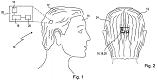 Here we have a patent filed by Sony for a sensor-laden hairpiece/wig. There are three prototypes; the Presentation Wig which has a laser pointer and allows you to change PowerPoint slides by simply pushing the sideburns – this would brighten up presentations no end ;-), the Navigation Wig which uses a GPS and vibration to direct the user, and the Sensing Wig which contains sensors to take physiological readings such as temperature and blood pressure. (more…)
Monday’s big news in the wearable sensor world was that the 10p/US quarter-sized Misfit Shine is out in an Android version, as promised back in their distant Indiegogo days before the Khosla and Founders Fund VCs discovered it. Delayed at the end of May, and reset for mid-July [TTA 30 May] then for early 2014, the Shine is now a bright spot at places like Best Buy and Target at prices from $99 to $120, though it only works on Android 4.3 or later devices and TechCrunch is reporting that early reviewers have found it crash-prone. VentureBeat raves that the Shine now has what Nike FuelBand does not–Android. It’s also far more wearable; it now comes online in the hot new ‘champagne’ and azure colors even if the initially touted jewelry-like concepts have yet to materialize.
Update 4 Dec (Breaking News): According to TechCrunch, Misfit just raised $15.2 million from Hong Kong-based Horizons Ventures. Current investors participated in the round. This now leads to a total funding of $23 million according to CrunchBase. According to AllThingsD, founder/CEO SonnyVu claims they are on track to ship 200,000 units by end of 2013 and that the funding will go to other areas of wearable sensing such as wearable feedback, identity and payments technology as well as wearable controls and gaming. Also Mobihealthnews. Are we seeing here another hype curve?
For more on wearables, AllThingsD spotlights clothing: Athos’ workout gear, Notch’s snap-on sensors and clothing, Push’s strap for weightlifters, Heapsylon’s heart-rate monitoring t-shirts and sports bras. And HIT Consultant has a nifty infographic on the future of wearable technology in healthcare which includes the new Reebok Checklight (previewed at CES Unveiled last month) and Push. (hat tip to reader Luca Sergio via Twitter @lmsergio).
A biohacker called Tim Cannon, has had a computer embedded in his forearm, to allow his bodily data to be monitored. The device called Circadia 1.0 was built by Tim and colleagues from Grindhouse Wetware. In this first version, the chip records body temperature and transfers it in real time via Bluetooth to any Android-powered mobile device. Three LEDs built into the package serve as status lights (which glow visibly under the skin). The device’s battery charges wirelessly.
Because a regular surgeon wouldn’t be allowed to carry out the implant as it is unapproved by medical authorities, Tim relied on the expertise of body modification enthusiasts to implant the device! …Yes, it’s a bit crude, but more likely than not is another small step towards our cyborg future!
[This video is no longer available on this site but may be findable via an internet search]Sano Intelligence–wearable patch sensor transmitting blood chemistry data such as glucose and potassium
Zephyr Technology–performance shirts in partnership with UnderArmour [TTA 25 Mar]
Cardiio–developed by the MIT Media Lab, it uses changes in skin tone read by an iPhone to measure resting heart rate [TTA 21 Mar]
MC10 (picture left/above)–the Biostamp elastic sensor and sensors used by combat soldiers to measure hydration, temperature, impact and other body indicators [TTA 22 Feb] (more…)
Research on telecare in the US has been rare of late. Thus this qualitative analysis of focus groups with twelve housing managers from twelve different Evangelical Lutheran Good Samaritan Society (GSS) assisted living communities in the LivingWell@Home (LW@H) program should be looked at carefully for both benefits of and issues with sensor-based monitoring of residents’ significant activities of daily living (ADLs). On the ten most prevalent themes, the most positive were:
However, issues with the LW@H program ranged from perceptual ones (resident privacy) (more…)
University of St Andrews, St Andrews UK 6-11 October 2013
Both ITS 2013 (The ACM Symposium on Interactive Tabletops and Surfaces 2013, 6-9 October) and UIST 2013 (the 26th ACM Symposium on User Interface Software and Technology, 8-11 October) will be co-locating at the University of St Andrews. Worked into the presentations–demos and papers– of new and emerging tabletop and interactive surface technologies is healthcare content; demos at ITS such as The SimMed Experience: Medical Education on Interactive Tabletops and The fun.tast.tisch. Project – Interactive Tabletops in Neuro-Rehabilitation. (more…)
Wearables are developing into the next big thing in the health tech/monitoring area, and developing beyond the bracelet form factor represented by Jawbone UP, Fitbit and Nike Fuelband. Misfit Shine of course has been touted as the major future player, but has experienced a few bumps on the road to Damascus, taking a technically-caused delay to their bracelet/pendant sensor debut now mid-July and not being compatible with Android [TTA 30 May]. But they have also entered the clothing fray with a trademark filing, according to Mobihealthnews. This article also spotlights wearables makers Zephyr, OMsignal (compression shirts); Heapsylon Sensoria socks. This Editor will be seeing and reviewing wearables such as Basis at CEWeek’s FashionWare, sponsored by Living in Digital Times, next week. Disclosure: TTA is a media partner of the Digital Health Summit, also produced by Living in Digital Times.
Switzerland-based company STBL Medical Research AG has developed a new ‘blood pressure watch’ that relies on a wristband made from piezo-resistive fibres. These fibres measure the contact pressure of the device on the skin to overcome the problem of the device slipping on the wrist or muscle tension that can affect the measurements. The device is currently undergoing clinical trials. Piezo-resistive fibers enable “blood pressure watch” with continuous monitoring Gizmag – note the comments too.
The University of Bristol has just released news of a new interdisciplinary research collaboration (IRC) led by the university, together with the Universities of Southampton and Reading. It has been awarded a £12 million grant by the Engineering and Physical Sciences Research Council (EPSRC). They will work in partnership with Bristol City Council, IBM, Toshiba and Knowle West Media Centre. The IRC, known as SPHERE (Sensor Platform for HEalthcare in a Residential Environment), will develop home sensor systems to monitor the health and wellbeing of the people living at home. [So far, so 2002.]
But the press release goes on to make it clear that they do not intend to develop new sensors but to improve ways of analysing data from existing systems. “The IRC’s vision is not to develop fundamentally-new sensor technologies for individual health conditions but rather to impact all these healthcare needs simultaneously through data-fusion and pattern-recognition from a common platform of non-medical/environmental sensors at home…The system will be general-purpose, low-cost and accessible. Sensors will be entirely passive, requiring no action by the user and suitable for all patients, including the most vulnerable. An example of SPHERE’s home sensor system could be to detect an overnight stroke or mini-stroke on waking, by detecting small changes in behaviour, expression and gait. It could also monitor a patient’s compliance with their prescribed drugs.” [So far, so 2005 but perhaps the available technology these days is more up to the job. Let’s hope so.]



Most Recent Comments