


 In the Chutes department…remember the scandal around healthcare ad trackers back in 2022? After multiple lawsuits, Congressional hearings, Department of Justice (DOJ), Federal Trade Commission (FTC), and Health & Human Services (HHS) investigations that were supposed to curb their use three to four years ago, ad trackers are still being used by healthcare organizations.
A Bloomberg-Feroot Security investigation published this week uncovered that nearly all of the 20 health insurance exchanges (HIX) set up by states and the District of Columbia as part of the ACA use ad trackers. Information included sex, citizenship, and race. In New York State, the HIX shared the pages applicants visited during enrollment with TikTok, Meta, Snap Inc. and LinkedIn. Even details about incarcerated family members was shared. Over 7 million Americans buy health insurance through the state sites.
The problem is that Federal protections on personal information (personal health information–PHI, and personally identifiable information–PII) do not apply at the state level. State laws are inconsistent and incomplete. There are consumer protection laws, but again application is inconsistent. And rather neatly, the ad companies contractually place the compliance responsibility on advertisers. While ad trackers serve useful marketing and operational purposes for site analytics, data retention, and ad targeting, sending PHI and PII to third parties for that purpose violates privacy.
The other 30 states use the Federal Healthcare.gov insurance exchange site. California removed trackers in 2025.
In 2022, ad trackers were on health system websites, large provider groups such as VillageMD, and e-prescribers such as the controversial Cerebral. Trackers such as Meta Pixel were disclosing all sorts of protected information that violated HIPAA and privacy guidelines to third parties such as Facebook, Instagram, and Google–and monetized. Most health systems removed them and Cerebral was fined for this as well as other issues. TTA 16 April 2024, 17 June 2022, 21 June 2022
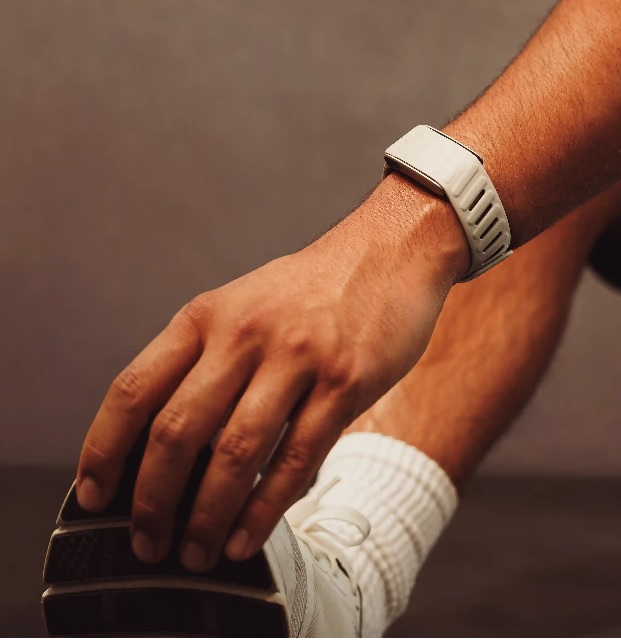 The US Navy is sailing with WHOOP and Talkspace. WHOOP, through MIT Lincoln Laboratory, has been awarded a contract to support the US Navy’s Command Readiness, Endurance, and Watchstanding (CREW) program. The CREW program’s objective is to improve operational readiness by reducing fatigue-related risk. WHOOP’s fitness and health monitoring wearable will be used to integrate physiological data into the CREW system architecture by monitoring sleep, recovery, and strain.
To gain the Navy contract, WHOOP waged a successful Federal procurement battle with fitness ring Oura, which was awarded a $96 million contract in 2024. WHOOP argued that the specifications were too narrowly written in specifying a ring wearable and that the contract was awarded to a foreign company (Oura is based in Finland, WHOOP in Boston). Certainly they had the funds to wage war with the Department of War; WHOOP scored a whopping $575 million Series G last month for a $10.1 billion valuation. The value of WHOOP’s contract via MIT is undisclosed. Oura has other contracts for projects with the Department of War. Release, Mobihealthnews
Talkspace is expanding its existing virtual behavioral health therapy program with the Navy to 40,000 sailors and families based at 13 Navy installations. They will have access to the Talkspace Go self-paced app and other offerings through their TRICARE benefits. Talkspace offers virtual therapy for anxiety, social anxiety, depression, ADHD, bipolar disorder, OCD, insomnia, postpartum depression, panic disorder, gambling addiction, schizophrenia, eating disorders and more, including medication refills. The company was bought for $838 million in March by Universal Health Services (UHS), a diversified for-profit health services provider, with the closing expected by Q3 [TTA 12 March]. There is no disclosure of the value of the contract nor the length. Mobihealthnews, Release
In M&A, ICON plc’s subsidiary Symphony Health is being acquired by HealthVerity. Purchase price is not disclosed. Symphony is a major company in the data analytics and clinical intelligence field with a massive commercial data repository, built on analyzing millions of patient claims and transactions for outcomes. ICON claims it stores 14 petabytes of data, sourced from over 900,000 providers and over 305 million patients. Clinical research organization (CRO) ICON acquired Symphony, founded in 2012 from four earlier health data companies, when it purchased PRA Health Sciences, also a CRO, in 2021. It was operated by ICON as a US subsidiary. The stated goal is to unite Symphony’s commercial health data with HealthVerity’s data exchange and patient identity systems. The deal is expected to close later this month. Release, Mobihealthnews
Medical device company Nervonik announced an oversubscribed $52.5 million Series B funding round. Their peripheral nerve stimulation (PNS) neuromodulation technology is used in high-motion areas of the body for chronic pain treatment. The financing was led by Amzak Health, with participation from Elevage Medical Technologies, U.S. Venture Partners (USVP), Lumira Ventures, Foothill Ventures, and Shangbay Capital, bringing their total funding to over $65 million. Their PNS integrates stimulation with advanced sensing to deliver more precise and personalized therapy. Nervonik completed a first human clinical trial of nerve stimulation for chronic pain in March 2025. Release, Mobihealthnews


Most Recent Comments