


LA billionaire and healthcare investor par excellence Patrick Soon-Shiong (his NantHealth raised $31 million earlier this year and owns Vitality, eviti, iSirona, iCOS) has just made a sizable $8 million investment in Fluential, which is developing a voice interface and speech-optimized recognition software for digital health, wellness, and weight management, to run on anything mobile including wearables, and to be released in the spring of 2014. If this works (and better than Siri), it has major implications across the board in the future shape of both consumer and clinical health tech, especially for older adults and those with mobility concerns. Mobihealthnews.
Health 2.0 Latin America
6-7 December 2013, Hospital Sírio-Libanês, São Paulo, Brazil
The first annual international Health 2.0 meeting in Latin America will be held at the historic hospital founded by the large Christian-Syrian and Lebanese community of São Paulo in 1931. Latin America’s fast-growing–and aging–population presents multiple health challenges and disparities. Yet as a region, it is a world leader in medical schools, internet usage growth (2nd largest for Facebook and Twitter) and the 4th largest mobile market. Topics include:
- What the Health 2.0 movement can do for Latin America
- Who should step up to finance Health 2.0
- What will be the role of incubators in the region
- Sensors and trackers – From quantifying the self to changing behaviors
Temperature sensing chip implanted in man’s arm
A biohacker called Tim Cannon, has had a computer embedded in his forearm, to allow his bodily data to be monitored. The device called Circadia 1.0 was built by Tim and colleagues from Grindhouse Wetware. In this first version, the chip records body temperature and transfers it in real time via Bluetooth to any Android-powered mobile device. Three LEDs built into the package serve as status lights (which glow visibly under the skin). The device’s battery charges wirelessly.
Because a regular surgeon wouldn’t be allowed to carry out the implant as it is unapproved by medical authorities, Tim relied on the expertise of body modification enthusiasts to implant the device! …Yes, it’s a bit crude, but more likely than not is another small step towards our cyborg future!
[This video is no longer available on this site but may be findable via an internet search]Phone chats between deaf and non-deaf now possible (the Netherlands)
 For deaf people wanting to have a conversation with non-deaf people remotely, there aren’t too many options. In the Netherlands, Royal Dutch phone company KPN has launched its Tele Interpreter service, which translates sign language to speech (or text) and vice versa, in real time. The service uses a combination of technology and real-life translators. Read more: Springwise
NYeC Digital Health Conference 2013: the trends
Updated 21 November
The third annual New York eHealth Collaborative (NYeC) Digital Health Conference in New York City attracted several hundred people from the worlds of hospitals, public health, academia, policy makers and health insurers–and the myriad related products and services which will enable these entities to improve their health IT, organization and engage patients in their own health. If there were three buzzword phrases setting the tone, they were interoperability, patient portals and technological innovation. All relate to data–data transfer of patient records between providers to be available regionally (RHIOs) and throughout the state via the SHIN-NY health information exchange (HIE); using data to help people visualize and improve their health; putting data into ‘whole person’ context for providers, integrating it into workflows and to save lives; using data to serve process improvement and tougher standards. And finally there is that old devil cost: reducing the cost of care, reducing expensive readmissions plus co-morbidities and making those tools to do this job more affordable for providers and patients.
NYeC has developed considerably since its early days seven years ago (more…)
International CES unveils in NYC
The trends and items of note for next January’s show in Las Vegas
- The ‘Internet of Things’ is the phrase-du-jour–embedding anything and everything with sensors (digital elements) and blending the physical and digital worlds
- Consumer Digital Health Care was listed as #3 of CEA’s 2014 Technology Trends to Watch (PDF link). What is hot is self-tracking (1/3 of mobile users have tracked using a smartphone and tablet, and over half are now concerned about data security), integrating tech for seniors (touching on Selfhelp’s Virtual Senior Center [TTA 17 Mar 2010], remote monitoring (telehealth and telecare) including GrandCare Systems and kiosk HealthSpot Station, patient adherence, FDA approval of apps and the home as a healthcare hub.
- Robots were the #4 trend: consumer robots such as home cleaners Roomba, Ecovacs; robots in eldercare; humanoid robots like NAO; robotic prosthetics and exoskeletons.
Digital health will again be showcased as a TechZone (more…)
Depressed? A woman? There’s an app for that.
[grow_thumb image=”https://telecareaware.com/wp-content/uploads/2013/11/T47screen-166×300.png” thumb_width=”130″ /]A new app still under development, Thrive 4-7 (the 7 is the seven dimensions of health) is meant to be used as a supplement to traditional therapy (and presumably medication). The app ‘thrives’ on constant interaction and uses gamification (!), behavioral psychology and influential design to modify the user’s behavior, for instance by sending special messages at times of daily stress. The developers want to connect the app with wearables and peer support groups as well. However, the time of their in-market–best case scenario is a debut at the end of 2014– is dependent on FDA clearance if it’s required–yet to be determined. The business plans, depending on this, may be direct to consumer or sold through health plans, hospitals and employer groups. The therapist you sleep with (MedCityNews) does seem like encouraging an unhealthy behavior, though.
‘Personalized medicine’ targets psychiatric drugs
A genetic test to help determine the efficacy of psychiatric medications for several diagnoses is under development by Cincinnati Ohio-based Assurex Health. Using a DNA analysis on a cheek swab sample, Assurex’s tests analyze a panel of genes in the cytochrome P450 family that are involved in drug metabolism. This information is then used to create a report that optimizes drugs for that diagnosis using a red/yellow/green code. Under development for seven years, the pharmacogenetic testing analyzes drugs for depression, anxiety, ADHD, chronic pain, schizophrenia and bipolar disorder. Assurex has also published a series of clinical trials conducted with the Mayo Clinic. It seems obvious that assessment beats the usual patient trial-and-error, but like most startups in the healthcare field, they are still trying to figure out the major reimbursement questions–who pays and how much. And somewhere there’s a digital health spin to this….MedCityNews
Wireless Health 2013 (US)
1-3 November 2013, Johns Hopkins University-Carey Business School, Baltimore, Maryland
Presented by the San Diego-based Wireless-Life Sciences Alliance (WLSA), the trans-disciplinary focus of the conference, crossing research, development and implementation lines, will bring together members of the medical and health research community, device manufacturers, clinical and health services providers, government leaders and policy makers. Peer-reviewed papers and abstracts, interactive workshops, emerging application demonstrations, and distinguished speakers will be featured. 1 November features pre-conference workshops. Keynoters include Dr. Michael Roizen, Chief Wellness Officer and Wellness Institute Chair at the Cleveland Clinic, Dr. Peter Tippet, Chief Medical Officer and Vice President of the Verizon Innovation Incubator, and computer/healthcare scientist Deborah Estrin of Cornell NYC Tech. Release. Information and registration here.
Turn up, tune in but don’t drop out with health monitoring earphones
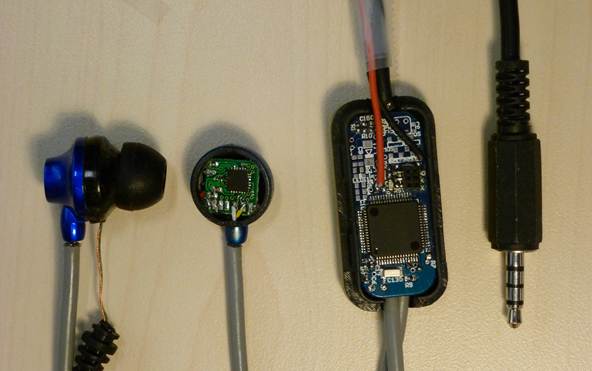 As part of a recent research project, Microsoft has incorporated health and fitness monitoring into a pair of earphones.
One application being developed for the hardware platform named Septimu, is a smartphone app called Musical Heart. The app enables Septimu to generate tunes based on a person’s mood or activity. So for example, fitness enthusiasts who want to keep the heart rate high can use Musical Heart to automatically up the tempo, helping them keep up the pace. Or for those feeling stressed or angry, Musical Heart could select something more soothing to help bring the heart rate and breathing down to a more relaxed level. Reported in PSFK.
A timely study published online last week in Proceedings of the National Academy of Sciences, demonstrated that ‘musical agency’ (i.e. music chosen by the study participants) greatly decreased perceived exertion during strenuous activity. (more…)
Humana, Healthrageous and some object lessons
The acquisition of the assets of Partners HealthCare spinoff Healthrageous by insurance and health service giant Humana is reverberating in the field in the US, particularly those in the buzziest digital health sectors. Some may look away, but a hard look provides some object lessons at the sheer unpredictability of the field for those who are innovating and attempting to shape consumer behavior and health. (Not behavioral health)
- Healthrageous had an impressive lineage and credibility. Developed over three years at Partners HealthCare, it was spun off in 2010, PHC members on the board, leadership from well-known/regarded figures such as Rick Lee and Mary Beth Chalk–and enjoyed abundant, rapid startup funding–$12.5 million in two rounds, the last exactly one year ago, from equally impressive investors, reportedly $15 million total. No raiding the credit cards here.
- It occupied what everyone for the past few years thought of as a sweet spot–personal health management targeted to employers/benefit managers along with health plans to lower costs that combined sensor-based telehealth data with individualized coaching and feedback–and data from a broad base of 10,000 users. (more…)
First M&A roundup for 3rd quarter: more action, less value, whither digital health?
VC/research firm TripleTree is first out of the gate with its roundup of merger and acquisition activity in healthcare, July through September. The news and directions are mixed. Deals are up 28 percent from the two previous quarters but down 12 percent in total deal value. Most are in the healthcare facilities area with home care giant Gentiva acquiring Harden Healthcare and insurance giant Humana adding to its LTC, Medicaid/Medicare portfolio with American Eldercare. 19 healthcare companies had successful IPOs totaling ~$3 billion of transaction value. Two highlighted here are Envision Healthcare Holdings (ambulance and outsourced physician services) and Benefitfocus (benefit administration software and tracking). Given that they are the creator of the iAwards at the annual Wireless-Life Sciences Alliance in May which focuses on digital health, the decidedly non-buzzy companies getting the action here are perhaps another indicator of the funding cooling preceding M&A as projected by Rock Health back in July [TTA 9 July], with their 3rd Quarter report due out shortly.
Health IT serving population health
From the iHT2 Health IT Summit this Editor attended two weeks ago is this presentation by Jonathan Weiner, DrPH, Professor in the Department of Health Policy and Management, Director of the Center for Population Health IT (CPHIT), Johns Hopkins Bloomberg School of Public Health, Baltimore, Maryland. Telehealth is (or should be) implicit in the data feedback loop outlined in slide 3; in the population health assessment and performance loop on slide 5; the ‘digital health milieu’ on slide 9.
Harnessing EHRs and Health IT to Achieve Population Health Interview with Dr. Weiner
Relax, it’s (not) just a breathing monitor headset
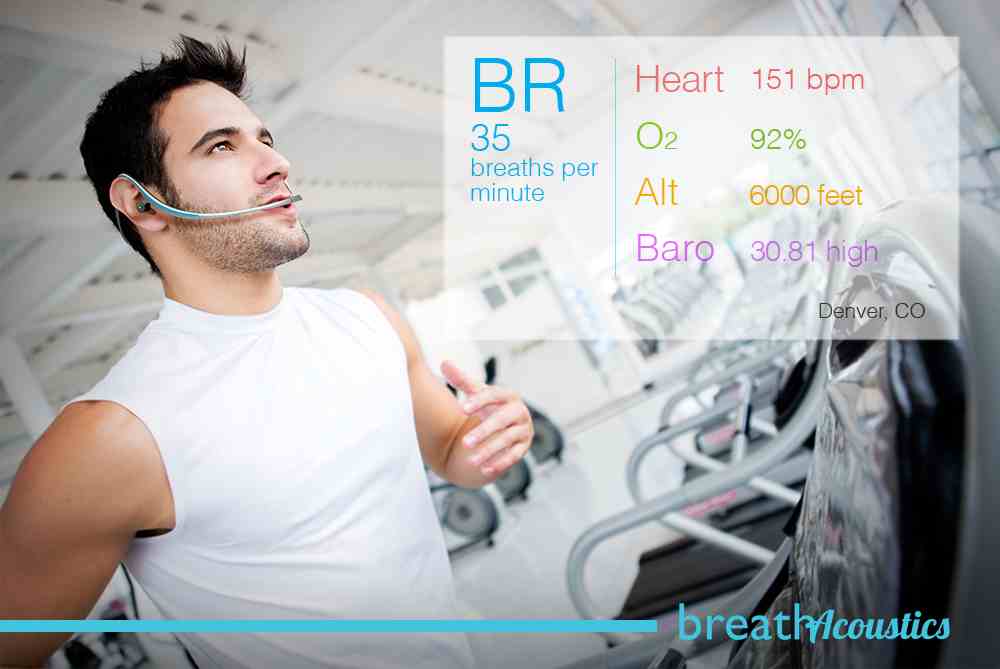 A headset which monitors the quality of your breathing is being developed by BreathResearch, a San Francisco Bay area start-up.
Combined with a mobile app, the ‘Breath Acoustics’ headset listens to your breathing and analyzes the patterns. Sensor-based breath monitoring may be a less commonly monitored biometric pattern but recent studies suggest it could be used to detect stress levels, bacterial infections and other conditions. The headset also presents other biometric data, including heart rate, pulse oximetry, and respiration. (more…)
Digital Health Summit–Istanbul
18-19 September 2013, Maslak Sheraton Hotel İstanbul
Health tech is definitely spreading worldwide and this conference in Turkey is proof. Full summit agenda and sponsors are at this link (PDF in English). David Doherty, the 3G Doctor, is speaking on an ‘introduction to mHealth’ as well as Rainer Herzog, Managing Director at HIMSS Analytics Europe. But not easy to register…main website is unfortunately in Turkish with no English option and no obvious place to register! Extreme digging turned up one page in English. If you’re intent on attending, best to call Project Coordinator Mert Akbulut: +90 533 598 17 71 or email dhs@dhsturkey.com
The five-point digital health checkup meets the FBQs
Checking up on some of the issues that the D3H crowd (Digital Health Hypester Horde) tends to skip merrily by, Dan Munro’s analysis hits several nails on the head and then some, with his points touching on our FBQs–the Five Big Questions*–we first outlined exactly three years ago (integration was added last year).
- Who has the rights to your data? You or only your doctor? (#3) And why not you?
- Need drastically improved standards of safety and security in devices. From those black hatted device hackers to the lack of updates by manufacturers and FDA‘s apparent discouragement–it may not be an an FBQ, but it impacts #5, data integration.
- Accuracy. Are these devices accurate or only ‘kinda’? How do you play off accuracy versus convenience?
- Privacy–what about it? Business models call for sale of ‘de-identified’ data which can be tracked back and re-identified. (#1) And what does your activity say about you-ooooo? (#3)
- The business model. Aside from who’s paying for the device and how much (#1, #2), #3 is still there–who’s looking at the data if you purchased the kit? And who’s liable for interpretation–and errors?
5 Point Digital Health Checkup (Forbes)
* The Five Big Questions (FBQs)–who pays, how much, who’s looking at the data, who’s actioning it, how data is integrated into patient records.


Most Recent Comments