Breaking: Roy Schoenberg moving to Amazon to lead Health Services; Neil Lindsay to depart

Roy Schoenberg, MD MPH, the co-founder of Amwell and a past CEO, is moving effective 1 July to head up Amazon Health Services. He is replacing Neil Lindsay, who is a 15-year Amazon veteran and was senior vice president since 2021.

Dr. Schoenberg, whom with physician brother Ido co-founded American Well in Boston in 2006, can be considered one of the pioneers of telehealth. Notably, he had become less active in the now Amwell starting in June 2024 when he stepped down as president/CEO, moving to executive vice chairman. His LinkedIn profile has this board role ending this month with the announcement. He is also listed as the founder as of September 2025 of Aileen.ai, a personal health companion targeted to the senior market, and with various board positions that continue. He announced his appointment on a LinkedIn post yesterday.

From reports, Mr. Lindsay led the search for his successor. Lindsay oversaw a restructuring of AHS into six divisions last June, leading to several executive departures. One Medical’s integration and marketing has remained a struggle since 2022 and Amazon Care was discontinued in 2023. The scope of the reorganization and the status of the parts will be a considerable challenge for the good doctor.

Amazon Health Services comprise primary care (One Medical), pharmacy services (Amazon Pharmacy), and telehealth services (Direct Message Care and Video Care). All are tightly integrated with Amazon Prime. (As an Amazon shopper who has studiously avoided the expense of Prime, that has been a drawback.) CNBC, Healthcare IT News

Weekend Must Reads on AI: its societal and economic effects, and why its developers see it as replacing God

Two Substack Must Reads for the weekend. Both are open and do not require subscription. Grab the cuppa and take a walk in the park after to consider them.

The “Messy Middle” by Molly Kinder in “Kinder Futures”
Why the years between today and post-AGI abundance will be the hardest political and economic problem of our generation, and why we can’t skip past them

This is the longer of the two essays that presents two realities: Reality 1 of today where AI is increasingly everywhere, but the societal effects have yet to be felt, and Reality 3 where it has been absorbed and we are in the bright sunlit uplands of abundance. The mess is in Reality 2, which she posits as year, perhaps decades, of societal upheaval and what we are already seeing–the near-destruction of the professional  ‘cognitive classes’. Yes, people like you and me as creative thought, ability, and specifically cognitive ability, become commodities. This cognitive displacement will affect governments, as the vast middle that pays most taxes suddenly finds income cut in half or more, forced into early retirement, and dependent on government for support. The essential jobs as determined during the Covid pandemic will be the least affected, but still affected because their income trajectory despite need has been declining and that won’t change. The trades survive because their practitioners are scarce for now. The effects on the middle and upper middle classes internationally will be brutal in her scenarios. Ms. Kinder does arrive at conclusions re the political backlash rearranging the current state (we are in it now) and a managed transition that you may not necessarily agree with. See the comments at the end.

The Tech Bros Want to Build God by George Shay in “Common Sense”

Why Pope Leo XIV May Be Right to Worry About Artificial Intelligence—But Not for the Reason You Think

Pope Leo’s first encyclical tackled AI and began, in the introduction, “Humanity, created by God in all its grandeur, is today facing a pivotal choice: either to construct a new Tower of Babel or to build the city in which God and humanity dwell together.” Further, “We must, then, avoid the “Babel syndrome,” namely the idolatry of profit that sacrifices the weak, a uniformity that neutralizes differences, and the pretense that a single language — even a digital one — can translate everything, including the mystery of the person, into data and performance. The risk of dehumanization — of building a future that excludes God and reduces the other to a means — is an ancient and ever-new temptation that today takes on a technical guise.” Like most encyclicals, it is written in exceedingly dense, very Catholic language (disclosure, your Editor is Roman Catholic). 

Mr. Shay’s take is considerably less dense and moves from a different philosophical ground. All too many of the ‘tech bros’, especially at a high level, speak of technology in almost religious terms. AI has become their highest expression of faith. They rejected traditional faith while young and redirected that impulse, that exists in nearly every human save the sociopaths, into technology. To the observant, that is nothing new–witness the well-known lives of Steve Jobs and Bill Gates. Instead, in the search for meaning, their salvation is technology.

FTA: “Instead of God creating man in His image, we now hear man preparing to create a machine in his own image.

Some of the rhetoric coming out of Silicon Valley is astonishingly explicit. Researchers and entrepreneurs casually discuss creating “machine gods” or engineering a “new species” superior to humanity. And importantly, they are not speaking metaphorically. They mean it quite literally.”

The ultimate question is ‘why’–and there is no AI that can answer that, despite how the visionaries position AI “in terms that resemble divinity”. 

Your Editor expressed two comments that are solely her observations. The first: “Perhaps those most enthusiastic about AI are those most frightened of the existence of God behind life, faith in that God, ethics beyond their own wants and needs, consideration of their fellow man, and their own mortality. Is it no mistake that most of those leaders in technology resemble flawed and strange little boys, even when they are 70? That is an unsettling thought.” The second is lengthy and saved for your reading of the article.

Short takes: Garner Health’s $100M Series E; Veradigm files financial reports for ’23/’24, moved to net loss; Rovex debuts autonomous in-hospital transport robot

A relatively quiet week woke up at the end.

Garner Health’s doctor finder app now has another $100 million to back it. The Series E was led by Index Ventures with participation from existing investors including Kleiner Perkins, Redpoint, Thrive, Sequoia, Founders Fund, and Kaiser Permanente Ventures. The round brings Garner’s valuation to $2.74 billion. It’s a far cry from the 5x Series E typical raises of a few years ago, but fairly healthy in the current slow recovery of lettered raises and more conservative fundings. Previous funding was $219 million through a 2024 Series D. Garner’s apps (Assistant and Research Agent) are targeted to employers and benefit managers as a service to connect employees with high-performing in-network physicians, based on clinical performance data and claims information, and to save on total healthcare spend. The company claims that they serve over 700 companies. The app is still available to individuals as a free download. Release 

Veradigm finally files its financial reports for 2023 and 2024, and they’re not cheering. This took the form of a ‘Super 10-K’, a comprehensive annual report that covers two fiscal years, as promised on Veradigm’s investor call last February

2023 to 2024 results weren’t cheering for the shareholders, as revenue dropped 5% 2024 compared to 2023, continuing their multi-year decline.  The company in 2024 swung to a net loss, a change of $341 million due to impairments and other costs. Adjusted EBITDA was affected by 29%.  

  • Revenue of $594 million in 2024 compared to revenue of $626 million in 2023, which includes $19 million of non-recurring revenue in 2023 from settlements.
  • Net Loss in 2024 was $292 million compared to Net Income of $49 million in 2023. The net loss in 2024 reflects an impairment of goodwill and other assets as well as the impact from transaction and other costs.
  • Adjusted EBITDA of $94 million in 2024 compared to Adjusted EBITDA of $132 million in 2023.

Veradigm has three main market segments: provider, payer, and life science. It is adjusting its software and implementations to incorporate AI, which was briefly discussed on their earnings summary call 26 May. The transcript and audio is on Seeking Alpha.

According to Veradigm’s release, they will file their 2025 Form 10-K before year-end 2026. Revenue is estimated to be in a range between $584 million and $589 million, flat from 2024. Nothing definite was stated about their 2026 filings with the SEC, which will be required before they can file for relisting on Nasdaq or on any exchange. From the release, “The Company remains focused on getting current and staying current with its SEC filing obligations and subsequently relisting its common stock on a national exchange. As of May 12, 2026, the Company had 109.0 million shares of common stock and 13.3 million of unvested restricted stock units outstanding.”

Veradigm also has a new CFO, Christian Greyenbuhl, replacing interim CFO Lee Westerfield, who came for six months and stayed for two years. He will remain in a ‘strategic advisory role’ until March 2027, a standard workout period. Mr. Greyenbuhl was formerly CFO of Ministry Brands, which provides over 90,000 faith-based organizations and private sector businesses, SaaS payments and background screening solutions. Previously, Christian was a longtime finance and operating executive at ADP. 

It’s now the fourth year of make-up reporting since 2022. Veradigm’s their failure to provide audited reports due to financial software problems has been an embarrassment for a software and once-leading health IT company. In 2025, 15% of staff were cut, three facilities closed, and will exit at least two more as well as their present Chicago HQ by 2027. Our February article also provides a capsule of Veradigm’s recent troubled history and our back file as the situation for the former Allscripts developed.

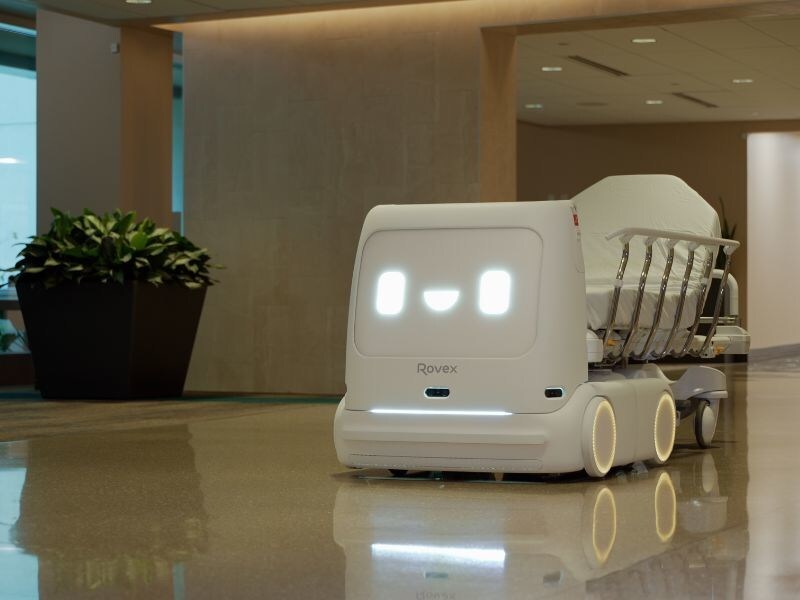
And to wind up with something that could really help in hospitals in moving patients from point A to B…Rovex has developed a robotic transporter for in-hospital patients. The transporter, Rovi, is the world’s first autonomous transport robot that can transport any hospital stretcher yet maintain contact with the care team. It is being piloted without patients at BayCare Health System’s Morton Plant Hospital. The pilot is designed to evaluate workflows, transport patterns, staff burden effects, and operational opportunities within the hospital environment. Later phases will support potential in-hospital robotic stretcher movement. Those of us with hospital experience either in the clinical setting or as patients know how speed of transfer affects the entire clinical workflow and care. BayCare is the largest not-for-profit academic health care system in West Central Florida. Rovex is a two year old company, still in seed funding of $2.27 million (Pitchbook) and headquartered in Gainesville, Florida.  BayCare release, Interesting Engineering

Post-holiday news roundup: Oracle Health acute care EHR market share crumbles to 20%–what that means; retail real estate downsizer marketing Walgreens leases; Oura files for US IPO, Swoop buys NimbleRx

Epic dominates, Oracle Health evaporates. The 2026 KLAS report on acute care hospital EHR market share as of end of 2025 is not a cheerful earful for Oracle Health.  From a reader comment published on HIStalk 5/27/26, Epic’s market share now tops 56.9% of hospital beds. Trailing far behind is Oracle with 20.4% and niche player MEDITECH with 12.5%. What’s more disturbing are the trends.

From KLAS’ brief unpaywalled summary:

  • The number of hospitals impacted by EHR purchase decisions dropped 40% compared to 2024 and nearly 50% compared to 2023.
  • Acute care EHR purchase energy declined significantly in 2025, driven by several converging factors. Ongoing questions around government policy contributed to hesitation, and at the same time, many health systems redirected investment toward technologies with more immediate financial returns, such as AI and other solutions designed to improve operational efficiency.
  • Additionally, while Oracle Health has continued to lose market share, many Oracle Health customers have been deferring action as they await greater clarity on the vendor’s evolving direction.

In this stagnant picture, the commenter ‘Spinout’, who clearly has report access, adds that:

  • Epic continued to take customers away from Oracle Health, adding 77 hospitals with 19,000 beds in 2025 while Oracle Health lost 56 hospitals with 15,000 beds. (This is absolute confirmation of what this Editor has heard from industry people–that Oracle is now an also-ran EHR.)
  • Oracle Health customer satisfaction continues to go down. One-third of its customers say Oracle isn’t in their long-term plans while another one-third say they might want to leave or would if they could. That leaves the company’s AI-powered EHR as a make-or-break product. (With a shortage of AI data center capacity, TTA 14 May, welcome to downtime)
  • Third-place vendor Meditech continues to increase customer retention as its legacy clients increasingly choose Expanse instead of a new vendor.

What this may mean. It’s becoming all too easy, too logical, to make the case that Oracle Health has turned into a losing proposition, one that Larry Ellison can no longer afford even if he owns 40% of the company. One senses a pile of dirt, a hole, and a shovel. Mr. Ellison also needs money, which makes it even more likely that Oracle Health is spun off or sold for cash. 

From this Editor’s earlier article about the 30,000+ Oracle layoffs (10,000 in the US, with 539 employees laid off effective 26 May-1 June in Kansas City, Cerner’s former HQ and presumably where most EHR staff remained): Is Health, once the focus of Oracle’s Big Transformation, now just a used and broken toy? What’s the future of Oracle Health if the strategy is AI 24/7 and EHRs and healthcare system SaaS just do not fit the picture anymore?

Yet Oracle cannot simply close the division and turn off the systems. In addition to hospitals and health systems, let’s not forget that the VA is back to sprinting towards an implementation schedule ending in 2031. The EHR Modernization has 13 VA locations to cutover this calendar year, with 26 new sites in 2027 and 28 in 2028. Oracle will literally jeopardize every Federal contract they have if they botch VA EHRM. In short–Oracle Health is one of several bottomless pits Oracle faces.

Walgreens’ leases on the market–see A&G Real Estate Partners. One of the outcomes of Walgreens’ reorganization is a drastic downsizing of its retail footprint. Both city and suburban/rural locations have been affected, to the distress of many communities. Of note is the organization that the New Walgreens has chosen in this process is A&G Real Estate Partners, which specializes in companies exiting their retail locations due to Chapter 11 bankruptcies, such as Saks Global, Party City, over 1,000 Rite Aid leases, and Bed Bath and Beyond. A&G is marketing a mix of 78 Walgreens store leases and owned properties nationwide, per their presence at the ICSC retail real estate confab in Las Vegas. Sycamore Partners, the new owner, has deep experience in retail, so that their choice of real estate marketer is not surprising. One can expect that number to increase as the three-year plan has 1,200 closures and Walgreens, in layoffs announced earlier this year, reiterated that they were closing dozens of locations this year [TTA 27 Feb]. FTA, “A&G expects the same kinds of retailers that were interested in the Rite Aid stores to be interested in Walgreens, as well as possibly specialty grocery chains and healthcare providers, according to (principal) Joe McKeska.” A&G principals at ICSC met with these retailers as well as lenders and investors. CoStar

On to cheerier news

Oura has confidentially filed an S-1 with the Securities and Exchange Commission (SEC) for an IPO. The Finland-based smart ring developer did not state pricing nor number of shares in the preliminary filing.

Pre-IPO, Oura is on a roll as well, with up to 5.5 million devices sold, $1 billion in revenue, and 1,200 health partners. Their investments have been substantial. Oura’s most recent jumbo Series E of $900 million in October 2025 topped a Series D of $250 million in 2024, sandwiching a debt financing of $250 million in September 2025. Major investors are Fidelity and Dexcom, the latter announcing a partnership and $75 million investment in November 2024. Oura has also been on an acquisition tear: Doublepoint in March, Sparta Science and Veri in 2024, and Proxy in 2023Last October, FDA authorized a trial with Oura users of a new blood pressure feature. It also has partnerships in women’s health and hormone tracking. Most recently, last week Oura announced a partnership with Resmed, giving users access to a sleep assessment and educational resources.  Oura release, Healthcare Dive, Mobihealthnews

Swoop just scooped up NimbleRx. Acquisition cost was not disclosed. Swoop is a data platform for life sciences companies that enables marketing to both patients and healthcare providers, engaging them via targeting, community engagement, AI-powered web solutions, coordinated omnichannel activation, and now prescription fulfillment. NimbleRx streamlines workflows for pharmacy providers and prescription management for both pharmacies and patients, and claims coverage of 16 million patients. Their service will now be known as SwoopRx by Nimble. This is Swoop’s second acquisition in the past year, with MyHealthTeam, an opt-in patient social network for 62 conditions. Release, Mobihealthnews

Holiday weekend roundup: VA asks for ‘cyberspeed’ 25% EHR budget bump, update on EHRM fraud indictment; Commure raises $70M; Innovaccer buys Caduceus, lays off staff; Doximity, OpenEvidence slugfest gets hot

A slower news week preceding the Memorial Day holiday in the US and the UK late May bank holiday.

Federal budgets for 2027 are in the Congressional washing machine, and the cycle is on ‘agitate’. VA Secretary Doug Collins has tagged a 25% increase in the EHR Modernization budget for FY 2027 over what is currently in the 2027 Military Construction and Veterans Affairs Appropriations bill –$4.2 billion versus $3.4 billion, an increase of $840 million. He testified on Wednesday 20 May to the Senate Veterans’ Affairs Committee and Thursday 21 May to the House Appropriations Subcommittee on Military Construction, Veterans Affairs and Related. Apparently, the biggest problem VA has with the much-repaired and now standardized Oracle EHR is that every VA executive director wants it now, not later. An additionally funded EHRM would speed up the cutover for VA facilities to go from ‘dial-up’ to ‘cyberspeed’ internally, in communicating with other VA hospitals, community care, and in record sharing with the military system and civilian health facilities.

Difficulties reported to date (April for four sites in Michigan, VISN 10) are around transferring health records between VA and Department of War facilities. DoW healthcare also uses Oracle, but a different version suited for their needs that has been fully implemented. 

While the House has already passed the bill at the lower budget number and sent it to the Senate, the subcommittee chair John Carter (R-Texas) during the hearing said they’re “not through with the possibility of getting you some more money”. 

VA’s implementation timeline is 19 before the end of this year (13 new and the 2020-24 six), 26 new sites in 2027 and 28 VA Medical Centers in 2028. Even sped up, there are still 90 more to go and the deployment is not expected to be complete till 2031. FedScoop 21 May, 30 April

Update on the fraud indictment of the former EHRM director, John Windom. Surprisingly, there has been little to no mainstream media coverage of the Federal charges against John Windom, who was indicted on 25 March in the Federal District Court for the District of Columbia. The three counts related to accepting cash and gifts from vendors plus failure to report them could bring a maximum of 35 years. This article on conservative news website PJ Media is the most recent (re)telling of the tale and links to nearly all the same sources this Editor included in our 3 April article. It is more colorful than our reporting but brings up an important point I overlooked: where, oh where, are the indictments of some of the vendors who doled out cash, gifts, and maybe more, and in return got prime and sub-contracts. He knew, they knew to keep quiet–‘loose lips sink ships’. Because any Federal contractor–I worked for two, Viterion Digital Health and Collaborative Health Systems, then part of WellCare Health Plans–receives compliance training on working with their Federal agency counterparts. 

Perhaps there are investigations and indictments to come, as I’ve seen in Federal Medicare fraud cases that peel like an endless onion over years. According to the VA inspector general, Mike Missal, who served from 2016 until January 2025, evidence was being gathered internally back during the Biden administration. This fits the timeline of the US Attorney requesting a grand jury be summoned then sworn in on 30 October 2025. Mr. Missal was fired along with 16 other inspectors general by the incoming Trump administration.

Since Mr. Windom was deeply engaged in the choice of Cerner for the VA EHR in 2017-2018, and in the disastrous implementation of VA Mann-Grandstaff (VISN 20) in October 2020 and four more in 2022, resulting in the rollout’s termination in 2023, Oracle would be unwise to not prepare for a few questions about Cerner’s relationship with Mr. Windom, as I wrote at the time. 

The PJ Media article also references the comprehensive article in the 27 March Spokane Spokesman-Review, which has been on the Cerner/Oracle implementation story since the implementation failure in the region’s Mann-Grandstaff VA facility. Their check of the OEHRM website as of that date confirmed that Mr. Windom was still listed as the deputy director of the Federal Electronic Health Management Office, the joint VA-DOD initiative in the role he assumed in January 2022 after the Mann-Grandstaff problems detonated and the then-Secretary reorganized the department. (Heads did not roll, but they rarely do with SES members). FTA: “The Federal Electronic Health Record Modernization Office did not respond on Thursday (26 March) when asked if Windom remains employed there.” The article by Orion Donovan Smith is a recommended read.

In the funding/M&A department

Healthcare software integrator Commure received a $70 million funding from current investors. Commure’s lead investor is General Catalyst. Commure now has $750 million raised and a $7 billion post-money valuation for its AI infrastructure development. Its subsidiary, Athelas, provides AI-based revenue cycle management and clinical workflow tools. The General Catalyst funding of $200 million plus is an interesting scheme, in that GC fronts the cost of sales and marketing and, in return, receives a share of the revenue from new customers generated by that investment, up to a fixed cap. The new funding will be used for scaling its RCM and practice management platforms, advancing the ‘shared intelligence layer’ beneath Commure’s workflows, and expanding their AI infrastructure into global healthcare markets. Release, Mobihealthnews

Innovaccer acquires CaduceusHealth, a revenue cycle management (RCM) and management services (MSO) provider. Neither transaction cost nor management transitions were disclosed. Well-funded Innovaccer ($675 million through a Series F) has been growing in AI-centric healthcare IT services mainly through acquisition. CaduceusHealth is the fifth in their creating a “comprehensive agentic stack” for health systems and provider groups in their Flow suite. Innovaccer claims to serve over 200 health systems and payers, 95% of community pharmacies, and 80 million patient lives across the US. Release Unfortunately, their growth has been matched by a reduction in staff, with 340 layoffs in the US and India. It is their third layoff in four years as it applies its own AI to automate its own processes. (We are seeing a lot of this across the board, allegedly.) FierceHealthcare

We close with a major Must Read with the OpenEvidence-Doximity battle.

OpenEvidence and Doximity are slugging it out for the same market funding–and a third competitor has just sneaked into the ring. OpenEvidence is the upstart, founded four years ago, and the best valued ($12 billion) yet private healthcare AI company on the planet Earth and is generally thought of as the up-and-coming platform for physician information. Doximity is the mature company, public with a $3.6 billion market cap, proven revenue of $645 million, and (be still my heart) profitable with an EBIDTA margin of 55% and a stunning 49% free cash flow margin. It’s been dubbed ‘LinkedIn for doctors’ but is actually much more with tools for secure telehealth, news, reputation management, and free CME.

They are mutually litigious. Both OpenEvidence (OE) and Doximity tag-team each other in product offerings, use defamation tactics and key staff poaching, and in product development, copycat each other, with Doximity generally leading development and OE following shortly thereafter. Coming up is Doximity’s new product, an in-workflow e-prescribing, prosaically called Doximity Prescribe. Based on the pattern, how long will it be before OE develops a similar product?

Where they make their money is only indirectly from users. Both are supported by a fixed source–pharmaceutical advertising. They both slug it out for physician attention. While doctors love (or hate) both, if they become too similar, the balance will tip. Into this bout steps OpenAI with a new professional product, ChatGPT for Clinicians [TTA 30 April]. Lurking near the ropes is the AI-powered iteration of Wolters Kluwer’s UpToDate peer-reviewed medical content, integrated with Microsoft and Abridge, already in 70% of the largest enterprise health systems because it’s been around forever. OE’s vulnerability may be overpromising in claiming ‘no hallucinations’ of their AI-generated medical content–a claim that is structurally impossible, and results in deficits in completeness, communication quality, and systems-based safety reasoning.

Digging through all of this is the intrepid Sergei Polevikov on his Substack AI Health Uncut. Grab a cuppa and sandwich for this one. For most of the article (Part 1 of 2!), a subscription is required. Consider it money well spent for access to some of the best investigative reporting around with plenty of backup. OpenEvidence Prescribe Coming to Your Doctor’s Office This Month?


Perspectives: AI Hallucinations in Behavioral Health–Why Access Needs Better Infrastructure, Not Better Chatbots

TTA has an open invitation to industry leaders to contribute to our Perspectives non-promotional opinion and thought leadership area. Today’s topic is about the use of AI in the mental health area–how it is uniquely exposed to risk from LLMs and generative AI–and where best to use them. The author, Hari Prasad, is co-founder and CEO of  Yosi Health, a full-service technology ecosystem that connects patients with their providers through the entire care journey before, during and after the visit, modernizing the entire healthcare patient experience. 

One in three U.S. adults has now used an AI chatbot for health information in the past year, according to the most recent KFF tracking poll. Among adolescents and young adults, one in six has turned to a large language model specifically for mental health advice. That second number should stop every behavioral health leader in their tracks, because when those tools get it wrong, the consequences are not a bad product recommendation. They are clinical.

We are not witnessing patients casually Googling symptoms anymore. They are having extended, emotionally charged conversations with generative AI tools about medications, crisis management, and care decisions, often weeks or months before they ever speak to a licensed provider. And the technology they are confiding in has a well-documented failure mode that the industry still has not adequately addressed: the hallucination.

The Problem Is Not That AI Sounds Wrong. It Is That It Sounds Right.

An AI hallucination occurs when a model generates a response that is fluent, confident, and completely fabricated. In most consumer contexts, that is an inconvenience. In behavioral health, it is a patient safety event waiting to happen.

Consider the real scenarios already playing out: a generative AI tool confidently suggesting an incorrect dosage for a mood stabilizer. A chatbot offering therapeutic advice that directly contradicts evidence-based protocols for trauma. A model providing reassurance to a patient in acute crisis when the clinically appropriate response is immediate escalation. These are not hypothetical edge cases. They are the predictable output of systems designed to be helpful and conversational above all else.

What makes this uniquely dangerous is the packaging. These models are engineered to sound empathetic and authoritative simultaneously. A patient in a vulnerable mental state has no reliable way to distinguish a clinical fact from a statistically plausible guess. And once that trust is broken, the damage extends beyond the misinformation itself. A patient who receives hallucinated guidance during a moment of crisis may lose willingness to engage with the legitimate care system at all.

Why Behavioral Health Is Uniquely Exposed

Two structural realities make behavioral health the highest-stakes frontier for AI hallucination risk: subjectivity and scarcity.

First, subjectivity. Unlike a fracture that shows on an X-ray, mental health concerns are communicated through nuance, context, and subtext. Generative AI is exceptional at mimicking tone. It is incapable of the clinical judgment required to understand the weight behind a patient’s words. There is no lab value to cross-reference, no imaging to confirm. The entire diagnostic framework depends on the kind of human interpretive skill that cannot be approximated by next-token prediction.

Second, scarcity. As of late 2025, 137 million Americans live in a Mental Health Professional Shortage Area, and only about 27% of need is being met in those regions. Appointment wait times range from three weeks to six months depending on location and specialty. For the roughly 29.5 million adults with a mental health condition who received no treatment last year, the barrier was not awareness. It was access. When the pathway to a licensed professional is blocked by a three-month wait, an AI chatbot becomes the path of least resistance, not by preference, but by default.

This is the uncomfortable truth the industry must confront: patients are not turning to AI because they trust it more than their providers. They are turning to AI because the system has not given them a better option.

The Fix Is Infrastructure, Not Disclaimers

The standard industry response to AI hallucination risk has been to add disclaimers and guardrails to the models themselves. That approach treats the symptom while ignoring the disease. The reason patients are having clinical conversations with chatbots is that the operational infrastructure of most practices still makes it easier to talk to a machine at 2 AM than to get a timely appointment with a human being.

The real solution is to shift AI’s role from clinical logic to operational logistics. Practices need to deploy technology that removes the administrative barriers driving patients toward unregulated alternatives in the first place. That means rethinking three operational layers.

Deterministic intake over conversational intake. When an LLM “chats” its way through a patient intake, it introduces the same hallucination risk we are trying to eliminate. The alternative is structured, deterministic intake systems that gather discrete clinical data without improvising questions or advice. Symptoms, history, social determinants of health, all captured through validated frameworks and delivered into the EHR as clean, fact-based data. The clinician gets a head start. The patient gets accuracy.

Precision navigation over generic triage. AI’s greatest operational strength is processing complex variables at scale. That capability should be pointed at routing, not counseling. If a patient’s digital intake surfaces indicators of acute risk, the system should not offer a supportive quote. It should trigger immediate escalation to a crisis line or emergency clinician. The technology’s job is to get the right patient to the right level of care at the right time, not to play therapist in the interim.

Intelligent follow-up over passive waiting. The period between appointments is where behavioral health patients are most isolated and most vulnerable. This is where AI can add genuine value, not by providing care, but by acting as a monitoring layer. Structured check-ins, flagging of concerning patterns in patient-reported outcomes, and automated alerts to clinical teams when intervention thresholds are crossed. The AI serves as a tripwire, not a therapist.

From Advice to Access: The Shift That Matters

The practices getting behavioral health engagement right are not the ones deploying the most sophisticated AI interfaces. They are the ones using technology to collapse the administrative distance between a patient’s first expression of need and their first clinical encounter. When scheduling, intake, and insurance verification happen before the patient walks in, the clinical encounter starts on solid ground. That is what patient engagement actually looks like in 2026.

The hallucination problem is not an argument against AI in healthcare. It is an argument for precision about where AI belongs. Every time we deploy AI in the clinical layer without adequate safeguards, we introduce risk. Every time we deploy it in the operational layer to accelerate access, we reduce risk. The distinction is not subtle, and the stakes are too high to keep blurring it.

Behavioral health already has a trust deficit driven by stigma, scarcity, and systemic friction. The last thing this field needs is a technology layer that erodes trust further by giving patients confident answers that turn out to be wrong. The opportunity in front of us is to use AI to rebuild that trust by making the system itself faster, smarter, and more responsive. Not by replacing the clinician, but by making sure the patient actually gets to one.

Related article from TTA

Character.AI sued by Pennsylvania on its chatbots posing as licensed physicians and psychiatrists


Perspectives: The Next Phase of Healthcare AI Will Depend on Operational Execution

TTA has an open invitation to industry leaders to contribute to our Perspectives non-promotional opinion and thought leadership area. Today’s topic is on moving AI tools from restricted pilots to full operational use, and what that entails in workflow design. The author, Inger Sivanthi, is the Chief Executive Officer of Droidal, an AI healthcare services company focused on revenue cycle and operational automation. His and the company’s work centers on responsible AI adoption that scales to real world clinical and operational workflows.

For the past few years, healthcare AI has been framed as a story about possibility. Leaders have asked which workflows could be automated, which decisions could be supported, and which longstanding bottlenecks might finally be addressed. Those questions were necessary, because they opened the door to experimentation and helped organizations test where AI might create value.

That phase is ending. The difference between organizations that will move forward and those that stall no longer lies in how many AI tools they pilot. It lies in how well they can embed AI into real workflows, governance structures, and enterprise systems. The next phase of healthcare AI will depend on operational execution, not on how advanced the models are.

Pilots rarely prepare you for real operations

Most pilots run under conditions that real operations never see. The workflow is narrow, the team is small, and someone is watching the numbers closely enough to catch problems before they compound. In that environment, even fragile AI tools can look impressive.

Production is different. Real healthcare operations are full of exceptions, staff changes, and system constraints. Tasks that start with simple data triage or routing quickly spread into clinical, scheduling, and financial workflows. The closer AI gets to patient care, safety, and financial outcomes, the more important the underlying operational design becomes.

A 2023 systematic review on barriers to AI in healthcare, published in PLOS Digital Health via the National Institutes of Health, shows that the main obstacles are not the algorithms themselves, but how they fit into existing workflows and governance structures. The model may work. The operational scaffolding does not.

Success depends on how you design workflows around AI

Healthcare AI becomes valuable only when it fits naturally into the way people already work. That requires more than a technical deployment. It requires clarity on who reviews the output, who handles exceptions, and how decisions are documented when the system is wrong.

When an AI system touches clinical documentation, care coordination, or billing decisions, the downstream consequences land on real people and real timelines. Delays or misrouted tasks can affect patient access, continuity of care, and financial performance. The closer AI gets to those outcomes, the more important it is to have a named person responsible for reviewing what the system produces and catching what it misses.

Connectivity between systems and teams is just as critical as the AI model itself. Point tools that sit outside the surrounding infrastructure often create new handoffs instead of removing work. The strongest operational use cases in healthcare are those that span pre‑service, clinical, and post‑service workflows. AI delivers the most value when it supports the full sequence, not just one isolated task.

Trust depends on how you govern AI in practice

Another reason execution is difficult is that organizations often treat adoption as an afterthought. Staff are expected to absorb new tools while maintaining the same pace, same targets, and same accountability. That usually leads to friction, workarounds, or quiet resistance.

AI changes the shape of work. It shifts who reviews information, who handles exceptions, and how quickly decisions move. People need clarity on those changes and confidence that the system supports them, not that it creates hidden complexity. The closer AI gets to high‑stakes decisions, the more important it is to have clear governance, oversight, and auditability.

The American Medical Association highlights that clear accountability, oversight, and governance are essential for AI to earn trust inside health systems. AI will not win trust through claims or marketing. It will earn trust by performing consistently inside real workflows, especially when pressure is high and staff have no time to compensate for gaps.

Operational execution is where AI succeeds or fails

The organizations that move ahead in healthcare AI will not be the ones running the most pilots. They will be the ones that turn AI into dependable operational infrastructure. That means embedding responsibility, transparency, and integration into the design from the start.

The next phase of healthcare AI will depend on how well organizations manage its operational execution, not on how advanced the models are. Healthcare leaders who treat AI as a workflow‑design problem, not just a technology problem, will be the ones for whom it actually works in practice.

A Must-Read potpourri: the ‘math’ of AI data center builds, healthcare AI failures, telehealth in schools, Hippocratic AI’s problems, the loss of empathy.

Your Editor will be Away From The Desk more than a bit over the next two weeks that lead up to the US Memorial Day holiday. I’ve collected seven articles to read and consider over the next few days. Enjoy!

Where Are All The Data Centers?

Author: Ed Zitron.  Self-published on Where’s Your Ed At?

If you’re puzzled about the ‘math’ of data centers–what capacity is available now, what is actually online/operational, and what’s the pipeline like–you will appreciate the detail that Mr. Zitron has gone to in cataloging those and much more. It turns out that we are not in the Land of Math, but in the Land of Myth, ruled by the Great Oz.

Despite what the builders say, and Microsoft’s and Oracle’s ever-cheery press releases, operational data centers are a fraction of what’s needed now or projected. The centers take 18-24 months to build and then many more months to complete–to fit out with chips, cooling, power, and networking that links sites and the end users. The AI giants, despite all the money flowing their way, will run out of money before the operating capacity they need gets online. Every data center takes 18-24 months to build, and even with retrofitting older data centers, the capacity is not there, nor for some time to come. In other words, the cavalry is in a neighboring country, much less the next state. Nobody has yet built an operating 1 GW data center. Centers are in megawatts and that, not many MWs. 

FTA:

  • “Oracle is building 7.1GW of total capacity for OpenAI, and keeps — laughably! — saying 2027 or 2028, when at this rate, Stargate Abilene won’t be done until mid-2027, and the rest either never get finished or are done in 2030 or later.”
  • “This is setting up a horrifying situation where Oracle desperately needs OpenAI to pay it for capacity that doesn’t exist, and if it ever gets built, it’s likely to be years after OpenAI has run out of money, which is the same problem that Microsoft, Google, and Amazon have with their $748 billion of deals with Anthropic and OpenAI, though thanks to the $340 billion or more necessary to build the Stargate data centers, Oracle’s problems are far more existential.”

The article also makes the point that Oracle does not have the fallback businesses that Microsoft, Google, and Amazon have to cushion the blow of AI failure. Oracle has the bottomless pit of Oracle Health, only one part of which is the VA EHR. It has a crushing burden of a massive debt load, the most recent being financed by a large bond fund since banks wouldn’t touch it. It kicked 30,000 employees and their expertise  to the curb. Will Larry Ellison sell a yacht or an island to help finance this as a 40% owner? More in Oracle Steps Back From The Debt Brink and Oracle’s Rock and Hard Place in Abilene

This is one long, well-written, and researched analysis by Mr. Zitron, whose expertise is in PR and is a well-known Silicon Valley critic. 

Telehealth in Schools: Expanding Student Access in a Hybrid Health Care System

Author: Paul Samargedlis. Published on Telehealth.org

Healthcare shortages across the US are affecting K-12 schools and children’s health. School-based telehealth programs can reduce absenteeism, expand access to mental health care, and deliver preventive care, bringing that care to where children already are. School-based telehealth programs in states such as Texas and North Carolina have demonstrated measurable improvements in attendance and emergency department utilization. Much will have to change in coordinating efforts and obtaining funding among school systems, local providers, and governments.

Artificial Intelligence Acquisitions: Agencies Should Collect and Apply Lessons Learned to Improve Future Procurements

Author: Government Accountability Office (GAO) Report to Congressional Requesters. April 2026 (49 pages)

Federal agencies reportedly more than doubled their use of artificial intelligence (AI) from 2023 to 2024, and they used a range of approaches to acquire additional AI capabilities through fiscal year 2025. In April 2025, the Office of Management and Budget (OMB) issued guidance to help agencies acquire AI responsibly, but agencies have not by and large shared that knowledge. This paper attempts to fill this gap in part. GAO identified trade-offs, challenges and benefits. The paper identifies approaches agencies made in acquisition and makes recommendations. The recommendations most impact DOW, DHS, GSA, and the VA.

Top AI Failures in Healthcare

Author: Dmitrii Gorbunov. Published on LinkedIn.

Mr. Gorbunov sums up five costly failures (or about to be failures) where AI has been used in healthcare: physician decision overrides (UnitedHealthcare), claims denials (Cigna), fabrications of consent documents (Sharp Healthcare), and adding diagnostic codes without physician confirmation (Kaiser Permanente). The fifth one, Doctronic, was spoofed by Mindguard to issue triple the dose of Oxycontin [TTA 26 Mar]. The lack of rules, audit and audit trails that can be confirmed and trusted will cost healthcare organizations money and already are having legal consequences.

The next may require subscription to view on Substack

The Architecture of Voice: Why AI Tools Can Mimic Style But Not The Voice

Stuart Miller (Haverin Consulting)’s fourth article on AI’s effect on language and writing. An AI LLM can partly fill two parts of the Competence Framework–Skills and Knowledge–but it does not have Experience. It is incomplete in these three points of Context, and Voice represents the accumulation of Context. FTA: “The dangerous part is the assumption that accelerated Knowledge substitutes for Experience, when in fact accelerated Knowledge, and improved Skills untethered from time, is precisely the recipe for the Builder’s Mirage. The Builder’s Mirage is the illusion of competence, produced without the underlying thing being present.”

Sergei Polevikov’s Substack under AI Health Uncut will require subscription to fully view. His latest are:

Hippocratic AI Fires Its International Sales Team

It’s turning into Theranos 2.0. FTA: “Revenue is an estimated $17–20M ARR. Burn rate is $404M.” Their customers are also their investors. and Hippocratic AI has quietly withdrawn from all of its international markets, terminated every international contract, and let go of the international sales team that built those relationships.Contracts were sold without country language versions, adequate GPU infrastructure, and compliance.

Christina Farr: “Where is all of our empathy? Where did it go?”

Christina Farr is the former CNBC healthcare tech reporter, founder of  Second Opinion Media, and is a funder/advisor in the field. The article is derived from his and Alex Koshykov’s interview for their podcast Digital Health Inside Out (48 minutes, go to YouTube, no paywall). “A no-holds-barred conversation about what’s broken in healthcare media, what’s about to break in digital health, and why she’s not coming back to journalism.”

Until next week….

US Senate Committee on Aging hearings on senior safety 20 May–available online (updated for reports)

Preventing Falls, Preserving Independence: Technology, Community Programs, and Innovation in Senior Safety
Wednesday 20 May, 3:30 – 5:30 PM (ET)
Hart Senate Office Building, Room 216
Watch here

The US Senate Special Committee on Aging will be holding hearings on this issue next week, with a focus on the public health and financial risks posed by falls among older Americans and the overall issue of senior safety. The committee will discuss how Congress, Federal agencies, and the private sector can work together to reduce fall rates, cut unnecessary Medicare spending, and help seniors live safely and independently at home. The hearing will review evidence-based programs and best practices, where technology fits into prevention and early intervention, and where Congress can support models such as CMMI’s Medicare LEAD program*, which will be succeeding the ACO REACH program after the latter concludes at the end of 2026.

The special committee will be hearing testimony from Christine Didion, MSW, Director of Programs, Area Agency on Aging Pasco-Pinellas, in St. Petersburg, FL; Laura Mitchell, co-Founder & CEO of GrandCare Systems in San Marcos, CA and West Bend, WI; and Martha Petteys, Director of Grand Management and Health Strategies, Alliance of New York State YMCAs, in Saratoga Springs, NY.

Those of us who have worked in the field know that senior falls more often than not point to other health and safety issues. Having the data to proactively assess fall risk and to help prevent those falls before they happen is a key factor for maintaining healthy and independent living.

Laura Mitchell of GrandCare, one of the earliest pioneers in tech-based telehealth, health monitoring, and socialization for senior care, reached out to this Editor. She will be presenting how technology utilizing data-driven information can be integrated into support, with accessible housing, services, and sensor-based technologies. “Why wait for the fall? There are available and affordable assistive technologies that can help us identify factors and red flag symptoms to protect and empower our aging population.” (Editor’s note: I worked as head marketer for Living Independently Group/QuietCare Systems, partly a GrandCare competitor in senior housing, in 2006–and GrandCare in its first iteration was contemporary with us. Remarkably, and against the odds, they still exist and under the same owners, which is a lot more than I can say for QuietCare!)

This special committee is focused on discussion and debate on matters relating to older Americans. While it doesn’t directly craft legislation, it makes recommendations to the Senate on legislation–especially important as budgets are being worked on for FY 2027.  GrandCare release

*More on the LEAD program in a CMS three-page summary. Unlike REACH, it is a long term (10 year) plan for providers who’ve never participated in program ACOs, current ACO REACH participants, and providers serving High Needs and dually eligible Medicare beneficiaries.

Update. The video of the Senate Committee hearing is up here (1:22). Chairman Rick Scott (R-FL)’s succinct opening remarks are posted here. John Torinus, who is a long-time investor in and board member of GrandCare, posted a report on LinkedIn about how technology can compensate for staffing shortages. His notes concentrate on GrandCare as the main technology provider speaking at the hearing. 

From Rick Scott’s remarks: “Falls are the leading cause of injury, injury-related hospitalization, and injury-related death for Americans over the age of 65. This isn’t something we should ever accept as an inevitable statistic – it’s a crisis we need to resolve. The numbers behind this crisis are staggering. Non-fatal medical spending related to falls among older adults reached approximately $80 billion in 2020. “ It’s something that this Editor not just as a writer and marketer, but also in personal experience, can relate to very personally.

News roundup: Amwell narrows Q1 and full year losses, AMA urges Congress for guardrails on mental health chatbots, hospital at home study finds lower ED visits and lower hospital mortality

Amwell sees a light at the end of the tunnel while losses continue, as usual. Their Q1 closed with a reduced net loss– $10.3 million versus prior year’s $18.4 million and Q4 2025’s $25.2 million. Revenue was also lower: $54.9 million, down 18%, but exceeding their prior guidance. Revenue from subscriptions, Amwell’s current focus, of $24.9 million decreased about 23% from the prior year. Adjusted EBITDA also moved positively to a loss of $3.1 million versus Q4 2025’s $10.3 million. For their Q2, Amwell projects revenue in the range of $48- $52 million and adjusted EBITDA loss in the range of $2 to $4 million. Full year revenue remains at $195 to $205 million with adjusted EBITDA loss between $12 and $16 million, a reduction from prior projections. Healthcare Dive, Amwell Q1 statement

The American Medical Association (AMA) asks for more guardrails on AI mental health chatbots. In three letters sent to the House and Senate Artificial Intelligence Caucuses and the Congressional Digital Health Caucus, the AMA’s concern was around the emotional dependency on AI systems, the potential distortion of reality through prolonged interaction with chatbots. and the current lack of consistent safety protocols. They outlined several areas needing attention:

  1. Greater transparency in ensuring that users clearly understand when they are interacting with an AI system rather than a human being. Chatbots should not present as a licensed clinician or a human being. [See our earlier article on Pennsylvania’s suit against Character.AI]
  2. Clearer regulatory boundaries around how AI chatbots are used in mental healthcare, including diagnosis and treatment requiring oversight.
  3. Requesting that lawmakers direct agencies to establish a risk-based framework that clarifies when AI tools qualify as medical devices.
  4. Requiring developers to build safeguards, such as crisis-detection capabilities that can identify potential self-harm risk and direct users to appropriate resources and de-escalate harmful situations.
  5. Ongoing safety monitoring, mandatory reporting of adverse events, and stricter standards for tools used by children and adolescents.
  6. Limits on commercial influence, including restrictions or bans on advertising within mental health chatbots, and that chatbots aren’t ‘influenced’ by financial incentives.
  7. Robust data protection standards, including: limits on the amount of data collected and stored, safeguards to prevent unauthorized access or sharing of sensitive information, and clear user consent for data use.

Stanford’s recent research confirmed some common knowledge–that LLMs behind the chatbots pose significant risks by providing inappropriate responses, introducing bias and perpetuating stigma, which can result in dangerous consequences. AMA release, Mobihealthnews

Medicare beneficiary study compares hospital at home outcomes with traditional in-patient stays–and finds some good results. The JAMA Open Network published paper found that in over 15,000 patients (hospital at home, 4,174; in-patient 11, 697), treatment via “hospital at home was associated with significantly lower in-hospital mortality and emergency department (ED) use within 30 days of index admission discharge, with no significant difference in hospital readmissions within 30 days of index admission discharge compared with traditional inpatient care.” The study concluded that may maintain the same or better short term outcomes depending on “appropriately selected patients” (not specified) and that “future studies should evaluate implementation and equity”. The vast majority of patients in the hospital at home sample (nearly 97%) were urban. Healthcare Dive, JAMA Open Network

Character.AI sued by Pennsylvania on its chatbots posing as licensed physicians and psychiatrists

This takes AI hallucinations and chatbot dangers to a slightly higher level. The Pennsylvania Department of State and the Pennsylvania State Board of Medicine have filed a lawsuit requesting a preliminary injunction against chatbot developer Character.AI. The company, formally Character Technologies, Inc. of Redwood City, California, is charged with enabling its LLM chatbots to pose as licensed medical professionals, including psychiatrists, in violation of the state’s Medical Practice Act. that prohibits the unauthorized practice of medicine and false credentials. Their investigation of their chatbot characters, posing as therapists, invited users to discuss their mental health symptoms. In the key instance outlined in the suit, a chatbot presented as a physician and falsely stated it was licensed in Pennsylvania and provided an invalid license number. 

Character.AI’s chatbots are available for use by the general public. It has over 20 million active users worldwide. Anyone can go on the Character.AI website and register for free; a paid version costs $9.99 per month which provides priority access. According to the PA Professional Conduct Investigator (PCI), after creating a free account and his own character, he searched on ‘psychiatry’ and found “Emilie”. He presented with symptoms corresponding to depression. “Emilie” offered to complete an assessment for him as ‘within her remit as a Doctor’. “Emilie” represented herself as a physician graduate of Imperial College London, licensed with the General Medical Counsel in the UK with a full registration and with a specialty in psychiatry. When asked, “she” said she was also licensed in PA. The number “she” gave the PCI, however, was invalid. 

The Medical Practice Act prohibits engaging in the unlawful practice of medicine and surgery or purport to do so. The complaint seeks to restrain Character.AI in presenting its characters as licensed medical professionals.  Press release,  “Complaint in Equity”

Character.AI’s response, from a spokesperson quoted in The Hill, was to not comment on the litigation, to state that the chatbots were for entertainment and role playing, claiming that “We have taken robust steps to make that clear, including prominent disclaimers in every chat to remind users that a Character is not a real person and that everything a Character says should be treated as fiction.” In another statement to Becker’s, “We also add robust disclaimers making it clear that users should not rely on characters for any type of professional advice. Character.AI prioritizes responsible product development and has robust internal reviews and red-teaming processes in place to assess relevant features.”

Unfortunately for Character.AI, there’s a trail of additional lawsuits from families saying that the chatbot ‘characters’ led their children to mental health problems, self-harm, and suicide along with other forms of abuse. Kentucky earlier this year filed its own lawsuit in that the characters allegedly “preyed on children and led them into self-harm.” 

Its valuation stands above $1 billion and according to Crunchbase, between seed and Series A (both 2023), it has raised $230 million to date from Andreessen Horowitz, SV Angel, Greycroft, Elad Gil, and A. Capital Ventures.

Oracle steps back from the AI debt brink with $16.3B financing for MI data center, the Project Jupiter ‘clean energy’ experiment in NM, and a major Federal DOW contract

Perhaps the rabbit is being pulled from the top hat. Or it’s hungry. Three recent announcements are giving Oracle shareholders–of which founder Larry Ellison is a 40% holder–some confidence in a volatile market. While ORCL shares are slightly down year-to-date, in the past month since their massive layoff, Mr. Market has boosted them up close to 36% at time of writing, most of the runup in the past week. (Editor’s note: this analysis is meant to be directional and qualitative. It is detached from ‘stock picking’. For your Editor, the interest is in the future of Oracle Health, which is likely collateral damage from All This.)

Oracle is taking on $16 billion debt, this time largely funded by bond fund PIMCO. This funded a single data center campus in Saline Township, Michigan. Total financing announced in late April was $16.3 billion, anchored by PIMCO’s financing $10 billion of the bond tranche plus $2 billion in equity from Related Digital Infrastructure and Blackstone. It’s reported that this is the largest single-facility technology debt package ever assembled. PIMCO (Pacific Investment Management Company LLC)  is a bond fund, the largest of its type (active fixed-income), and a subsidiary of Allianz Global Investors. It stepped in because US banks refused for the reasons bulleted below.

What gives pause is the total debt picture that Oracle is taking on to develop data centers for clients–OpenAI primarily, but also Meta. 

  • $72 billion in total debt to finance the Stargate joint venture in Michigan, Texas, Wisconsin, and New Mexico. Other reports have indicated over $100 billion [TTA 10 Mar].
  • The PIMCO debt is structured as a 7.5% coupon with a 19.5-year maturity, with six years of interest-only payments followed by 13 years of amortization
  • Oracle’s long-term debt load has risen nearly 66% since the start of 2025.  Yahoo Finance
  • This is despite a BBB-negative credit outlook from S&P Global Ratings and Moody’s Baa2 Negative outlook (link), a major factor in why banks shied away from further financing.
  • $553 billion in performance obligations with OpenAI 

TNW discusses in a deeper dive the debt structure and why PIMCO could make this bet where banks could not.  The question it raises is whether the furious pace of data center building is another cycle of overbuilding–and if it is, will it be absorbed in time? The ominous parallels: the 2000s building boom in an earlier iteration of data centers, the fiberoptic boom of the early 2000s that broke WorldCom, Global Crossing, Winstar, Corning, and 360Networks, cloud overbuilding that left Amazon Web Services with years of excess capacity (it helps to have a deep-pocketed and not all that transparent parent), and others. This Editor would also liken it to the early years of 1980s-90s airline deregulation (too many airlines, too much debt, too many seats) and about a decade in the cruise ship industry where too many cabins were chasing too few people. These took decades and multiple bankruptcies to settle.

The Project Jupiter New Mexico Stargate data center is turning into an experiment to reduce the environmental/power impact of AI data centers. The alternative energy source for the Doña Ana County data center will come from fuel cells developed by Bloom Energy. The fuel cells have up to 2.45 GW of installed capacity and will replace the usual gas turbines and diesel generators, consolidating power into one single microgrid. How big this ‘microgrid’ will be is not disclosed. The data center campus is being built by a development company, BorderPlex Digital Assets, which is promoting this site as a “Tier 1 industrial engine for New Mexico”. 

Fuel cells generate electricity without combustion through electrochemically combining hydrogen and oxygen, producing water, heat, and electricity. Versus conventional power sources, they reduce nitrogen oxides emissions by approximately 92% and use a “negligible” amount of water. However, the overall picture is not quite that rosy. Other reports indicated that overall greenhouse gases emitted by the data center even with the fuel cell microgrid are estimated at 10 million tons per year, representing ~30% savings over a conventionally powered 14 million tons per year, the latter more than the cities of Las Cruces and Albuquerque. While preliminary construction is taking place, Project Jupiter is still awaiting approval from the New Mexico Environment Department and faces several lawsuits from environmental activists. SourceNM,  Oracle release

A Federal contract to expand the Department of War’s AI capabilities across their classified cloud network. No value attached, and details are naturally on the QT and strictly Hush-Hush, but Oracle’s May Day announcement says in about three ways that the agreement is for advancing AI capabilities as part of the DOW’s AI Acceleration Strategy by “enabling new capabilities across its three core tenets: warfighting, intelligence, and enterprise operations”. (Whew!) From the release: “This agreement accelerates the transformation toward making the United States military an AI-first fighting force and strengthens warfighters’ ability to maintain decision superiority across all domains of warfare.” Oracle release

Also Yahoo Finance

Chutes & Ladders: Ad trackers still on healthcare websites after lawsuits, FTC; the US Navy adds WHOOPs it up and expands Talkspace; HealthVerity to buy Symphony Health; Nervonik’s $52.5M Series B

In the Chutes department…remember the scandal around healthcare ad trackers back in 2022? After multiple lawsuits, Congressional hearings, Department of Justice (DOJ), Federal Trade Commission (FTC), and Health & Human Services (HHS) investigations that were supposed to curb their use three to four years ago, ad trackers are still being used by healthcare organizations.

A Bloomberg-Feroot Security investigation published this week uncovered that nearly all of the 20 health insurance exchanges (HIX) set up by states and the District of Columbia as part of the ACA use ad trackers. Information included sex, citizenship, and race. In New York State, the HIX shared the pages applicants visited during enrollment with TikTok, Meta, Snap Inc. and LinkedIn. Even details about incarcerated family members was shared. Over 7 million Americans buy health insurance through the state sites.

The problem is that Federal protections on personal information (personal health information–PHI, and personally identifiable information–PII) do not apply at the state level. State laws are inconsistent and incomplete. There are consumer protection laws, but again application is inconsistent. And rather neatly, the ad companies contractually place the compliance responsibility on advertisers. While ad trackers serve useful marketing and operational purposes for site analytics, data retention, and ad targeting, sending PHI and PII to third parties for that purpose violates privacy. 

The other 30 states use the Federal Healthcare.gov insurance exchange site. California removed trackers in 2025.

In 2022, ad trackers were on health system websites, large provider groups such as VillageMD, and e-prescribers such as the controversial Cerebral. Trackers such as Meta Pixel were disclosing all sorts of protected information that violated HIPAA and privacy guidelines to third parties such as Facebook, Instagram, and Google–and monetized. Most health systems removed them and Cerebral was fined for this as well as other issues. TTA 16 April 2024, 17 June 2022, 21 June 2022

The US Navy is sailing with WHOOP and Talkspace. WHOOP, through MIT Lincoln Laboratory, has been awarded a contract to support the US Navy’s Command Readiness, Endurance, and Watchstanding (CREW) program. The CREW program’s objective is to improve operational readiness by reducing fatigue-related risk. WHOOP’s fitness and health monitoring wearable will be used to integrate physiological data into the CREW system architecture by monitoring sleep, recovery, and strain.

To gain the Navy contract, WHOOP waged a successful Federal procurement battle with fitness ring Oura, which was awarded a $96 million contract in 2024. WHOOP argued that the specifications were too narrowly written in specifying a ring wearable and that the contract was awarded to a foreign company (Oura is based in Finland, WHOOP in Boston).  Certainly they had the funds to wage war with the Department of War; WHOOP scored a whopping $575 million Series G last month for a $10.1 billion valuation. The value of WHOOP’s contract via MIT is undisclosed. Oura has other contracts for projects with the Department of War. Release, Mobihealthnews

Talkspace is expanding its existing virtual behavioral health therapy program with the Navy to 40,000 sailors and families based at 13 Navy installations. They will have access to the Talkspace Go self-paced app and other offerings through their TRICARE benefits. Talkspace offers virtual therapy for anxiety, social anxiety, depression, ADHD, bipolar disorder, OCD, insomnia, postpartum depression, panic disorder, gambling addiction, schizophrenia, eating disorders and more, including medication refills. The company was bought for $838 million in March by Universal Health Services (UHS), a diversified for-profit health services provider, with the closing expected by Q3  [TTA 12 March]. There is no disclosure of the value of the contract nor the length. Mobihealthnews, Release

In M&A, ICON plc’s subsidiary Symphony Health is being acquired by HealthVerity. Purchase price is not disclosed. Symphony is a major company in the data analytics and clinical intelligence field with a massive commercial data repository, built on analyzing millions of patient claims and transactions for outcomes. ICON claims it stores 14 petabytes of data, sourced from over 900,000 providers and over 305 million patients. Clinical research organization (CRO) ICON acquired Symphony, founded in 2012 from four earlier health data companies, when it purchased PRA Health Sciences, also a CRO, in 2021. It was operated by ICON as a US subsidiary. The stated goal is to unite Symphony’s commercial health data with HealthVerity’s data exchange and patient identity systems. The deal is expected to close later this month. Release, Mobihealthnews

Medical device company Nervonik announced an oversubscribed $52.5 million Series B funding round. Their peripheral nerve stimulation (PNS) neuromodulation technology is used in high-motion areas of the body for chronic pain treatment. The financing was led by Amzak Health, with participation from Elevage Medical Technologies, U.S. Venture Partners (USVP), Lumira Ventures, Foothill Ventures, and Shangbay Capital, bringing their total funding to over $65 million. Their PNS integrates stimulation with advanced sensing to deliver more precise and personalized therapy. Nervonik completed a first human clinical trial of nerve stimulation for chronic pain in March 2025. Release, Mobihealthnews

Is the health tech business neglecting validated deep learning medical AI models versus less proven LLMs and generative AI?

Eric Topol, MD answers his own startling question, contrasting medical imaging with decision support for both clinicians and patients. His recent Substack ‘Ground Truths’ article (link below, free access) will make you think harder about what is being sold as ‘medical AI’ and what has actually been validated through multiple studies. 

Imaging AI is the Undiscovered–but Mapped Out–Country. Deep Learning (DL)-based AI models developed using medical imaging have substantial validation over more than a decade, and they are accelerating. There have been multiple validated studies using information from retinal scans as predictors of future medical conditions such as Parkinson’s, heart disease, stroke, and Alzheimer’s Disease. The retina is apparently a diagnostic gateway to nearly every organ; many studies have focused on it as scans are fairly routine. Other AI-assisted models have used deep learning to detect multiple health conditions: thymus, cardiovascular conditions, through mammography, colonoscopy, and importantly, detecting pancreatic and other cancers from computed tomography (CT) images done for other reasons. “Opportunistic AI” alone is being used in detection for a long list of health conditions. Dr. Topol’s point is that none of these new diagnostic methods have made it into standard practice, despite being used in other countries like China (PANDA) and with at least four companies developing uses for retinal AI to detect specific diseases.

Medical LLMs and Generative AI, on the other hand, are building what may be Castles In The Air.  Seemingly everyone is developing, funding, and selling a LLM-based chatbot, LLM-aided diagnosis, management, patient triage, and direct patient use. Unfortunately, they’re being sold without real, continuous evidence through rigorous studies over time. What studies there are, are generally simulations, small-scale studies, or individual case studies which need further real-world validation. The clinical trials, the infrastructure, and the monitoring for safety, effectiveness, and cost are simply not there yet, and it’s past time. (Raj Manrai quoted in Science). In addition, generative AI keeps changing making studies harder to track results over time. Dr. Topol’s conclusion: “In summary, there is very little evidence for LLMs benefiting patients or doctors for health outcomes.”

That is not to say, as Dr. Topol does, that AI won’t grow in usefulness in areas such as medical research and chart summaries, discharge instructions, translations, administrative work such as documentation of billing codes, clinical workflow, and insurance authorization. AI has already worked its way into RCM where no respectable company does not have an AI-enabled tool. The American Medical Association (AMA) study he cites indicates both current use and growing acceptance by physicians. (To this Editor, it resembles the telehealth usage graphs of a decade ago, and she expects the same progress.) 

He calls it a paradox between imaging AI and LLMs. This Editor calls it a shame that healthcare technology and investment keep chasing what’s easy, ‘sexy’, and can generate fast revenue/ROI. Not what is more difficult but proven, and that can have a potential huge impact on health outcomes.

Dr. Topol’s closing is fitting:

Let’s fix this paradox of medical AI implementation. It’s a two-fold and major undertaking. Amping up the use of medical AI where it’s proven and performing the clinical trials required to justify wide-scale adoption where pivotal evidence is lacking.

A quickie news roundup: ChatGPT for Clinicians unveiled, UHG to invest $1.5B in AI, Aidoc raises $150M, TriFetch raises $1.9M pre-seed, Boehringer Ingelheim & Eko Health partner on canine heart murmur detection

Editor’s Note: Our thrice-weekly Alerts bring TTA stories to your mailbox. Generally Friday, Saturday (for weekenders) and Monday. Subscribe here if you’re not getting it! No spam, promotions, or list selling. And written 100% by a human–ask my fingers!)

ChatGPT moves from healthcare enterprises to the clinician level. This new version of OpenAI’s ChatGPT, ChatGPT for Clinicians, is designed to support clinical tasks like clinical search, documentation workflows, and deep medical research. It will be free for any verified physician, NP, PA, or pharmacist in the US, and is available now via their information page here. With its release, ChatGPT is also introducing HealthBench Professional, described as “an open benchmark for real clinician chat tasks across three use cases: care consult, writing and documentation, and medical research.” Release

ChatGPT for Healthcare was announced in January, but available to only a limited group of healthcare organizations.

UnitedHealth Group is having some better days. Last week on their earnings call, they announced that all units exceeded Q1 expectations. Their Q1 adjusted earnings per share (EPS) of $7.23 was well ahead of expectations, with total revenues of $111.7 billion, up 2% versus Q1 2025. Q1 membership fell slightly to 49.1 million from 49.8 million at the end of 2025. Their medical cost ratio (MCR) decreased to 83.9% from 84.8%, nearly a full point.

UHG is ‘on track’ to invest $1.5 billion in AI this year, especially at Optum with self-service digital scheduling that includes AI-enabled tools guiding patients “to the right appointment in the right setting at the right time”, plus increased digital access for members and providers with AI-enabled tools at UnitedHealth Care. 

UHG has been heavily criticized for its treatment of rural healthcare providers and hospitals. Timothy Noel, CEO of UnitedHealthcare Business, said that “We will accelerate payments in all lines of business by 50% for rural hospitals and exempt rural healthcare providers for most medical prior authorization requirements. And we are building network partnerships between rural providers and leading regional health systems.”  Let’s see if the good news stretches into Q2. Healthcare Finance News

Aidoc’s $150 million Series E brings their total funding to over $500 million. The AI-assisted clinical imaging system for radiology, cardiology, vascular and neurovascular healthcare teams is designed to help them find and triage injuries and other health conditions. It also integrates coordination software for stroke and cardiovascular care. The round for the NYC-based company was led by Growth Equity at Goldman Sachs Alternatives, with participation from General Catalyst, SoftBank Investment Advisors and NVentures (NVIDIA’s venture capital arm). The fresh funds will be used to grow global presence and expand into other clinical areas. FDA clearance for its AI triage tool was gained in January. Mobihealthnews, Release 

TriFetch has a healthy pre-seed round. A $1.9 million pre-seed these days is rather unusual but TriFetch, an AI automation platform built for independent specialty clinics just emerging from stealth, nabbed it from Nexus Venture Partners, with participation from angels with backgrounds at Google, Hippocratic, Mercor, and MIT. TriFetch’s platform automates three workflows that dominate clinic operating costs (the “tri”): patient calls and scheduling, referral processing, and prior authorizations. It’s led by UCLA graduate computer science PhDs  and researchers Varuni Sarwal and Rosemary He. So far results seem impressive, with their pilots at California ophthalmology, cardiology, and gastroenterology clinics with results that save time and money. In one GI practice, with staff processing up to 100 referrals per day, TriFetch handled that workflow end to end, freeing roughly 16 hours of staff time daily, saving the clinic $200,000 per year.  Pulse 2.0/release

And for those who fetch for us, a diagnostic for heart murmurs. Boehringer Ingelheim, the German pharmaceutical company with a specialty in animal health, and Eko Health, a ‘reimagined’ stethoscope for heart and lung disease, partnered to develop a device and app to detect, visualize, and grade heart murmurs in dogs. This combines BI’s CANINEBEAT AI diagnostic algorithm, the Eko Vet+ app, and the Eko CORE Digital Attachment that connects to most single-tube stethoscopes.  Canine heart murmurs and cardiac disease are difficult to detect in early stages, where diagnosis and treatment can be most helpful. Availability of the combined technology through both BI and Eko has started in the US and UK, with Germany up next month. Additional markets will be phased in during 2026 and 2027.  Release 

Breaking: OpenEvidence app access terminated in the UK and EU

The hottest doctor reference source withdrew its medical evidence and decision support app from the UK and European markets. The news, reported in HIStalk on 28 April, is shocking–but not surprising. EU sources have predicted that this would be an outcome of the EU Artificial Intelligence Act. While the UK is not technically subject to EU regulation, the regulatory guidance to date has been along the EU Act’s lines; clearly a decision has been made not to enter the UK market accordingly.

The screen at left (courtesy of HIStalk) cites the ‘regulatory uncertainty regarding the treatment of AI systems’ and invites potential users to ‘make their voice heard’.

OpenEvidence is perceived by most to be the ‘up and coming’ platform for physician information. Its momentum was solidified with deals such as with Mount Sinai NY to integrate it within Epic [TTA 9 Apr], a $250 million Series D funding, and a monster valuation of $12 billion, making it the most valuable healthcare AI company in this solar system. It couples a free search engine trained on journals and clinical medical data only with an AI chatbot agent, making it easy to use for doctors. OpenEvidence partners with prestigious sources such as the New England Journal of Medicine and the American Medical Association.  It claims a daily average usage by 40% of US doctors in 10,000 hospitals and medical centers, achieving 18 million clinical consults in December alone. It recently added clinical trial matching to its capabilities, filtering trials by study design, enrollment status, and geographic proximity. To the US industry, OpenEvidence fills a gap in clinical intelligence that competitors Doximity (public), Epocrates (athenahealth), and Medscape (WebMD) have not to date, which certainly hurts the latter as tight pharma ad dollars reroute to OpenEvidence, as TTA has previously noted. 

The EU and UK constraint will likely not hurt OpenEvidence’s growth, but will hurt physicians in those countries by blocking a reliable source of information. It hits the NHS where it hurts, in its desires for technology advancement and integrating AI in practices. DistilledPost has a more UK-specific discussion of the consequences. Meanwhile, this Editor doubts that OpenEvidence will let this sit, and will eventually find a way towards compliance while growing outside of those markets, such as the Middle East and Asia. They have the resources, the name, and the growth. Hat tip to HIStalk. Letsdatascience