The CES of Health (Monday)

A managing director of Accenture, writing in Forbes, looks at the health tech trends as ZDNet did (TTA 5 Jan) and lobs a few surprises. He checks the boxes for wearables and real-time monitoring (what ZDNet called The Internet of Things), but also added in–happily for us–aging in place technologies, giving as examples household robots, med dispensers, video calling, easy navigation screens and interfaces (Bosch Health Buddy Web, GrandCare?). Surprisingly on the list: telecare–“motion sensors that can tell if a person has fallen”. Could it be QuietCare’s and Healthsense’s time–or will these be in a watch form factor? And how about proactive fall detection to help prevent them in the first place?

Withings gets into the Z-Z-Z-Z market: the Aura Smart Sleep System monitors noise, room temperature and light level. It also has an under-mattress sleep sensor to monitor breathing, body movements and heart rate. The app on your mobile device makes sense of the data so you can understand your sleeping patterns and make needed changes for better rest. It’s one of ZDNet’s top 10 products (so far) today.

[grow_thumb image=”https://telecareaware.com/wp-content/uploads/2013/10/blue-blazes.jpg” thumb_width=”100″ /]Our Blue Blazes award (so far) goes to the Kolibree Bluetooth Toothbrush. It connects with an app which somehow sizes up how well you–and other members of your family–are polishing their pearlies. Crowdfunding this summer, available either in July or 3rd Quarter (depending on reports) for iPhone and Android (Samsung Galaxy III and S4). It sounds like a good fit for the Hammacher Schlemmer catalogue. MacRumors The Guardian takes an even more dim view by including it in its ‘Day Zero vapourware at CES’ list but Engadget likes it (the job to be done by the inventor related to the kids).

And if you are already there, accelerator/investor RockHealth has a guide to where they will be participating at CES through 9 January here, if you’re interested.

Motorola files patent for Emergency Alert – Neck Tattoo!

throat tattooAnother pointer to the future in the world of wearable tech is this patent filed by Google-owned Motorola, for a throat ‘tattoo’, with the capability to send automatic alerts with location information to a monitoring centre or the emergency services (though the patent filing is drafted much wider!).

The ‘tattoo’ idea isn’t as dramatic as it first appears, as the filing states it can be applied to the skin via an adhesive, or embedded in a collar or neck-band. The way it would work is by capturing the sound from a person’s throat and transmitting it to a nearby smartphone or other Mobile Communications Device (MDC). (more…)

Sony files SmartWig patent!

smartwigHere we have a patent filed by Sony for a sensor-laden hairpiece/wig. There are three prototypes; the Presentation Wig which has a laser pointer and allows you to change PowerPoint slides by simply pushing the sideburns – this would brighten up presentations no end ;-), the Navigation Wig which uses a GPS and vibration to direct the user, and the Sensing Wig which contains sensors to take physiological readings such as temperature and blood pressure. (more…)

Temperature sensing chip implanted in man’s arm

A biohacker called Tim Cannon, has had a computer embedded in his forearm, to allow his bodily data to be monitored. The device called Circadia 1.0 was built by Tim and colleagues from Grindhouse Wetware. In this first version, the chip records body temperature and transfers it in real time via Bluetooth to any Android-powered mobile device. Three LEDs built into the package serve as status lights (which glow visibly under the skin). The device’s battery charges wirelessly.

Because a regular surgeon wouldn’t be allowed to carry out the implant as it is unapproved by medical authorities, Tim relied on the expertise of body modification enthusiasts to implant the device! …Yes, it’s a bit crude, but more likely than not is another small step towards our cyborg future!

[This video is no longer available on this site but may be findable via an internet search]

Read more: PSFK / Time

Tech to help blind people navigate… and perform yoga

smart_glassesA pair of “smart glasses” being developed by researchers at Oxford University could help blind people in unfamiliar surroundings. The majority of people registered as blind have some residual ability to perceive light and motion. With this in mind, the team are developing glasses with mini cameras on either side which detect objects. Enhanced images are then displayed on the lenses. In addition, the cameras can detect how far an object is from the wearer by comparing the distance between the cameras. (more…)

Turn up, tune in but don’t drop out with health monitoring earphones

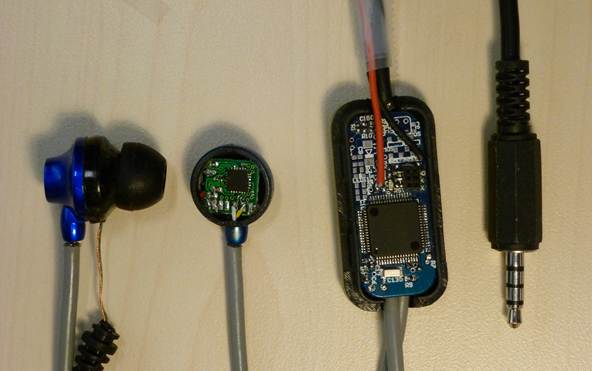
microsoft_septimu_earphonesAs part of a recent research project, Microsoft has incorporated health and fitness monitoring into a pair of earphones.

One application being developed for the hardware platform named Septimu, is a smartphone app called Musical Heart. The app enables Septimu to generate tunes based on a person’s mood or activity. So for example, fitness enthusiasts who want to keep the heart rate high can use Musical Heart to automatically up the tempo, helping them keep up the pace. Or for those feeling stressed or angry, Musical Heart could select something more soothing to help bring the heart rate and breathing down to a more relaxed level. Reported in PSFK

A timely study published online last week in Proceedings of the National Academy of Sciences, demonstrated that ‘musical agency’ (i.e. music chosen by the study participants) greatly decreased perceived exertion during strenuous activity. (more…)

Relax, it’s (not) just a breathing monitor headset

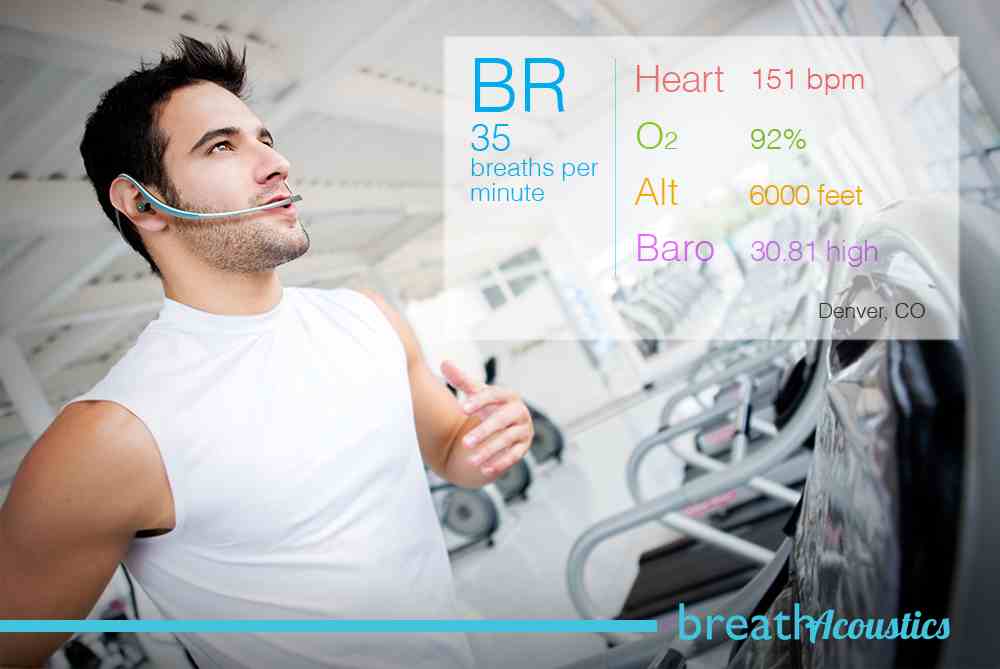
breath monitor treadmillA headset which monitors the quality of your breathing is being developed by BreathResearch, a San Francisco Bay area start-up.

Combined with a mobile app, the ‘Breath Acoustics’ headset listens to your breathing and analyzes the patterns. Sensor-based breath monitoring may be a less commonly monitored biometric pattern but recent studies suggest it could be used to detect stress levels, bacterial infections and other conditions. The headset also presents other biometric data, including heart rate, pulse oximetry, and respiration.  (more…)

First human to human brain control – yikes!

EEG TMS diagram2University of Washington researchers have performed what they believe is the first non-invasive human-to-human brain interface, with one researcher having used a brain signal to control the hand of a fellow researcher.

Rajesh Rao sent a brain signal to his colleague Andrea Stocco (who was on the other side of the university campus), causing Stocco’s finger to move on a keyboard – involuntarily! It’s pretty cool stuff and you can watch a video of it here.

“It was both exciting and eerie to watch an imagined action from my brain get translated into actual action by another brain,” Rao said. So how was it for Stocco? Maybe slightly less thrilling – he compared the feeling of his hand moving involuntarily to that of “a nervous tic”! (more…)

Smartwatches as the 2014 tablet, redux

Mobihealthnews does a very good roundup of smartwatchesboth familiar and not in this 10 page report. Most are in kickstarter mode, raising funds and some may never see daylight, but all a Pointer to the Near Future:  Pebble, AGENT, Kreyos Meteor (sounds like a sportscar), Sony Smartwatch, i’m Watch (from Italia), Motorola’s MotoActv, Androidly, Neptune Pine, the unfortunately named GEAK Watch, Toshiba, the Qualcomm Zola and the rumored Apple iWatch and Google Watch. If you want to watch smartwatches more, there is a website called The Smart Watch Review10 smartwatches that may take on fitness trackers

Previously in TTA: Smartwatches as the 2013-2014 tablet…and will they knock out fitness bands? at the end of the ‘Apple-ologist” article. A situation we spotted two weeks ago.

Useful 3D printer patterns?

3D printing is one of those technologies full of promise which has yet to prove that ubiquitous adoption is worthwhile. [Sound familiar?] The promise is that we will be able to download patterns for useful things and print them at home, saving the costs of mass production and distribution and, at the same time, enabling customisation for each user. One has the impression that most of the things produced so far have a toy-like quality but in the following item we see the green shoots of the promise becoming reality. Normal game controllers are too difficult for people with weak muscles to use and purpose-built light-touch ones are expensive, then along comes 3D printing and someone with the vision to use it to produce low cost controllers for people with muscle impairments. Building custom game controllers for the disabled (3ders.org) Hat tip to Nicholas Robinson.

Piezo-resistive fibers for continuous BP monitoring?

Switzerland-based company STBL Medical Research AG has developed a new ‘blood pressure watch’ that relies on a wristband made from piezo-resistive fibres. These fibres measure the contact pressure of the device on the skin to overcome the problem of the device slipping on the wrist or muscle tension that can affect the measurements. The device is currently undergoing clinical trials. Piezo-resistive fibers enable “blood pressure watch” with continuous monitoring Gizmag – note the comments too.

Microgripping and touching robots

Need that tissue sample, doctor? You may be laying aside your scalpel and forceps for a swarm of microgripping robots that you place and retrieve.  David H. Gracias, PhD. and his Johns Hopkins team has developed star-shaped nickel metal discs of only 300 micrometers in size which snip bits of tissue. Using a magnetic catheter, the microgrippers are then gathered and removed–hopefully. Gizmag; study in Gastroenterology.

Last week, the TakkTile, this week, piezotronic transistors. Thousands of them arrayed, and designed to give robots–and touchscreens–that extra and almost human edge in touch sensitivity. The transistors in thin, flat material can sense changes in their own polarity when pressure is applied due to their zinc oxide composition. Initial use will probably be in touchscreens, but the Georgia Tech project’s supporters–the Defense Advanced Research Projects Agency (DARPA), the National Science Foundation (NSF), the US Air Force (USAF), the Department of Energy (DOE), and the Knowledge Innovation Program of the Chinese Academy of Sciences–are also considering its use in prosthetic skin or limbs. Gizmag.

Curl me up

Phones have rung or buzzed since Alexander Graham Bell’s time. What if it simply…curled? That is perhaps the Phone In Your Pfuture, or something like the MorePhone. The prototype “can curl its entire body to indicate a call, or curl up to three individual corners to indicate a particular message” –phone, text or email. The thin, flexible electrophoretic display is manufactured by Plastic Logic, a UK company. Developed by a team from Queen’s University (Toronto, Canada) Human Media Lab, it will be presented at the ACM CHI 2013 (Computer-Human Interaction) conference in Paris this week. But don’t hold off on getting that Galaxy 4G…this is estimated to take another 5-10 years to market. The possibility of course is that some of its underlying technology and Plastic Logic display will find its way into other devices.  GizMag, Human Media Lab press release, main page with short video.