

CES Unveiled New York

11 November, New York

The annual event that is CES Unveiled in New York City is meant to be a nanoparticle-scale preview of International CES in Las Vegas, 6-9 January.  It’s a smörgåsbord of what used to be called ‘consumer electronics’ and now is all about innovation–a taste of everything from ever-smarter video and audio to sensors, smarter homes with IoT (the cutely named Internet of Things), Big Data, robotics and (drum roll) Digital Health and the Quantified Self (QS). This Editor regrettably missed the opening briefing by Shawn DuBravac, CEA’s Chief Economist and Senior Director of Research which would likely touch on his areas of the innovation economy and disruption along with the other four 2015 trends to watch: big data analytics, immersive entertainment content, robotics and digital health. (CEA helpfully provides the 30-page white paper here.)

The exhibitors at the Metropolitan Pavilion did not fully represent the trends, however. (more…)
Hospitals snooping on your shopping and eating

[grow_thumb image=”https://telecareaware.com/wp-content/uploads/2014/10/Doctor-Big-Brother.jpg” thumb_width=”150″ /]Another charming use for Big Bad Data. Hospitals are investigating whether available data on patients–prospective and current–on shopping patterns and other purchase behavior such as gym memberships can be used to predict patient risk of disease. Leading the way is Carolinas HealthCare System, which operates the largest group of medical centers in North and South Carolina. With more than 900 care centers including nursing homes, they have 2 million patients to analyze for risk, using data points such as purchases a patient has made using a credit card or store loyalty card, to create predictive models on patient risk and eventually to reach out to patients. Of course this data crunching  has a purpose, and that is to meet quality metrics imposed by HHS and CMS. The goal would be to change the risk curve (more…)

IBM Watson decision tools expand, lands at NYC HQ

Confirming that New York metro’s once-devastated (post-dot.com bust) ‘Silicon Alley’ is increasingly attractive to healthcare and tech firms, IBM this past Monday opened its new NYC downtown headquarters at Astor Place for the IBM Watson Group. Our readers have been following the development of Watson in the healthcare decision-making process since 2012 [TTA’s article index here], primarily in oncology (breast and lung cancer), in the UK (via the RSM’s 5 June ‘Big Data’ conference) as well as the US. IBM Watson has smartly created Ecosystem Partners where third parties integrate Watson. The spread is fairly wide: travel (your Editor’s former industry), retail, veterinary care, IT security and support, cognitive computing and of course healthcare. Spotlighted were three companies: @PointofCare, Welltok and GenieMD. (more…)

Big Data – Royal Society of Medicine 5th June

Finding the needles in an ever bigger health information haystack – that’s what the latest RSM conference on 5th June is all about.

There is now a mass of data in the NHS accumulated over the past 60 years about health, its delivery, and increasingly about the individual characteristics, personal health and genetic data of individual and massed patients. The novelty is that this data can now be linked up with data from ever more disparate sources to give answers to questions that only yesterday we could barely conceive.

We have access to a vast data volume, faster, and in increasingly varied ways. We have more papers about how to manage it and more tools. Where are the experts? We have moved rapidly from bytes to gigabytes, and now Petabytes (and soon evenbiggerbytes) of data held by health systems about people.

But how can we use this data rationally? How can Big Data analytics help? (more…)

Big data and mHealth combine to track & test ‘flu (UK event)

What looks to be a really fascinating event is being held on Thursday 26th  June 2014 in The Council Room, The Institute of Materials, 1 Carlton House  Terrace, London SW1Y 5DB entitled “New Frontiers in Digital  Technologies for Influenza:  Big data and Mobile-­‐Phone  Connected Diagnostic Tests“. Entry is £70 for delegates, less for students.

This event brings together leading experts in the field of big data and mobile diagnostics to discuss the latest technologies to track and test influenza. This includes recent developments in mobile connected tests such as microfluidic chips, advanced nano materials and optics and surface-acoustic wave devices and the use of online sources (e.g. Google search engine queries, Twitter) to identify disease outbreaks much earlier than current healthcare systems.

Pandemic influenza is rated as one of the top threats to global health on the UK Government National Risk Register. Early detection and vigilant monitoring of serious flu epidemics is crucial to controlling outbreaks and supporting effective follow-up care. Researchers across the globe have turned to innovative digital technologies to address this global challenge. A successful early warning system using big data and mobile-phone connected tests could predict a pandemic even before people attend clinics or in parts of the world that lack the resources for traditional public health surveillance.

Picture murky: 23andMe and the FDA

Genetic testing company 23andMe seems to be in no rush to resolve its differences with the FDA, and the digitalhealtherati a/k/a D3H (Digital Health Hypester Horde) are wondering why. In late November, 23andMe executives undoubtedly had a depressing Thanksgiving when the FDA ordered them to stop providing health reports (interpretation of genetic results) and marketing kits. Four months later, 23andMe continues to sell its kits for $99, providing only raw genetic data and ancestry reports–and according to its 31 March blog posting, will do so for the foreseeable future as they complete the regulatory review process. The blog quoted CEO and co-founder Anne Wojcicki, “My main priority is resolution with the FDA,” but actions speak louder than words–and the FDA isn’t talking. The FDA standard is still validation–the company has to analytically and clinically validate 23andMe for its intended uses, which is why the FDA took action against them in the first place.

  • Is the lack of urgency more about continuing to gather raw genetic and health data unimpeded? Ms Wojcicki had widely stated her real aim was to build a 25-million-strong database (Fast Company).
  • Is the real revenue stream of the company not the kits but in monetizing a massive database, selling it to researchers and others (Matthew Herper in Forbes)–the Google model which Ms Wojcicki is quite familiar with? Consider that there’s $126 million into the company, that is a lot of $99 kits.

Most companies in this situation would be imploding. This one is not. Interestingly. FierceMedicalDevices, The Verge

Previously in TTA: all you ever wanted to know about the 23andMe kerfuffle in FDA tells 23andMe genomic test to stop marketing (including this Editor’s analysis of their pre-FDA website with copy breathlessly expressing potentially life-saving or critical lifestyle changing claims, countered by legal ‘educational use’ boilerplate) and The inevitable: class action lawsuit against 23andMe (a check of the Ankcorn blog has no updates)

Recent Developments in Digital Health – RSM conference summary

Editor Charles summarises the one day conference at the Royal Society of Medicine on 27th February

This was the first  conference in 2014 organised by the Royal Society of Medicine’s Telemedicine & eHealth Section.  The day began with one of Dr Kevin Doughty’s excellent presentations on telecare. Kevin is Deputy Director of CUHTec. One key message was that the oldest people in society – those most in need of support to remain in the community – were best communicated with using televisions.  In response to this requirement he particularly picked out the Speakset set-top box as a low cost, easy-to-use add-on to make any television into a videoconferencing unit.

This was followed by an excellent summary by Julie Bretland, Director, OurMobileHealth, on the maturity of the use of mobile apps, in particular the need for good curation. (This subject will be explored in much greater detail in the RSM’s 10th April apps event, where there are still just a few places left.)

Next came (more…)

DARPA’s $45million program to mine health data

The Defense Advanced Research Projects Agency (DARPA) has just announced they are soliciting research proposals for a data mining/bioinformatics program to research the biology of cancer and signal pathways for cancer cells.

The anticipated budget for the “Big Mechanism” program is $45M over 42 months. The idea is to mine through worldwide scientific research on cancer, in order to find patterns within that mass of information which can be meaningfully interpreted. By the final 12 months of the project, mechanism developers should be able to identify targets for therapy based on their findings from the data.

The full text of the announcement tells us that although the domain of the Big Mechanisms program is cancer biology and systems biology, the goal of the program is to develop the capacity to integrate data/research more generally – more or less immediately – automatically or semi-automatically – into causal, explanatory models.

Read more: Military Times

Royal Society of Medicine events that should appeal

This year the RSM kicks off with Recent developments in digital health on 27th February, in association with the Royal Academy of Engineering. This event aims to update attendees on all the latest advances in the field of digital health that will affect care delivery. Perhaps the highlight of the day will be the demonstration of a smartphone that, on its own, can measure a person’s systolic and diastolic blood pressures, pulse, blood oxygen saturation, respiration and temperature – as this is a facility that will appear on the next generation of smartphones, the discussion on how app developers and the medical profession will respond will be particularly interesting. In addition there will be presentations by leading thinkers in the field on topics like big data, mHealth, medical apps, point-of-care-testing, genomic technology, evidence gathering and NHS England’s digital priorities.

Another event, that sold out early last year, is our medical apps day, this year on 10th April, entitled  (more…)

IMS Health enters health app ranking, prescribing

Global healthcare informatics provider IMS Health during mHealth Summit announced its entry into mHealth prescribing and evaluation with AppScript. They also are getting into the development standards business with AppNucleus, a hosting platform that from the description, will guide developers in designing secure, HIPAA and HITECH Act compliant apps using IMS Health information and data analytics. AppScript uses a proprietary methodology called AppScore to classify and evaluate apps based on functionality, peer and patient reviews, certifications, and their potential to improve outcomes and lower the cost of care. According to Information Week Healthcare, AppScore includes 25 criteria developed by IMS and its physician advisors (more…)

Turn up, tune in but don’t drop out with health monitoring earphones

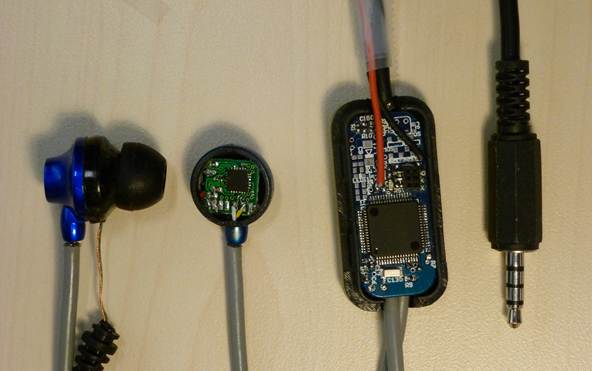
microsoft_septimu_earphonesAs part of a recent research project, Microsoft has incorporated health and fitness monitoring into a pair of earphones.

One application being developed for the hardware platform named Septimu, is a smartphone app called Musical Heart. The app enables Septimu to generate tunes based on a person’s mood or activity. So for example, fitness enthusiasts who want to keep the heart rate high can use Musical Heart to automatically up the tempo, helping them keep up the pace. Or for those feeling stressed or angry, Musical Heart could select something more soothing to help bring the heart rate and breathing down to a more relaxed level. Reported in PSFK

A timely study published online last week in Proceedings of the National Academy of Sciences, demonstrated that ‘musical agency’ (i.e. music chosen by the study participants) greatly decreased perceived exertion during strenuous activity. (more…)

Big data in heart failure detection gets $2 million grant

One part of the US government that hasn’t gone silent is the National Institutes of Health (NIH) which announced yesterday a $2 million research grant to IBM, Sutter Health and Geisinger Health System to jointly develop data analytics tools to help primary care physicians detect heart failure sooner. This will analyze EHR data to determine the patterns that may be indicative of a person at high risk–and investigate more effective early intervention. Big data sets sights on heart disease (HealthcareITNews)

From ‘Big Data’ to Collective Wisdom – SIHI conference report

This year’s Southern Institute for Health Informatics (SIHI) conference, in Portsmouth on September 11th, was a hugely impressive event featuring a well-chosen array of excellent speakers. As one who has often struggled to get excited about the finer points of coding, this was a revelation: I was converted.

Just what can be achieved in the NHS when technology, culture and organisation are in harmony was breathtaking (more…)

Big data in healthcare’s Tower of Babel: interview with Eric Topol

A short interview in iHealthBeat with Eric Topol, MD, Lydon Newmann of Impact Advisors and Lee Pierce from Intermountain Healthcare shows the bright side of business intel/’big data’. All that structured and unstructured data collected on individuals can be put to good use by data warehousing and analysis–a success story is Intermountain’s reduction of induced births from 30 percent to 5 percent. Yet the wins outlined are single system. Eric Topol agrees with this Editor that “The problem that exists is they lack any ability to transfer information from one to the next. There’s no interoperability. So we have a Tower of Babel.” Audio (and a dissenting comment) here, PDF transcript here.

Snowden and digital health – the FT finds a worrying connection

The FT’s excellent journalist Gillian Tett has written a thought-provoking article on how increasing privacy concerns brought about by recent cyber surveillance revelations are threatening the ability to use ‘big data’ to connect specific genomic features with individual health conditions.  This in turn is threatening the ability to find and improve treatments and cures for many ailments.  All is not lost though; she describes a number of possible solutions, most notably a “people’s movement”.

Well worth a read even though it fits more under a wider definition of Digital Health than is conventional on TTA.
