TTA’s Royal Visit Week: OpenEvidence goes dark in UK & EU, UK Biobank and Medtronic hacked, RapidSOS’s well-done docu-video, ‘fetching’ fundings, more!


Friday, 1 May 2026

This week saw King Charles III and Queen Camilla on our shores, from Washington to NYC to Virginia, before flying off to (hopefully) warmer Bermuda. Perhaps the pomp made for a quieter healthcare week. Perhaps the three most important stories were almost lost in the circumstance. “IT” clinical info app OpenEvidence stumbled over compliance with the EU AI Act–and chose to go dark in UK and EU. 500K UK Biobank records were hacked–by trusted Chinese researchers. Medtronic had what they depicted as a not-terribly-consequential breach of their corporate IT systems–we’ll see. A well-done docu-video on what happens when you call 911–and emergency services. Some fundings that ‘fetch’. And more!

Please feel free to comment on the articles and pass along this Alert. Let me know if this is worth it to you!

A quickie news roundup: ChatGPT for Clinicians unveiled, UHG to invest $1.5B in AI, Aidoc raises $150M, TriFetch raises $1.9M pre-seed, Boehringer Ingelheim & Eko Health partner on canine heart murmur detection

Breaking: OpenEvidence app access terminated in the UK and EU

(Updated) Medtronic reports corporate IT systems cyberattacked. 500K UK Biobank records breached in inside job. Are med device and research organizations the new hacker happy hunting ground?

‘Behind the Emergency’–a well-done presentation about and approach to a specialized healthcare market

Last Week

Weekend Must Read: The 10 point pattern of failure of healthcare tech companies

News roundup: (breaking) IKS Health finalizes TruBridge buy, Hims shares rise on independent Rx fills, Cala Health scores $50M, Joyful Health $22M, Tava Health $40M, actor Jeremy Renner partners with RapidSOS

Even famous doctors have their identity stolen: Dr. Eric Topol “authors” an apparently fake, AI-generated paper (This Editor’s investigation)

Teleprescriber Zealthy–and CEO Kyle Robertson–accused of asset fraud; DOJ moves to freeze assets and put company in receivership

Chutes & Ladders: Vendor protest filed against VA-OIT, Teladoc stock touted as ‘best buy’, Treehub ‘founder residency’ launches, AcuityMD raises $80M to near-$1B valuation

29th ISfTeH International Conference announced for 11-13 November in Germany–submit your proposal now!

Perspectives: What Healthcare Can Learn from Formula One About AI

 * * *
Advertise on Telehealth and Telecare Aware
Support not only a publication but also a well-informed international community.

Contact Editor Donna for more information.

Help Spread the News

Please tell your colleagues about this free news service and, if you have relevant information to share with the rest of the world, please let me know!

Donna Cusano, Editor In Chief
donna.cusano@telecareaware.com

Telehealth & Telecare Aware – covering news on latest developments in telecare, telehealth and eHealth, worldwide.

‘Behind the Emergency’–a well-done presentation about and approach to a specialized healthcare market

This is a follow up–and a short review–of last week’s mention of RapidSOS’s premiere of their ‘Behind the Emergency’ video. Your Editor viewed this today, along with most of the panel discussion following, which was aired as part of RapidSOS’ Innovation Day in Reno, Nevada. I have an interest in emergency services and first responders, having delved into their complex world during my time as the marketing director of the (now-defunct) Viterion Digital Health, and with a friend who is former EMS. Otherwise, I have zero connection to RapidSOS.

Being the cynical marketer and writer I am, I expected something more salesy, more commercial, more pitchy. This mercifully was not. It was informative. It used actor and endorser Jeremy Renner, plus testimonies from emergency service dispatchers and first responders, in a professional, low-key, and semi-documentary fashion. It was a video with real production values, increasingly a rarity. Not selling their AI assisted platform–the name wasn’t even mentioned–but in the circumstances of what public safety is, the people, what they do, and what they face, such as responding to emergencies in the rural backcountry of Nevada. Time is everything. It was about the problems they face and what emergency services need to be more effective. 

Why Mr. Renner? He was in a horrible accident in a snowcat three years in that backcountry, and became interested in emergency response as a result. While the benefit was clear–tech cuts the time for 911 public safety centers’ dispatchers and responders to coordinate multiple resources needed to respond to a call, and RapidSOS has the AI tech to connect the pieces more seamlessly and faster–it didn’t bang you over the head with The Brand or The Product even at the end. It may have been a 12 minute commercial, but it was a damn good one and a rare one today. You can view it here.

I also stuck around for part of the live panel that was with the CEO, Reno’s mayor Hillary Scheive, Reno’s director of public safety Cody Shadle, retired firefighter and founder of eFireX Jesse Corletto, and chaired by a company executive whose name I did not catch. It was again about the emergencies they typically face in both the city, the pressure on dispatchers in handling multiple situations, and more rural environments in Washoe County and how coordinating their resources over a large area is a huge challenge. Every connection made better saves time and is “good AI”. Drones, for instance, can get to a scene faster and feed data back to dispatchers as they coordinate, and responders as they are arriving.

A company that is beneficially using AI for the public, and an interesting, low-key exposition on how one company is integrating it into its services.

Editor’s note 1 May: Of interest to marketers re strategy is that the preview clip (on the website) is also being run as a RapidSOS commercial on streaming service Pluto. The spot closes with the logo and a link on a black screen. I suspect there are buys elsewhere.

News roundup: (breaking) IKS Health finalizes TruBridge buy, Hims shares rise on independent Rx fills, Cala Health scores $50M, Joyful Health $22M, Tava Health $40M, actor Jeremy Renner partners with RapidSOS

Breaking: IKS Health finalized their acquisition agreement with TruBridge, Inc. Today’s (23 Apr) announcement did not contain an acquisition price, but IKS is offering shareholders $26.25 per share, a small premium above today’s close at $25.27. Both are revenue cycle management (RCM) companies and will strengthen capabilities in the rural and community hospital markets. Since TruBridge is publicly traded on Nasdaq with 14.91 million shares outstanding, the deal is a minimum of $391.4 million, considerably less than the rumored $675 million [TTA 15 Apr]. TruBridge’s largest shareholders (27%) have agreed to terms, but it is subject to the usual regulatory reviews with an expected closing in Q3. Otherwise, the press release is short on details, but IKS will finance the TruBridge buy with debt financed by Citibank, JP Morgan Chase, and Deutsche Bank.

The unstoppable Hims & Hers notches another rise with wider GLP-1 med access. Hims announced a deal with Eli Lilly to fulfill Zepbound prescriptions via Lilly Direct. It also permits its providers to prescribe medications that are fulfilled by independent pharmacies, which essentially opens Hims up to all GLP-1 drugs, with restrictions of course.

Once largely wedded to compounded weight loss drugs, to the point of running commercials on 2025’s Super Bowl that their obesity drugs are priced “for profits, not patients”, Hims & Hers has flipped the script in less than a year to be the online prescriber of nearly all brand name weight loss drugs. This started about five months after the Super Bowl when FDA finalized the ban on compounding those drugs. Pretty soon Hims was inking deals, starting with Novo Nordisk in May 2025 to prescribe Wegovy and fulfill through NovoCare Pharmacy. In March, they settled their long-running legal tiff with Novo when they agreed to drop their just-debuted compounded pill to sell Novo’s Wegovy and Ozempic in both pill and injectable versions.  (The newest Lilly weight loss med, Foundayo, is only available DTC from them and commercial insurance/cash pay only.) Hims is up to $28/share. Sherwood News

News of raises for some interesting companies came thick and fast the latter part of the week

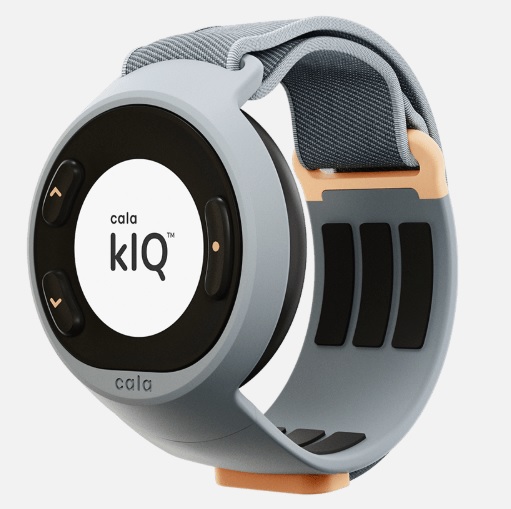
Wearable neuromodulator developer Cala Health gained $50 million in an unlettered raise. Unusually, it had a sole funder, Trinity Capital. Cala has developed the only FDA-cleared 510(k) wearable for action hand tremor in people with essential tremor and Parkinson’s disease. The funding will be used to scale commercial distribution and product development. The kIQ device uses transcutaneous afferent patterned stimulation (TAPS), which reduces hand tremors by measuring a patient’s tremor pattern and delivering individualized nerve stimulation. Prior rounds were in 2024 ($50 million), $77 million in 2021, and a $55 million Series B in 2019. Trinity Capital release, Mobihealthnews

Joyful Health, a financial operating system for providers, raised a $17 million Series A for a total of $22 million. It is designed as a claims denial intelligence and recovery infrastructure to work within an existing revenue cycle management system and connect claims data. The round was led by CRV with participation from seed investors XYZ Venture Capital, Designer Fund, Inflect Capital (the healthcare investment arm of Vituity, the largest physician-owned partnership in the United States), and Go Global Ventures (led by Commure founder Diede van Lamoen). Providers lose over $125 billion annually in lost revenue from unpaid or denied claims.  Joyful Health blog, Yahoo Finance

Back in the popular stomping grounds of telemental health, Tava Health raised a $40 million Series C. Tava, based in Salt Lake City, markets a  behavioral health platform to providers, employers, and health plans. It also announced three new products: Symphony for providers, TavaCare for the employer market, and Tava Guide for health plans, health systems, and care coordinators. Approximately 5,000 mental health providers are a part of the Tava Health network. Investors were led by Centana Growth Partners with participation from Catalyst Investors, Blue Heron Ventures, Peterson Ventures, and Springtide Ventures. Tava has raised $73 million since 2020 with its last raise in 2024. Yahoo Finance (release), Behavioral Health Business, Mobihealthnews

And an interesting partnership

Popular actor Jeremy Renner is partnering with public safety and first responder platform RapidSOS NYC (!)-based RapidSOS originally specialized in the technical aspects of public 911 systems and then developed integrations to link data from over 350 million connected devices, apps, and sensors directly to 911 centers and first responders. Increasingly, these integrations are AI-powered and even incorporate drones. Mr. Renner relates very well to first responders, having his own near-death experience on New Year’s Day 2023 where his snowcat machine rolled over and crushed him, breaking 38 bones along with blunt chest trauma. He is the focus of a 30-second documentary leading up to next Wednesday’s (29 April) premiere of Behind the Emergency. He is not only helping to tell their development story from his experience, but also as a partner plus investor. Mobihealthnews 

Funding roundup: new unicorn Capsule’s $300M, $100M for Caresyntax, Sesame Care’s $24M, UCM Digital Care’s $5M; MD Ally brings telehealth to 911

This week’s (so far) Big Raise is virtual pharmacy Capsule. Their new funding of $300 million, added to a previous $270 million in five rounds through a 2019 Series C (Crunchbase), now, according to CEO Eric Kinariwala, puts his company into $1 bn unicorn territory. Founded in New York City in 2015, Capsule now covers the NY metro plus a dozen markets in same-day delivery plus the option for pharmacist chat/text via mobile phone. Their goal is to reach 100 million people nationally by the end of this year. The fresh funding will be used for expansion and to upgrade technology. Durable Capital Partners led the funding round and was joined by new investors Baillie Gifford, T Rowe Price, and Whale Rock.

Capsule is in a hot niche sector of fast prescription delivery that has players large (CVS, Walgreens’ AllianceRx), Amazon (PillPack, Amazon Pharmacy), and smaller or local services like Blink Health, FetchMyRx, Medly, and your local pharmacy. Uber is also partnering with some for delivery. Earlier this year, Capsule partnered with Ginger to fill and deliver medications prescribed by their board-certified psychiatrists in metro New York City, Chicago, Minneapolis, Boston, and Austin. FierceHealthcare, Mobihealthnews, Bloomberg (may be paywalled)

Mobihealthnews also rounded up three additional digital health fundings from the seed to Series C range:

  • Surgery data/AI plus virtual consult platform Caresyntax, closed a $100 million Series C funding round led by PFM Health Sciences LP. Release.
  • NYC-area direct-pay healthcare marketplace Sesame Care added a $24 million Series B, for a total of $47.6 million to date (Crunchbase). Sesame offers in-person and telehealth care to patients, allowing them to compare prices and providers before booking and paying the provider directly. 
  • UCM Digital Health, a provider of emergency telemedicine and virtual health, announced today it closed a $5.5 million Series A funding round. Armory Square Ventures led the round with additional participation from Contour Ventures and River Park Ventures. Based in Troy, NY, UCM has a “digital front door” platform with a 24/7 telehealth treat, triage and navigation service marketed to employers, insurers, and providers. Release
  • Last but certainly not least, MD Ally added a modest $3.5 million in a seed round led by General Catalyst with participation from Seae Ventures. MD Ally triages 911 emergency services calls, rerouting non-emergency calls to telehealth services and expanding their scope of services. It integrates into existing dispatch systems with a unique range of codes that confirm for the dispatcher that the call can be safely routed to a telehealth provider. TechCrunch, release