Short takes: Will there be an Amazon Clinic?, Transcarent and Teladoc, perfect together?, Get Well partners with Palomar Health, expands with Veterans Health Administration

Did Amazon prematurely leak an initiative? Or was it an error? The Verge reports that a video was uploaded to Amazon’s YouTube page on Tuesday–then taken down–describing a new service that would offer assessment, diagnosis, and treatment of common conditions such as allergies. The Amazon Clinic video depicts a user taking an online questionnaire about their symptoms, After paying a fee, a clinician reviews it, diagnoses, and prescribes as needed, sending to the patient’s pharmacy. The disclaimer: “Telehealth services are offered by third-party healthcare provider groups.” The video directs to amazon.com/clinic which is not live. Another Amazon Mystery. Amazon Care is shuttering and the company is jumping through Federal hoops to get approval to close their buy on OneMedical. Hat tip to HISTalk today.

HISTalk also pointed to a Forbes article on health navigator companies such as Castlight and Firefly Health, with a bit of a ‘sting’ at the end. Transcarent, a health navigator that takes on risk integrating its services into employee benefits, is the latest enterprise founded by Glen Tullman, a serial entrepreneur who founded Livongo, investor group 7Wire Ventures, and built up Allscripts as CEO. The writer speculates that Tullman should buy Teladoc to give Transcarent a distribution system–a built-in network of physicians and health system relationships. Yes, this is the same Teladoc that Tullman sold Livongo to for a tidy $18.5 billion, then earlier this year wrote off $6.6 billion as an impairment. This one drips with irony. With its stock down nearly 90% from its January 2021 high, it’s never been cheaper!

Get Well, an RPM, patient care management, and workflow automation company, announced new and expanding partnerships. The new one is with Palomar Health, a health system in Escondido, California. This will implement Get Well services in four phases in five areas to improve patient experience: digital care management (GetWellLoop), inpatient experience (Get Well Navigator and a workflow automation for hospital staff), emergency department experience, care gap closure, and health equity through additional features. Becker’s  The second is an expansion with the Veterans Health Administration (VHA) into 70 Veterans Affairs Medical Centers (VAMC) and a fifth Veterans Integrated Service Network (VISN) with nine facilities. They also now have a FedRAMP “In Process” designation for cloud services which is enabling expansion of GetWellLoop care plans with a VAMC. Release (Business Wire)

Figuring out the future for health tech after 2022’s realignments: new SVB study

As Readers who subscribe to our Saturday Alerts (repeated on Wednesday) have seen, this Editor has dubbed this season Realignment Autumn. From the fever pitch of funding, hiring, inflated valuations, SPAC funny money, and unrealistic expectations that started in 2020 and peaked in 2021, we in the industry are now fretting that we can’t get back to 2019 or 2020. Part of the new reality is that telehealth and health tech are far beyond that point in tech integration, ease of use, and takeup by enterprises, but has entered an uncertain business period more than a bit overextended and overexpecting. Unprofitable lines and side businesses, however promising, are being dropped or sold. Talented people who helped to start them are gone. The trend toward consolidation, which started last year, is accelerating.

For a more financial and data-oriented view, Silicon Valley Bank’s latest, “The Future of Healthtech 2022”, does not disappoint. This is a far deeper dive than served up by Rock Health, StartUp Health, and (unless you are a subscriber) CB Insights. This is a US and EU (including UK) view of how investment patterns have shifted, and a look at where investment may be going next year.

So far in 2022 they have seen:

  • Lower valuations and plummeting share value of public companies
  • A shift from ‘growth at all costs’ to a clear value proposition and creation: improving health outcomes, access or affordability.
  • Investments are more modest and at earlier stages–no more blockbuster Series Ds and Es (40% decline in mega-rounds of $100 million+)
  • No IPOs so far
  • Only 18 unicorns formed this year
  • M&A still rising at the right price
  • Companies have to deliver measurable value to continue driving innovation

Through 30 September, SVB tracked investment at $23 billion. Where it’s going:

  1. Provider operations: $7.0 billion–defined as technology that improves efficiency and accuracy of provider-provider, provider-patient interactions
  2. Clinical trial enablement: $6.8 billion
  3. Alternative Care (includes telehealth and mental health): $5.6 billion
  4. Wellness and education: $1.3 billion
  5. Healthcare navigation: $1.3 billion
  6. Medication management: $833 million
  7. Insurance: $117 million

Sections drill down on these sectors and subsectors such as mental health and women’s health, including an analysis of female-founded health tech companies, investors by sector, and a historical view of unicorns. Grab a cuppa and take your time with this one!

Oracle proceeds with $7B bond sale to restructure debt funding Cerner buy

As expected at end of October, Oracle is refinancing debt incurred to acquire Cerner. Bloomberg reported the bond sale is in as many as four parts. “The longest portion of the offering, a 30-year note, yields 2.55 percentage points above Treasuries after earlier discussions of about 3.1 percentage points, said the person, who asked not to be identified as the details are private.” The bridge loan (revised) of $11 billion was further reduced by $1.3 billion. Citigroup Inc., Bank of America Corp., Goldman Sachs Group Inc., HSBC Holdings Plc, and JPMorgan Chase & Co. are managing the bond sale.

Oracle has one of the highest debt loads in tech, exceeding $90 billion. Fitch Ratings has downloaded their bond rating from BBB+ to BBB overall, the next to lowest investment grade rating. The new notes were rated BBB by Fitch and S&P Global Ratings. An investment company queried by Bloomberg noted that as recently as 2020, Oracle’s debt was rated high A. Also Becker’s.

News roundup: cybersecurity benchmarking study, Tyto Care’s Home Smart Clinic, Long Island’s $2.6B life sciences hub, Singapore’s Speedoc raises $28M, NantHealth’s sinking feeling, Hims & Hers revenue up 95%

Censinet, the American Hospital Association (AHA), and KLAS Research announced at industry confab CHIME22 Fall Forum a benchmarking study on health system cybersecurity. The study, currently enrolling hospital and health system participants, according to the release will enable a comparison of cybersecurity investments, resources, performance, and maturity to peer organizations across key operational cyber metrics. It will also cover NIST Cybersecurity Framework (NIST CSF) and Health Industry Cybersecurity Practices (HICP). Censinet provides healthcare risk management solutions, consolidating enterprise risk management and operations capabilities. Hat tip to HISTalk 9 Nov.

TytoCare’s latest is the rollout of the Home Smart Clinic, a platform that combines TytoCare’s FDA-cleared handheld for remote physical exams; Tyto Insights, their AI-powered diagnostic support that aids diagnosis in remote physical exams; Tyto Engagement Labs, a suite of user engagement services including behavioral science-backed blueprints, consulting services, and marketing tailored to each specific program and cohort; and support for multiple provider models and different patient populations. The new platform is targeted to health plans and providers. Release (Yahoo)

Long Island NY’s proposed Midway Crossing project, creating a life sciences hub in quaintly named Ronkonkoma, would cost about $2.55 billion, but create an estimated 4,300 science, technology, engineering, and healthcare positions. They’d also be lucrative, with salaries mostly well over $100,000 a year. The proposal was authored (sic) by Michael Dowling, president of Northwell Health, and James Hayward, PhD, president and CEO of Applied DNA Sciences, and appeared in Newsday (paywalled). Its 179 acres would include a STEM educational center, research labs, biotech manufacturing facilities, health care offices, a hotel and convention center plus connect to the LIRR and Long Island-MacArthur airport. While approved by local authorities, it now needs funding. Becker’s

Traveling to the far Pacific…Speedoc, a home health company based in Singapore, raised $28 million. Speedoc offers app-based video consults and home visits, non-emergency ambulance transport, and remote monitoring for several chronic conditions. It is available in nine cities in Singapore and Malaysia. According to Mobihealthnews, it is also one of the technology partners for the two-year pilot of the Mobile Inpatient Care@Home initiative by the Ministry of Health’s Office for Healthcare Transformation. The pre-Series B funding round was led by its new investors Bertelsmann Investments, Shinhan Venture investment, and Mars Growth. Vertex Ventures Southeast Asia & India, which led its $5 million Series A funding round in 2020, also participated. 

Our Readers with very long memories will remember that transformative health darling, NantHealth. This Patrick Soon-Shiong NantWorks company, originally in genetic sequencing for cancer research, was caught en flagrante in a ‘pay to play’ scheme with the University of Utah funding NantHealth and providing data that would prove useful to other Soon-Shiong companies [TTA 18 April 2017]. It’s long since pivoted to payer/provider data solutions (NaviNet). What’s not improved is their bottom line. It lost $13.7 million, or $0.12 cents per share, increasing loss by 26% from 3Q 2021. Shares on NasdaqGS are trading at $0.31. Yahoo!Finance/SimplyWallSt. Another tip of the cap to HISTalk 9 Nov.

And who said all of telehealth is suffering? Online direct-to-consumer marketer Hims & Hers posted a third consecutive $100 million+ quarter in revenue. Their Q3 revenue was up 95% versus Q3 last year, reaching $144.8 million. They also gained 70,000 new online subscribers for a total of 991,000, up 80% year over year. Q4 guidance is up to $159 million to $162 million, with a full-year revenue forecast of $519 million to $522 million. And yes–they’re profitable. Their embarrassing TV spots notwithstanding, they seem to have found The Magic Formula. FierceHealthcare

TEC Cymru launches telecare programme strategy for Wales to complete digital transition by 2025

TEC Cymru, Wales’ national platform to use, scale up, and spread technology-enabled healthcare across health and care, has launched its new Telecare Programme Strategy to guide digital migration changes over the next 18 months for the December 2025 digital telecom deadline. 

The strategy document, published today (9 Nov) outlines action to support Welsh ARCs (Alarm Receiving Centres) with digital migration over the next 18 months, working with NHS and social care entities. The goals are:

  • Ensure telecare services in Wales are fully ‘digitally enabled’ comfortably ahead of the 2025 deadline
  • Shift the narrative from reactive to proactive care through common data standards and interoperable protocols allowing for greater
    opportunities for widespread TEC adoption
  • Enable a culture of high performance and measurable outcomes on the importance of telecare in Wales to its citizens through producing consistent business intelligence data

Once this is accomplished, the next move will be to move forward with Next Generation Telecare and a workforce restructured to handle reactive and proactive alerts, supported by health and social care teams.

For migration, the test bed was The Vale of Glamorgan Council. They completed their upgrade to a SaaS-based digital ARC in six months, from January to July this year. Their summary report is here. TEC Cymru also provides a toolkit for pre-migration planning. More information on their website. Release (PDF).

VillageMD opens the Walgreens purse, set to buy Summit Health for $8.9B

Moving from rumor to deal in a New York Minute. Primary care provider VillageMD has moved to a definitive agreement to acquire specialty/urgent care provider Summit Medical in an $8.9 billion deal including debt. This was heavily rumored last week [TTA 1 Nov]

This will create a provider behemoth of 680 provider locations, 750 primary care providers, and 1,200 specialty care providers in 26 markets. The fun facts:

  • VillageMD has 342 total primary care clinics in 22 southern and northeastern markets covering 15 states, with 152 co-located with Walgreens; these will eventually increase to 200.
  • Summit Health has 370 locations in New York, New Jersey, Connecticut, Pennsylvania, and central Oregon. VillageMD and Summit do not overlap (except in NJ) on markets.  
  • VillageMD consists of primarily owned and affiliated primary care practices; Summit Health specialty practices (neurology, chiropractic, cardiology, orthopedics, dermatology) plus 150 CityMD urgent care locations.
  • VillageMD has successfully mastered value-based care models in Medicare and entered advanced Medicare ACO models early and vigorously (Editor’s information). Summit Health presently is primarily is fee-for-service with some participation in value-based programs.

The participation in this one is interesting: 

  • Walgreens Boots Alliance (WBA) will invest $3.5 billion through an even mix of debt and equity 
  • Cigna’s health services organization Evernorth will become a minority owner; the exact percentage is not disclosed at this point
  • It’s not disclosed at this time whether Summit Health’s current majority owner, Walburg Pincus, will retain an interest in the combined companies. 

WBA remains the largest and consolidating shareholder of VillageMD, but with this acquisition, reduces its ownership share from approximately 62-63% to 53%. WBA’s other US non-retail healthcare interests include specialty pharmacy company Shields Health Solutions and at-home care provider CareCentrix.

Based on their release, the acquisition is expected to close in January 2023, subject to the usual Hart-Scott-Rodino Act (HSR) premerger notification and report with the DOJ and the Federal Trade Commission (FTC) that initiates a 30-day waiting period.

Bet on VillageMD and Summit closing deeper into Q1–but closing. This Editor’s over/under is that this is overly optimistic given the current DOJ and FTC’s scrutiny and apparent dislike of healthcare acquisitions, even though the provider groups don’t overlap except in a minor way in NJ. But perhaps Amazon, with a healthcare footprint primarily in pharmacy and shuttering Amazon Care, thought OneMedical would move smartly. CVS thought the same with Signify Health, yet both are on information Second Requests that extend the waiting period. DOJ is after all smarting hard with a Federal District Court nixing their challenge of UHG’s Optum with Change Healthcare, but it’s hard to throw typical antitrust at this one.

Go big or go home, indeed.     Healthcare Dive, Becker’s

News roundup: WakeMed sued on Meta Pixel; Hint Health buys AeroDPC; Neurotrack’s $10M raise, 3 min. cognitive tool intro; layoffs dim Kry, Brightline

WakeMed has been caught up in the litigation surrounding Meta Pixel. The Raleigh, North Carolina area health system installed it on their MyChart patient portal and website, where it was in place for over four years sending information back to Facebook, violating patient privacy and open to unauthorized misuse. The class action lawsuit filed in NC states that it was installed in March 2018 and not removed until June 2022. PHI cited includes names and contact details; computer IP addresses; emergency contact information; check-in information, such as allergies and medications; appointment details; and, in some cases, Social Security numbers or financial information. Matthiae v. WakeMed Health and Hospitals (ClassAction.org), Becker’s.  TTA’s Meta Pixel articles

Two more acquisitions and fundings announced this week:

  • Hint Health is acquiring AeroDPC, an EHR and practice management software for direct primary care clinics. Purchase price was not disclosed. AeroDPC will operate as a subsidiary of Hint, with cofounder Dr. Brad Brown joining the combined company as medical director. Hint is a platform with a subscription-based payment model for primary care providers that bypasses health plans. It sets them up with enrollment, member management, billing, and administration.  Mobihealthnews   In June, Hint raised $45 million in a funding round led by Banneker Partners and Frist Cressey Ventures. Crunchbase, Mobihealthnews
  • Neurotrack, a startup focusing on developing digital cognitive tools, raised $10 million in new funding, adding to its 2019 $21 million Series C. Putting the raise to work right away, yesterday (1 Nov) it launched a three-minute digital assessment tool to screen for cognitive decline and impairment during the typical 40-minute wellness appointment. CMS guidelines require a cognitive assessment as part of a Medicare beneficiary’s annual wellness visit (AWV) enrolled in Part B or Medicare Advantage, yet only about 25% actually receive one.   Release, Mobihealthnews

Unfortunately, the layoffs do continue. From Layoffs.fyi which track them by industry:

  • Kry, known in the UK, US, and France as Livi, is having its second layoff of the year with 10% (about 300) of its workforce pinkslipped. Back in June, they released 100 employees [TTA 30 July]. While Dagens Nyheter reports that Kry is already profitable in Sweden, overall profitability is elusive. The goal is to achieve it in 18-24 months.
  • On Friday, pediatric virtual behavioral health startup Brightline laid off 20% of their workforce, citing realignment of strategic priorities. A number was not estimated. Brightline raised $115 million between March and July this year from 7Wire and Northwell Health, for a total of $212 million (Crunchbase) and, at that time, a valuation of $705 million. [TTA 1 April]. Brightline provides digital tools, coaches, live therapy sessions, psychiatric services, and medication support for children, teens, and families. Behavioral Health Business

News roundup UK, AU, NZ: BMA England’s concerns on digital medical records; Australia and NZ’s health connectivity initiatives advance

The British Medical Association (BMA) has expressed several concerns on NHS England’s ‘Data Saves Lives’ patient record access that is part of the NHS Long Term Plan and ‘Data Saves Lives’ Data Strategy. Data Saves Lives requires practices to offer, effective 1 November, patients aged 16+ access to their health records at their GP. Practices were notified back in April of the access available to them starting with care as of 1 November. The information includes consultations, documents (sent and received), problem headings, lab results, immunizations, and free text entries made by GPs plus secondary care, community services, and mental health services that go into the GP record. Patient access is currently working for practices with TPP and EMIS systems, with Cegedim (previously Vision) in progress.

The concerns in the BMA letter to GP practices center around protecting and redacting information from patients. This may sound contrary to the intent of Data Saves Lives, but in certain circumstances, such as risky situations with harm to the patient (example, a coercive situation or domestic violence) or to another individual. Practices are obligated to identify patients who could be at risk of serious harm.

The workaround identified is to add a specific SNOMED code to the patient’s full record before 1 November.  Practices will then need to 1) monitor if the patient requests access and 2) can schedule reviews on a case-by-case basis at a future date to identify if access can be provided. If third parties are mentioned without permission, this is also inappropriate to view and that information has to be redacted. 

The BMA also considered the Law of Unintended Consequences in these areas:

  • Specific consults can also be redacted, but there are clinical safety concerns that the current software apparently does not function well and hides too much.
  • Redaction does not remain in place following a GP2GP transfer
  • There has been no public campaign that warns patients that the NHS app now can become a portal to their detailed health records. Users have passwords saved in their smartphones, and their family members who know the patient’s phone PIN can have easy access to health records. 
  • Some practices may not be ready for opening their patient records
  • Workload will at least for a time increase

BMA letter to practices, HISTalk 28 Oct, GP practice letter from Dr Ursula Montgomery at NHS Digital

Take a look back at the convoluted history of Data Saves Lives going back to June 2021.

Forming a “centre of excellence” for Australian healthcare connectivity is the Australian Digital Health Agency (ADHA) and the Australian e-Health Research Centre under the Commonwealth Scientific and Industrial Research Organisation (CSIRO). Terminology and interoperability are central to connectivity and governance. A third agency, the National Clinical Terminology Service (NCTS), will provide terminology services and tools, including an online browser, a mapping and authoring platform, and CSIRO’s national syndication server Ontoserver. According to the release, “under the new partnership, ADHA will retain responsibility for governance and the strategic role of end-to-end management, SNOMED CT licensing and the relationship with SNOMED International, while CSIRO will deliver the services and functions required to manage the NCTS, as well as content authoring and tooling” over the next five years. Healthcare IT News

And over in New Zealand, Te Whatu Ora – Health New Zealand and Te Aka Whai Ora – Māori Health Authority have developed the 2022 interim national health plan. Te Pae Tata New Zealand Health Plan identifies greater use of digital services as part of their six critical areas. Actions to be taken in the NZ$600 million (US$400 million) data and digital budget include:

  • Create and implement actions to deliver national consistency in data and digital capability and solutions across Te Whatu Ora including streamlining duplicate legacy systems
  • Implement Hira, a user-friendly, integrated national electronic health record, to the agreed level
  • Scale and adapt population health digital services developed to support the COVID-19 response to serve other key population health priorities
  • Improve the interoperability of data and digital systems across the hospital network, and between primary, community and secondary care settings
  • Improve digital access to primary care as an option to improve access and choice, including virtual after-hours and telehealth, with a focus on rural areas

Healthcare IT News

J.P. Morgan forms life sciences/healthcare VC group; virtual care Ovatient formed by MUSC Health, MetroHealth; Oracle’s putting lots of KC office space on market

Some more good news in healthcare–maybe a bit of spring in autumn?

J.P. Morgan is setting up a new venture capital team to invest in life science healthcare companies. The new group, Life Sciences Private Capital, will sit within J.P. Morgan Private Capital. Investments will be in early and growth-stage companies developing novel therapeutics and technologies in several target areas including genetic medicine, oncology, neurodegenerative disease, rare diseases, autoimmunity, AI/ML platforms, metabolic diseases, and neuropsychology. Heading the group is Dr. Stephen Squinto as Chief Investment Officer and Managing Partner. He joins from OrbiMed Advisors, and previously co-founded and built numerous biotechnology companies including Alexion Pharmaceuticals plus being a scientific founder of Regeneron Pharmaceuticals. Also joining are Dr. Gaurav Gupta and  Anya Schiess with experience at OrbiMed and Healthy Ventures respectively, as well as a prestige group of advisors. JPM press release, Becker’s

The Medical University of South Carolina health system (MUSC Health) and The MetroHealth System (MetroHealth) are partnering in a joint venture for virtual and in-home care. From the press release, Ovatient is designed to improve the care experience by linking patients to the delivery of virtual and in-home care via a platform that connects to health systems and acute or procedural care, eliminating fragmented care experiences. The JV also intends to sell the platform to other providers. Other health systems are either joining forces with virtual care providers and AI platforms or forming their own, such as NYC’s Hospital for Special Surgery with their RightMove virtual MSK spinoff, and Northwell Health. MetroHealth release, Mobihealthnews

And if you’re a company looking for luxe office space, Oracle’s putting a lot of it on the market. Granted, it’s in Kansas City, but it’s two buildings: the former Cerner World Headquarters in North Kansas City and a separately located Realization Campus in KC. Current onsite employees will be consolidated at the fairly new Innovations Center in KC by 30 November, which has a substantial 2 million square feet of space. The health clinic part of WHQ will close as well, but not the data centers–at least for now. (A gargantuan task!) Both WHQ and Realization, according to the Oracle Cerner thread on Reddit, have been largely unused since 2020, the pandemic, and Cerner’s transition to a hybrid workforce. Cerner had from 2021 been reducing KC-area office space which had been funded locally by $170 million in sales tax and revenue bonds. The downside is once moved, how many will remain? Oracle reportedly has been considering $1 billion in cuts and is busily refinancing its debt incurred by the Cerner purchase [TTA 27 Oct]. Ridding itself of empty office space is actually a good start, versus cutting heads–a bad move as Oracle tries to save Cerner at the VA and MHS. HealthcareITNews, HISTalk, KSHB 41

A spooky ‘good news’ roundup: AtlantiCare rolling out Orbita AI, Health Wildcatters Pitch Day, RapidSOS, HealthJoy fundings and more

This Editor has noticed the gloomy tone of the past few weeks’ postings. She has decided to ‘accentuate the positive, eliminate the negative” (in Johnny Mercer’s words) using the last few hours of Halloween (boo!) with nothing but Good News.

A health system is actually implementing an AI platform! AtlantiCare, which is based in southern New Jersey, will be rolling out the Orbita virtual artificial intelligence platform across its system, which includes more than 100 locations across Southern New Jersey. Orbita’s capabilities can link patients with virtual assistants and AI to streamline routine tasks such as scheduling, patient reporting, medication adherence, and care management. It also recognizes and translates more than 100 languages. According to Becker’s, Orbita’s functions will be rolled out in stages with the digital ‘front door’ going live in September and patient outbound communication capabilities in 2023.

Dallas’ Health Wildcatters finishes up its 2022 cohort with an evening Pitch Day at their new HQ on Thursday 10 November. Their 11 startups will present starting at 4pm in two sessions. With two networking sessions, the festivities start at 3:30 and go to 8pm. Health Wildcatters has relocated to a 23 acre campus, Pegasus Park, targeted to entrepreneurs and startups in biotech and healthcare to encourage development and collaboration. More information and registration links

And fundings are actually happening–for companies with an established success story + track record–and those at a very early stage where there’s promise, the risk is shared, and the investment is modest. 

  • RapidSOS raised $75 million in a venture round. It developed an emergency response platform that provides first responders with real-time health and location data from connected devices, apps and sensors. It supports 5,200 Emergency Communications Centers, protecting 95%+ of people in the US, across 150 million emergencies annually. Night Dragon Security led 11 other investors. Funding to date is over $280 million.
  • HealthJoy, a digital employee benefits platform for healthcare, raised $60 million in Series D funding from nine investors led by Valspring Capital. Their app bundles telemedicine, wellness, dental, advocacy, medical bill review, EAP, prescription savings, behavioral health, price transparency, MSK, chronic care, mental health, and others. FierceHealthcare
  • Pediatric telehealth provider Hazel Health closed a Series C1 of $51.5 million led by Bain Capital. Hazel partners with school districts to offer virtual care clinics inside the school nurse’s office. It claims to be the only company in school-based telehealth.
  • Others: Navina (AI, $22 million), Galen Robotics ($15 million), Midi Health (menopause virtual clinic, $14 million), and Lumata Health (virtual practice management for ophthalmology, $4 million seed)  Mobihealthnews

Also:

  • Valera Health raised $44.5 million in a growth equity financing round led by Heritage Group. Additional participants are Horizon Healthcare Services and Cigna Ventures, joined by seven previous investors. Total funding is over $71 million. Valera is a specialized virtual mental health platform for high-acuity patients with serious mental illness and severe depression with live health coaches to find a therapist or doctor, and creates a team with multiple clinicians. Their services can be used by adults (18+) and children, adolescents, and teens (6-18)  Mobihealthnews

VillageMD considering $5-$10B merger with Summit Health provider group: reports

Two large provider groups, VillageMD and Summit Health, reportedly are considering a merger. VillageMD, which now is majority owned (62%) by Walgreens Boots Alliance, has 342 total primary care clinics in 22 southern and northeastern markets covering 15 states, with 152 co-located with Walgreens eventually increasing to 200. Summit Health has 370 locations in five states, including specialty practices and CityMD urgent care locations. Summit Health is majority owned by Walburg Pincus.

This reinforces a trend of cross-healthcare sector buys, consolidations, and control. VillageMD’s move from a co-location deal with Walgreens to majority ownership (but controlled by an independent board) was one step starting during the pandemic in July 2020 [TTA article series here].

  • Amazon agreed to acquire OneMedical (1Life) for $3.9 billion at the end of July, and abandon Amazon Care, though now running into FTC/DOJ review headwinds with a second request for information [TTA 15 Sep].
  • CVS Health has made no secret of its desire to acquire primary care, provider enablement, and home health companies (Signify Health, also under DOJ scrutiny), but apparently has abandoned or put on hold a deal with Cano Health [TTA 21 Oct].
  • Walmart continues to go direct by opening full-service clinics, announcing the expansion of 16 based in the Tampa, Jacksonville, and Orlando areas in 2023 (Healthcare Dive, Healthcare Finance News).

Valued at $12.9 billion and with Walgreens’ backing, VillageMD has the ‘go big or go home’ resources to execute Walgreens’ version of this strategy.

Why this very well may happen. The two do not overlap (except in NJ) on markets. VillageMD is primarily owned and affiliated primary care practices; Summit Health specialty practices (neurology, chiropractic, cardiology, orthopedics, dermatology) and CityMD urgent care. VillageMD has successfully mastered value-based care models in Medicare and entered advanced Medicare ACO models early and vigorously (Editor’s information); Summit Health primarily is fee-for-service with some participation in value-based programs. More to come. Bloomberg, Becker’s, and a very big hat tip to research from Jailendra Singh of Truist Securities  (paper here)

Is there a way out of the digital health funding black hole? Can it rebound to…2020?

The latest CB Insights report tracking global health funding isn’t cheery reading for VCs and their young analysts, associates, and principals. CB’s tracking of Q3 spending, like Rock Health’s [TTA 5 Oct], indicates it’s Back to 2019–not even 2020–with funding of $4.6 billion snapping back to Q1 2019.

In CB Insights’ tracking, 2022 Q1 had funding of $16.1 billion with Q2 slumping to $7.2 billion. Q3 funding was a 36% drop from Q2. (Editor’s note: CB Insights tracks global funding, while Rock Health is US only, with lower totals.) The most affected sectors: clinical trials tech, telehealth, and health IT, though the last two still have high levels of funding.

Unlike Rock Health’s analysis, mental health funding is struggling with 72 deals, a small gain after two straight quarters of decline. CB also identified only three new unicorns (over $1 billion) in Q3: health startup accelerator Redesign Health (which since September has had some reverses), nurse staffing platform Incredible Health, both with $1.7 billion, and UK-based Spectrum Health, with $1.2 billion. M&A/exits have also slumped to 48, the lowest level in five years. IPOs were also down to seven.

It doesn’t look bright for Q4, especially when you look at the miseries of healthcare-related companies like Philips, which reported a €1.3 billion operational loss this past quarter and immediately moved to reduce its global workforce by 4,000. For the young analysts and associates who were just starting or advancing their careers in the VC field, it snapped shut with a suddenness that would make a crocodile envious.

Healthcare Dive, CB Insights (paywalled)

Telehealth-only follow up increased repeat ED visits by 2.8%, return admissions by 1.1%: JAMA Network study

Not good news for telehealth using the ‘lower healthcare utilization’ talking point, if this study is confirmed by others and not an outlier. A study published this week in JAMA Network Open could be dismaying for those advocating a ‘straight line’ view of telehealth as a complete substitute for the in-person visit. The researchers from University of California, UCLA, and the Wharton School – University of Pennsylvania (Leonard Davis Institute for Health Economics) found that telehealth follow-up was “associated with 28.3 more repeated ED encounters and 10.6 more return hospital admissions per 1000 patients compared with in-person follow-up.” In percentage terms, they are 2.8% and 1.15 respectively.

The retrospective study was based on 2 in-system EDs of a single integrated urban academic integrated health system in Los Angeles from 1 April 2020, to 30 September 2021. They sampled over 12,000 patients with close to 17,000 ED encounters who were discharged home, then obtained a follow-up appointment with a primary care physician within 14 days of their index ED visit (15 total days).

Based on postdischarge follow-up visits:

  • In-person: 1865 (16%) were followed by an ED return visit and 438 (4%) with a hospital admission within 30 days
  • Telehealth:  937 (18%) were followed by an ED return visit and 238 (5%) with a hospital admission within 30 days

The percentage is small in this study, but there, for which there is no substitute for in-person follow-up visits. The study conclusion addressed this with the following points:

  • “Patients with telehealth follow-up who return to the ED might have greater illness severity when they arrive or possibly other medical or social circumstances that prevent ED physicians from being able to discharge them home.”
  • Patients in the study who used telehealth follow-up lived farther from the ED than in-person patients
  • “A potential mechanism to explain increased health care utilization after telehealth visits is the inherent limitation in the ability of clinicians to examine patients, which may compel clinicians to have a lower threshold for referring patients back to the ED for an in-person evaluation if they have any ongoing symptoms.” There is additional discussion of how the lack of a physical examination during telehealth may hamper clinicians in fully evaluating evolving illness or deterioration.
  • “Telehealth is not well suited to evaluate specific concerns, such as chest pain, abdominal pain, or shortness of breath, which represent a large proportion of post-ED follow-up visits” based on two other qualitative studies.
  • “The association of telehealth with increased health care utilization warrants further study to evaluate its appropriateness as modality for post-ED follow-up.”

Association Between In-Person vs Telehealth Follow-up and Rates of Repeated Hospital Visits Among Patients Seen in the Emergency Department (JAMA Network Open–PDF, online link)

Smartwatches lead wearables, adoption now at 29%: Parks Associates study

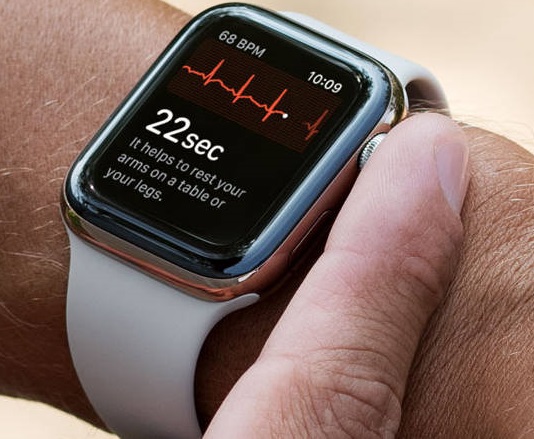
Health tracking and users are leading the way into smartwatch adoption and wearables popularity. In just one year, (Q2 2020 to Q2 2021), smartwatch ownership increased 13 points from 16 to 29% of US households. Fitness trackers, which once predominated, increased five points to 23%, while GPS sport watches grew four points to 11% in US households.

Overall:

  • Smartwatches are dominated by the Apple Watch (1st left), with Samsung’s devices a distant second.
  • Smartwatch owners are particularly likely to own and use other connected health products, with these consumers reporting owning an average of 6.8 devices (including their smartwatch)
  • Most people buy their smartwatches through ecommerce channels–42%–but 30% still use traditional retail. (15% are gifts!)
  • Intent to purchase in the next six months has rocketed from 18% to 45%
  • Apple and Samsung lead all wearable brands under consideration. Curiously, pioneers Fitbit and Garmin are ranked below LG and Sony, which no longer offer wearables. (Fitbit–2nd left–and Garmin need to do some marketing)
  • Fitness trackers/bands hold their own, but GPS sport watches are the weakest of the three categories. Current owners are most likely to seek a new model, with 88% of owners reporting intention to purchase.
  • Most of the intenders are “very likely” to purchase add-on subscriptions for their watch, such as cellular plans (69%) and at-home fitness programs (47%), as long as they are at $10/month. This overlaps into cellular phone providers who need to keep these subscriptions inexpensive.

Parks Associates surveys every quarter 10,000 U.S broadband households, with additional surveys throughout the year. The results represent the national demographics for US broadband households, which are 88% of all US households. To read the full survey results, go to Parks Associates’ survey page.

Pre-weekend short takes: Teladoc posts much smaller Q3 loss, 17% revenue boost; is telehealth threatening disability care quality; $2.8M for Australian wearables; more healthtech layoffs at Antidote, OrCam, Ada Health

Teladoc today (27 Oct) beat Wall Street consensus in reporting revenue of $611.4 million, a 17% increase versus prior year. It also reduced its per-share losses to 45 cents per share ($73.5 million) versus last year’s Q3 loss of 53 cents ($84.3 million) and Q2’s stunning $3.1 billion loss due to goodwill impairments from the Livongo acquisition [TTA 30 July]. Powering today’s stock bump (6.5% to $28.47) was primarily loss reduction from the prior quarter zeroing out the goodwill impairments and lower net interest expense. Motley Fool, Mobihealthnews

Disability groups are expressing concern that incentives to promote telehealth may be discriminatory. The concerns are primarily around the need for in-person care.  Groups such as the American Association of People with Disabilities admit that telehealth can benefit the disabled, but are wary of a swing towards telehealth as a cost-saving measure versus in person. Federal data confirms that Medicare beneficiaries due to disabilities use telehealth at about twice the rate of age-eligible Medicare beneficiaries. There’s also concern about how the disabled can access and use telehealth platforms, as well as the quality of assessment during the virtual visit. POLITICO.

The Australian government is funding three five-year projects using wearable sensors for activity and diagnostics. The US$2.8 million will go to Curtin University for monitoring activity in children with cerebral palsy who are unable to walk (US$950,000), University of New South Wales for a cuffless blood pressure for hypertension monitoring (US$1.2 million), and Bond University for a project combining data from wearable devices and medical records for Type 2 diabetes patients (US$700,000). Mobihealthnews

More healthcare tech layoffs confirm that VC Elvis has left the building. The tech downturn has hit Israel-based startups particularly hard, but Europe is also affected. This is despite fundings for two of them earlier this year.

  • Pinkslipping over a third (23) of its employees is telehealth platform Antidote Health. Based in Tel Aviv and New York, the layoffs hit primarily R&D staff in Israel. Antidote in March closed a $22 million Series A, bringing total funding to $36 million (Crunchbase). Antidote offers telehealth primary care, mental health, and hypertension chronic care as well as featuring sinus, tick bite, and UTI treatment on its website. The platform connects users to a network of about 100 doctors with a smart chatbot and through video calls. Their target audience is uninsured and underinsured people. Calcalist CTECH, Mobihealthnews   
  • Larger OrCam in Jerusalem is laying off about 16% (62) of staff, again primarily in Israel, as part of a reorganization. OrCam develops devices to help blind or visually impaired people read and navigate daily life more easily via AI. OrCam has over $86 million in funding through a Series A and three venture rounds (Crunchbase), the last in 2018. A planned 2020 IPO valuing the company at $3 billion never happened. The company also has offices and staff in New York, London, and Cologne. Calcalist CTECH, Jewish Business News

Berlin, Germany-based Ada Health also pinkslipped 50 people. According to a spreadsheet linked on Layoffs.fyi, most of the layoffs are in Europe and the UK in tech and product development, with others in marketing and medical. Ada has a medical assessment app that claims 10 million users and 25 million assessments. Employees are based in the US, London, and within Germany. Most recent funding was in March from a $30 million Series B, adding to a 2021 Series B of €74 million funded by Bayer (Crunchbase).

Oracle talks to banks to increase loans funding Cerner buy; VA delays Cerner deployments to June 2023

Oracle’s Cerner buy proving to be more expensive–and complicated–than expected. Oracle is reportedly going to its banks to increase their term loan against the Cerner purchase from the current $4.4 billion. The increase would refinance short-term debt and reduce refinancing of the existing bridge loan into longer-term bonds and loans. According to reports, the bridge loan, originally $15.7 billion of debt, was reduced to about $11 billion by the term loan. The bridge loan was originally used to finance the Cerner purchase.

Under the existing agreement, the term loan can be extended up to a maximum of $6 billion. This avoids the dicey situation the bond market is currently in with yields and access by companies.

According to Bloomberg Intelligence, Oracle’s over $90 billion in debt is one of the largest debt loads in tech. Oracle’s credit rating by S&P Global Ratings places it two steps above junk (Baa2/BBB/BBB+) but it may sidestep a downgrade by this action. Yahoo!Finance (Bloomberg), Becker’s 

Oracle announced last week modernizations to Cerner which would have greater interoperability and introduce more cloud-based features. This follows on Larry Ellison’s pronouncements during their September Q1 2023 earnings call. During the Oracle Cerner Health Conference last week, four were announced: Seamless Exchange (eliminating duplicate patient health information), Advance (dashboard), virtual models of care (virtual nurses capturing information), and RevElate (billing). Becker’s

Will the modernizations help Oracle’s VA migraine with the Cerner Oracle Millenium implementations? The prior week (13 Oct), the VA announced that deployments are being pushed from January to June 2023. The release cites the multiple problems with technical and system issues that were uncovered in August (outages), discussed extensively in Senate hearings in July, and the OIG report released in July on the ‘unknown queue’ and more.

Deputy Secretary of Veterans Affairs Donald Remy stated that “VA will continue to work closely with Oracle Cerner to resolve issues with the system’s performance, maximize usability for VA health care providers, and ensure our nation’s Veterans are served by an effective records system to support their healthcare. During this “assess & address” period, we will correct outstanding issues—especially those that may have patient safety implications—before restarting deployments at other VA medical centers.” VA will also concentrate on the existing five facilities already deployed on fixing the multiple issues they have. Veterans treated at these sites will receive letters asking them to call the VA if they experienced delays in prescription filling, appointments, referrals, or test results. One wonders if all the steps Oracle’s Mike Sicilia said Oracle is taking [TTA 28 July] to fix the performance, design, and functionality issues are achievable even in the longer time frame–and certainly in the five live systems.