

Another diagnostic for Alzheimers with impact on telehealth gains $2MM funding

Will a market of hundreds of millions be able to access these needed technologies?

Neurotrack, a computer-based cognitive program designed to pick up changes three to six years in advance of an official diagnosis of Alzheimer’s or dementia, gained Series A funding led by Founders’ Fund (Peter Thiel) and joined by Social+Capital Partnership plus several angel investors. Developed initially at Emory University with the technology part of a five year National Institutes of Health (NIH) study, it tests subjects on preference for repeat images versus novel images; a preference for repeat images may indicate a disturbance in the hippocampus area of the brain in completely asymptomatic subjects. However, you will not find it at a doctor’s office or a pharmacy kiosk near you soon. Its initial use will be in clinical trials for pharma companies developing drugs targeting early-stage dementias. The meaning for telehealth and telecare (more…)
ITS 2013/UIST 2013

University of St Andrews, St Andrews UK 6-11 October 2013

Both ITS 2013 (The ACM Symposium on Interactive Tabletops and Surfaces 2013, 6-9 October) and UIST 2013 (the 26th ACM Symposium on User Interface Software and Technology, 8-11 October) will be co-locating at the University of St Andrews. Worked into the presentations–demos and papers– of new and emerging tabletop and interactive surface technologies is healthcare content; demos at ITS such as The SimMed Experience: Medical Education on Interactive Tabletops and The fun.tast.tisch. Project – Interactive Tabletops in Neuro-Rehabilitation. (more…)

Telecare Soapbox: Predicting the telequake

[grow_thumb image=”https://telecareaware.com/wp-content/uploads/2013/09/earthquake.jpg” thumb_width=”175″ /]Predicting earthquakes is notoriously unreliable but TTA’s ex-Editor in Chief Steve Hards says that one is on its way for the telecare and telehealth industry.

Earthquakes are hard to predict because, depending on the local geology and where you are in relation to the future epicentre, they vary in speed, intensity and effect. However, there are four generally recognised stages:

  1. a long period of between quakes when straining deep beneath the surface that goes unnoticed
  2. a build up of intense pressure along the fault which may be noticed as slippage
  3. the release of the pressure which causes the well-known effects of tremors, liquefaction and damage as the two sides of the fault realign
  4. the new resting position of the land each side of the fault

O2 and Bosch realising that systems which do not use smartphone-based technology are now dead in the water and therefore exiting from the UK telecare market was not the quake; they are just signs of stage two slippage. We will see more strains and cracks appear (more…)

Some ‘Lively’ness in telecare with $4.8 million in funding

[grow_thumb image=”https://telecareaware.com/wp-content/uploads/2013/04/Lively.jpg” thumb_width=”150″ /]Our April profile of Lively (or Live!y)’s telecare system for monitoring ADLs in private homes ended with their (imminent, then actual) failure to acquire $100,000 in Kickstarter funding. Last week, they announced a reversal of fortune, with $4.8 million in Series A VC financing from Cambia Health Solutions including a contribution from their seed investor Maveron. Our earlier article discussed their setup, pricing, (more…)

Doctor disciplined for using Skype for telemedicine consults

A family practice physician in eastern Oklahoma was disciplined by the state medical board for using Skype on initial mental health consults. Skype is not approved by the board for telemedicine; other factors were that the patients were not physically seen at any point and that they were prescribed controlled substances (including narcotics). Three of the patients died while under care but the deaths were not attributable to Dr. Trow. It is easy to score the doctor for what could be seen as bad practice in telemedicine, but a mitigating factor is his practice in a remote area of the state and the distance of the patients. Joseph Kvedar, MD of the Center for Connected Health/Partners HealthCare reviews the situation (more…)

Robotic leg prosthesis controlled by thigh muscles

An experimental prosthesis which redirects the nerves from the thigh muscle to a lower robotic leg, and translates them into knee and ankle movements, is a major advance that makes the prosthesis more like a natural leg in walking and navigating stairs. According to MedPageToday, “the system links nerves in the thigh — including some for missing muscles in the lower limb — to a processor that decodes the signals and guides the motion of the prosthesis.”  The nerve data helps to eliminate mechanical errors that can cause falling. The robotic leg is being developed with an $8 million grant from the US Army (more…)

Tablets as ‘socializers’ for older adults

Long-time reader and now guest contributor John Boden of ElderIssues LLC and developer of the LifeLedger, reasons that if young children can use tablets fairly meaningfully, so can older adults at home or in senior communities. This is adapted from one of his series of ‘Caregiver Tips’ available via opt-in at caregivertips@elderissues.com.

Socialize With Technology: Tablets and iPads

If babies can use iPads, so can the very old.

Tablets and iPads are everywhere – EXCEPT – with nursing home patients.

This must be the season for me to have “aha!” moments. Last month it was while reading “Still Alice” and this month it was while visiting a nursing home where Sue told me she liked playing Scrabble but it was hard to find people to play with.

I am sure it is hard in a nursing home where you have to find another patient (more…)

Magnetic microbots can be delivery ‘trucks’ for meds

The research on magnetically activated and controlled microbots for drug delivery and biopsies continue. The latest research from South Korea has designed ‘cages’ to carry drugs that are effectively the closest microbots have to a delivery truck form factor for delivery to the brain or eyes. The tradeoff is tininess versus more capacity; more drugs, more effectiveness.  Published in Advanced Materials (link to full text PDF), short summary in PopSci, very long and thoughtful article on how nanobots work in IEEE Spectrum by French scientist-pioneer Sylvain Martel of École Polytechnique de Montréal, who projects their first use will be to fight cancer. Hat tip to Contributing Editor/Editor TANN Ireland Toni Bunting.

Telehealth Soapbox: Medical device tax finally under fire; implications many (US)

[grow_thumb image=”https://telecareaware.com/wp-content/uploads/2013/09/gizmodo-the-top-10-rube-goldberg-machines-featured-on-film-rube-goldberg.jpg” thumb_width=”180″ /]A key part of the Rube Goldberg (or Heath Robinson)-esque funding of the Accountable Care Act (ACA, a/k/a Obamacare) is a punitive medical device tax of 2.3 percent levied on gross sales (not profits) of hip, knee, cardiac implants, many dental materials, diagnostics such as scanners, radiotherapy machines, catheters and more. Since it went into effect on 1 January, it has raised $1 billion according to the Medical Imaging & Technology Alliance, the Advanced Medical Technology Association and the Medical Device Manufacturers Association in July–for a program that does not start till 2014. According to The Hill, senior Senators Orrin Hatch, Barrasso and Hoeven are pushing for a repeal amendment to be attached to the stopgap spending bill. The reasons why the tax deserves to be tossed out on its ear are: (more…)

An Alzheimer’s diagnosis test that could have profound telecare implications

Significant progress on early diagnosis of Alzheimer’s is reported today by Fierce Diagnostics.  The Cognoptix test involves a laser eye-scanning device and an ophthalmic ointment, according to their website, designed to spot telltale beta-amyloid proteins in the lens of the eye.

The excitement in the article is about the possibility of increasing drug sales; the ability to deploy drugs to delay progression of the disease would clearly be very important. However, whilst perhaps less commercially significant, there would be some huge benefits (more…)

All seven of Supra’s 18th Birthday Golden Keys now active – get ready to vote!

[grow_thumb image=”https://telecareaware.com/wp-content/uploads/2013/09/gold_key.png” thumb_width=”150″ /]With the last of SupraUK’s golden keys located, all the recipients have now contributed community project proposals in preparation for voting which begins on 14th October (ends 31st October) for the recipient of the £18,000 prize from SupraUK.

See the key recipients and their proposals here

…and spare a though for the keysafe, which comes well down the exciting-technology ranking and so is often overlooked in discussions and presentations on telemonitoring, although it is a critical element in providing an emergency response to alerts raised by that technology.

Relax, it’s (not) just a breathing monitor headset

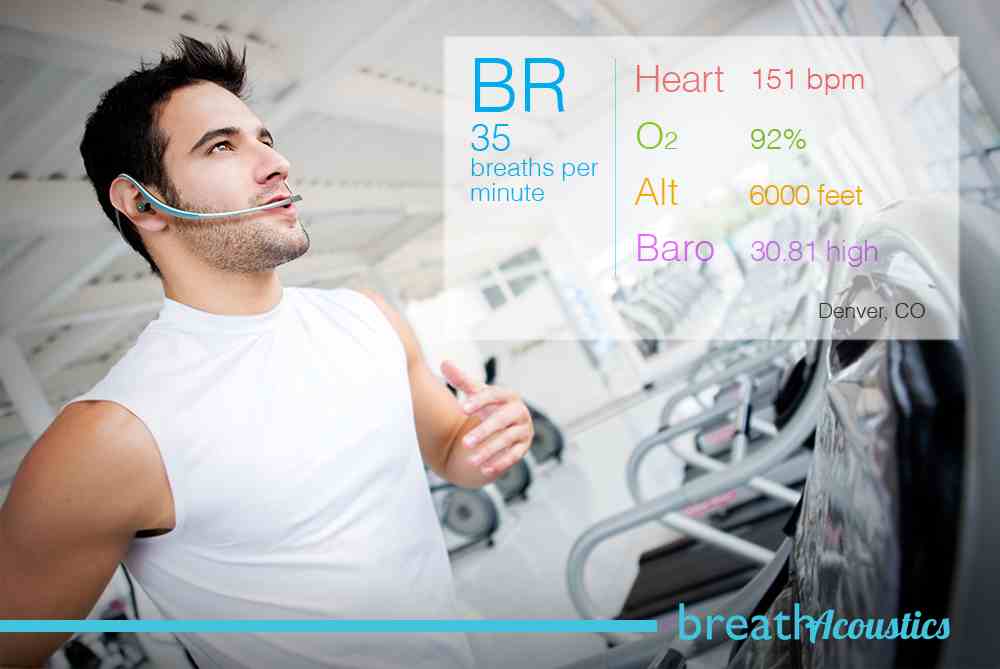
breath monitor treadmillA headset which monitors the quality of your breathing is being developed by BreathResearch, a San Francisco Bay area start-up.

Combined with a mobile app, the ‘Breath Acoustics’ headset listens to your breathing and analyzes the patterns. Sensor-based breath monitoring may be a less commonly monitored biometric pattern but recent studies suggest it could be used to detect stress levels, bacterial infections and other conditions. The headset also presents other biometric data, including heart rate, pulse oximetry, and respiration.  (more…)

An encouraging Australian RCT combining self-care and telemonitoring

A paper just published in the Journal of Telemedicine & eHealth (Volume: 19 Issue 9) entitled “Telehealth Remote Monitoring for Community-Dwelling Older Adults with Chronic Obstructive Pulmonary Disease” makes refreshing reading for those of us who still believe that a well-designed implementation of telehealth brings immense health benefit to those with chronic long-term conditions.

The authors, Kristen De San Miguel, Joanna Smith, and Gill Lewin, all from Western Australia describe a small RCT using Docobo kit that involved (more…)

Google Glass-assisted operation: another first?

Although we previously reported on the first operation performed using Google Glass, Solar News claims this week that Spain hosted the first Google Glass assisted operation, in Madrid.

Dr. Pedro Guillen performed a chondrocyte transplant (a procedure used to treat cartilage injuries) in the knee of a 49-year-old male. The entire procedure was streamed live via the glasses, to an audience of 150 doctors in the United States, Europe and Australia.

Apart from providing videoconference capability, Julian Beltran, CEO of Droiders, the company that built the software, says Google Glass opens a world of new tools to surgeons as they work.  “You can see in the prism the arthroscopy and perform the surgery without having to move the head to the right. For example you can see pictures, educational videos, remember how to perform a surgery, see an x-ray, consult the interaction of medicines or information you need. Everything connected to the internet,” he said.

Droiders say they have plans to build new software which will also help doctors to check the patient´s heart rate just by looking to their faces.

Thanks to Prof Mike Short for alerting me to this.

Tynetec sale?

Following our earlier post about Bosch ending sales of their Health Buddy and (temporarily?) exiting the telehealth market in the UK, comes another unattributable suggestion that Tynetec have been purchased by Legrand whose website proclaims them to be “The world’s leading manufacturer of wiring devices and cable management systems.”

There’s some clear and fascinating synergy there which looks potentially very exciting for the world of remote monitoring…however as yet there is nothing confirmed in the media, so watch this space.

Bosch to can Health Buddy, withdraw from telehealth in UK – temporarily?

On September 6th, Bosch announced a tie up with Remedy Health Media  [TTA 10 Sep] “to launch remote patient monitoring products designed for tablets and smartphones”, which suggested that it would not be long before they stopped selling their purpose-built telehealth hardware.

Now TTA has heard from a reliable source that they are telling their customer organisations that they are going to withdraw (more…)