


Korean ‘nurse droid’ being tested in nursing homes. The KIRO-M5, which resembles a pint-size (3′) version of R2D2, can wake up residents, announce meals, schedule daily exercise–and can sniff the air to alert an aide or nurse when an elderly patient needs a diaper change. The KIRO also sterilizes and deodorizes the air, and totes supplies. Developed by the Korea Institute of Robot and Convergence. Korean nurse bot sniffs the air to detect soiled diapers (GizMag)
A polymer patch delivers vaccine. Designed by MIT, a dermal patch with microneedles slow-releases vaccine DNA rather than viruses or proteins, to allow the body to build immunity. Could this open up fresh horizons on drug delivery? And with a wafer-thin transmitter, can monitor it? Polymer patches could replace needles and enable more effective DNA vaccines (GizMag)
And finally the most amazing–a prosthesis mostly out of a 3D printer. A five-year-old boy, Liam, now has a workable hand with moveable fingers made using a Replicator 2 3D printer. The fingers are attached to a brace worn over the hand, and controlled via cables and return bungees. The designers who collaborated long distance from Washington state and South Africa, have also released the design into public domain. Inexpensive home-brewed prostheses created using 3D printers (GizMag)
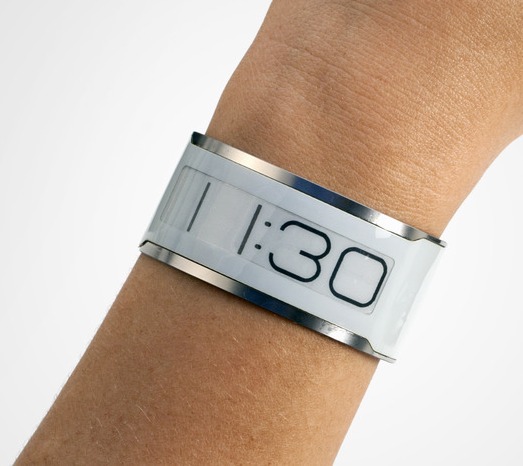 The Central Standard Timing ‘e-ink’ watch will, when it goes into production, be the world’s thinnest watch at 0.80mm and wholly assembled in USA (take that, Switzerland). Its high visibility, basic colors and stainless steel band (in three preliminary sizes) makes it cool–and ‘Mick and Tina’ cool (when costs go down from the current projected $170) for the older adult or vision impaired market. It’s always on and charged/adjusted at the base station. What would be interesting if this technology, or the watch itself, eventually incorporates things like fall detection or pulse monitoring.


Most Recent Comments