Apple-ologizing Healthbook

[grow_thumb image=”https://telecareaware.com/wp-content/uploads/2014/03/healthbook-book.jpg” thumb_width=”300″ /]With the same obsession that Kremlinologists had during the Cold War, the Apple-ologists at 9to5Mac observe emanations and permutations emitting from Cupertino. Based on their inside sources, they have the lowdown on how Apple will Go Big into healthcare monitoring and fitness tracking.

  • ‘Cards’ in the Healthbook allowing entry for vital signs such as blood pressure, blood glucose, breathing rate, weight, hydration and oxygen saturation (O2). (photo at left above a ‘recreation of screenshots’ by 9to5Mac)
  • Sleep tracking. Apple in February hired Roy J.E.M. Raymannone of the world’s experts in sleep tracking including wearables and sensors, out of Philips.
  • Emergency Card with customer’s name, birthdate, medication information, weight, eye color, blood type, organ donor status, and location.

The rumors tie it to the introduction of iOS 8, the iWatch or both. But beyond the sensors on the phone and/or the iWatch–there’s no information on how telehealth apps, devices or sensors would wirelessly transmit the information. “While Healthbook is capable of tracking, sorting, and managing various types of health and fitness-related data, it is currently uncertain where this data will actually be sourced from.” But Editor Toni noted in February (link below) that Apple just patented headphones which are capable of monitoring temperature, heart rate and perspiration levels. This is Healthbook, Apple’s major first step into health & fitness tracking (9to5Mac). And Wired thinks Apple’s Upcoming Health App Is the Start of Something Huge (Wonder if South Korea’s Ministry of Food and Drug Safety will impound it as an unapproved medical device!)

Previously in TTA: Apple-ologists discern ‘new’ interest in health tech and telehealth [20 July 13], Apple’s tarnished luster, Round 2 [29 July 13], Apple purchasing 3D gesture control developer PrimeSense [19 Nov 13]Apple patents health monitoring headphones with ‘head gesture’ control [19 Feb]

Polymers to prevent infections, binding molecules for detection

A multiple-university team along with the US Army’s Natick Soldier Research, Development & Engineering Center (NSRDEC) was granted a patent for antimicrobial polymers which could be used in wearables and in other products such as medical implants, filtration systems and paints. Surface-grafted antimicrobial polymers trap and kill bacteria either by itself or activated by light. Incorporating Antimicrobial Polymers to Protect Warfighters (Armed With Science)

Get your favorite PhD or biotech researcher to interpret this article, which describes an approach developed at the Defense Threat Reduction Agency (DTRA) and Joint Science and Technology Office (JSTO).  Biosensors for detection of chemical and biological threats and enable better post-exposure treatments use binding molecules on demand (BMOD–remember, this is the Army). Binding Molecules on Demand  and Could a Computer-designed Protein Protect Soldiers? Developers: think about combining the two to support better health in hospitals, transplant patients, older adults and those with compromised immune systems–or children in those petri dishes called ‘school’. 

Wearables solving real ‘jobs to be done’

[grow_thumb image=”https://telecareaware.com/wp-content/uploads/2014/03/orcam-device-web11.jpg” thumb_width=”200″ /]This Editor strongly believes that the heart of a great product is that it addresses, in Clayton Christensen’s terms, a ‘job to be done’–or as pre-social media marketing writing put it, ‘not a ‘nice to have’–a must-have’. Venture Beat, usually a facilitator of the D3H (Digital Health Hypester Horde), has an unusually sober and personal article from writer Christina Farr highlighting five wearable devices and how they could be ‘must-haves’, improving quality of life for significant groups of everyday people.

  1.  The OrCam computer-assisted vision device (above) for those with low vision, which interprets nearby visual inputs, including letters, faces, objects, products, places, bus numbers, and traffic lights–and describes them to the wearer through a bone-conduction device heard by the user only. From Israel and available only in the US at present, the initial pricing is around $2,500.
  2. Physician, surgical and law enforcement decision support may be the best use of Google Glass–not exactly the ‘hipster on the L train’ picture promoted by Google.
  3. Emotiv’s mind-controlled wheelchair, which is controlled by a headset (EPOC) capable of picking up electrical signals.
  4. For autistic children and adults, Neumitra and Affectiva are both bands that measure and alert for physiological stress that may lead to inappropriate wandering or acting-out.
  5. Red-green color blindness affects 1 in 12 men and 1 in 200 women. It can be dangerous–think of traffic lights and wiring–and EnChroma’s correcting set of glasses is a simple, useful solution. Reportedly there is a 30 percent improvement in color identification and a 70 percent improvement in color discrimination. The pricing is fairly standard at $375-460.

Apple patents health monitoring headphones with ‘head gesture’ control

[grow_thumb image=”https://telecareaware.com/wp-content/uploads/2014/02/apple-patent-earphones.jpg” thumb_width=”150″ /]Another reminder of Apple’s growing interest in the health monitoring and fitness space is the news that the company has just been granted a patent for a “Sports monitoring system for headphones, earbuds and/or headsets” (U.S. Patent No. 8,655,004). The biometric headphone system can sense a number of metrics including temperature, heart rate and perspiration levels. It also contains ‘head gesture’ control which could allow users to change music tracks and adjust volume by tilting or rotating their head. Read more in Apple Insider.

Related TTA posts: Sensor-based monitoring coming to an iPhone near you? /  Wearable technology – so much choice, so much data to sell? / Turn up, tune in but don’t drop out with health monitoring earphones


Wearable technology – so much choice, so much data to sell?

Vandrico has recently updated its List of Wearable Devices which now features (at the time of this post) 118 such items, plus some interesting analysis.  It is indeed a most comprehensive and impressive listing, that underlines the growing importance of this sector. And still there are others, such as Apple, apparently still to join.

One aspect not mentioned by Vandrico, which is becoming increasingly concerning is the extent to which the business models of such apps might involve selling persona fitness data.  In spite of denials, this Mother Jones article suggests that worries persist. iMedicalApps reports that the practice is already well established with medical apps used by physicians in the US (more…)

The CES of Health: post-scripts

It’s Everywhere, Everyday, Disruptive, Not Impressive and Still ‘Bicycles for Fish’.

Neil Versel’s first major article recaps the Digital Health Summit ‘Point of Care Everywhere’ panel with Dr. Joseph Kvedar of Partners HealthCare/Center for Connected Health, Walter De Brouwer, founder and CEO of Scanadu (the tri-corder everyone’s waiting for) and Laura Mitchell, VP of business development at ‘grizzled pioneer’ in telecare and telehealth GrandCare Systems. The key is integration–for Dr. Kvedar, making it ‘about life, personal and social’; for Mr. DeBrower, bringing digital health into the home; for Ms. Mitchell, persuading long-term-care providers that technology provides useful, actionable information. Some surprises here: Scanadu will be shipping 8,800 units in March to its Indiegogo supporters and is going into a Scripps Health clinical trial; Dr. Kvedar admitted that the latest CCH startup, social wellness site Wellocracy [TTA 30 Oct] is “still searching for its audience.” The headline is “Mobile health has a lot of power, but it’s raw and new”–but is that helpful in positioning it to the Big Users–payers, pharma, providers–who are not all that daring? Mobihealthnews 

Everyday Health with the Digital Health Summit announced on Thursday their 2014 awards for innovation to five US companies for ‘achievement in technology innovation aimed at improving health outcomes.’ They include Scanadu but also four less heralded companies: (more…)

11th Wearable Technologies Conference 2014 I Europe

27-28 January 2014, International Congress Center, Munich, Germany

The 11th Wearable Technologies Conference is the leading event to experience the most comprehensive line-up of technology innovations, discuss the latest trends, and meet doers and makers, thought leaders and innovators, as well as groundbreaking start-ups in this area. Featuring smart watches and smart glasses projects, and the industry giants Samsung, Sony and ST Microelectronics, the 11th Wearable Technologies Conference Europe gives you the chance to get in-depth insights into the future of lifestyle, sports, and health devices and other application fields for wearable technologies. Another highlight is the award ceremony of the Wearable Technologies Innovation World Cup on Jan. 27, 2014, where the finalists will present their solutions, and the “WT Innovator of the year” will be announced. Website. SpeakersRegistration.

The CES of Health (Friday)

Rounding up the 10 Ring Vegas Circus-Circus, it’s time for ‘best and worst lists’: hopping with the Kiwi tracker, no one’s kind to Mother, in the kitchen with 3D printers and what may be up with Google, FDA and contact lenses.

[grow_thumb image=”https://telecareaware.com/wp-content/uploads/2014/01/02-itoi-620×400.jpg” thumb_width=”150″ /]ZDNet rounds up its Friday coverage with a Best of CES selection. It’s always interesting to get the broader non-healthcare techie view of ‘what’s hot’–they spotted fitness bands early when even diehard QSers were skeptical– and to then see if their picks make it into the broader market. Their health tech picks are the Mimo Baby onesie + detachable turtle monitor from Rest Devices (sure to be a hit at your next baby shower; TTA 10 Sept], movement profiler Notch(see Thursday; it also made The Guardian’s roundup), MakerBot’s home 3D Replicator Mini (Wednesday) and the Epson Moverio BT200 digital content projection smart glasses  (in-market March, @ $699.99 a bargain for what use?). Au contraire, see 11 born-to-fail worst gadgets which includes being mean to Sen.se’s Mother and, in worst design, an iPad video ‘periscope’ from iTOi which looked like it was stolen off the set of the 1956 space opera Forbidden Planet. For today’s market, it definitely could have used a steampunk vibe to carry off its ‘Blue Blazes’ design.

Yet one of their writers gives Mother, a/k/a the “M2M Mollycoddle”, “part-Russian doll and part-Doctor Who monster”, a more thoughtful once-over. (more…)

The CES of Health preview

International CES in Las Vegas will be the annual ten-ring circus it always is, but this year even the tech watchers are concentrating on health. There appears to be no blockbuster consumer electronics debuts this year, so what you will see in the rinse-and-repeat cycle are the connected categories of Wearables and The Internet of Things. Basically everything will be connected, automated…and gathering lots of data on you (what ZDNet’s Jason Hiner in his CES preview article has dubbed Contextual Computing, and he likes it). Lisa Suennen of Psilos Group, writing in MedCityNews, coins her own slightly dismissive term, ‘The Internet of Wearable Things’, and makes the entirely sensible point that sensing your fitness is one thing, doing something about it another. But the critical health app that soars over her goal posts is the Surf Life Saving WA Twitter account. If you’re in Western Australia and hitting the water, you want to know where the sharks are. This gives it to you. This Editor also sees that Samsung received FDA 510(k) approval for their heavily hyped S Health app built into the US-released Galaxy S4 smartphone. While the UK enjoyed third party device connectivity back to the S3, the US version of S Health, according to Mobihealthnews, only connected to three unreleased Samsung peripherals and relied on manual entries. This undoubtedly will change–expect there to be buzz about where Samsung will now take this at CES. And there’s always hay to be made with sleep analysis tracking–high-end multi-sensor fitness watch Basis Science has now added advanced sleep tracking to its BodyIQ analysis of running, walking and biking, as well as upgrading its looks (VentureBeat).

Certainly more to come out of CES and conferences within CES this coming week!

2014: the year of reckoning for the ‘better mousetraps’

Or, the Incredible Immutability of the Gartner Hype Cycle

From Editor Donna, her take on the ‘mega-trend’ of 2014

This Editor expected that her ‘trends for next year’ article would be filled with Sensors, Wearables, Glasses, Smartwatches, 3D Printing, Tablets and Other Whiz-Bang Gizmos, with splashes of color from Continuing Crises like Healthcare.gov in the US, the NHS’ 3million lives plus ‘whither UK telecare’, various Corporate ‘Oops-ses’, IP/Patent Trolls and Assaults on Privacy. While these will continue to spread like storm debris on the beach, providing continuing fodder for your Editors (and The Gimlet Eye) to pick through, speculate and opine on, what in my view rises above–or is under it all–for 2014?

We are whipping past the 2012-13 Peak of Inflated Expectations in health tech…

…diving into the Trough of Disillusionment in 2014. Crystallizing this certainty (more…)

End of year roundups: 10 leaders, 10 trends

Four of Information Week‘s top 10 tech leaders have a direct impact on healthcare: Tony Young, CIO, Informatica (big data); Michael Sentonas, VP & CTO, APAC, McAfee (defense against cybercriminality); Dr. Ruchi Dass of HealthCursor Consulting Group, India; Mikael Hagstrom, Executive VP, EMEA and APAC, SAS (big data and analytics again.) The others are from Hitachi Data, Dell, Amazon, Salesforce.com, Facebook and UIDAI India. Juniper Consulting’s top 10 trends for 2014 are smarter cities, mobile money (bitcoins, anyone?), wearables, tablets, mobile fitness, LTE goes wide, smarter devices, cheaper home gaming, personal private clouds and 3D printing. VentureBeat

Wearables on the hype cycle: a ‘Fitbit for babies’

[grow_thumb image=”https://telecareaware.com/wp-content/uploads/2013/12/3019806-poster-1280-sprouting.jpg” thumb_width=”175″ /]Is nothing sacred? Certainly not when you want a high-performing infant! FastCompany Design goes ga-ga over the Sproutling, an anklet activity monitor for the bassinet set. It tracks heart rate, skin temperature, and movement plus the room’s ambient temperature, humidity and light levels via a camera and sensors in a base station, sending data to parental smartphones. Target price not disclosed. More measurements here than our late summer baby rave, the Owlet smart sock sleep monitor which primarily alerts for dangerous baby rollover onto the stomach and trends in sleep quality, plus blood oxygen and skin temperature. There’s quite a bit in the article (more…)

Motorola files patent for Emergency Alert – Neck Tattoo!

throat tattooAnother pointer to the future in the world of wearable tech is this patent filed by Google-owned Motorola, for a throat ‘tattoo’, with the capability to send automatic alerts with location information to a monitoring centre or the emergency services (though the patent filing is drafted much wider!).

The ‘tattoo’ idea isn’t as dramatic as it first appears, as the filing states it can be applied to the skin via an adhesive, or embedded in a collar or neck-band. The way it would work is by capturing the sound from a person’s throat and transmitting it to a nearby smartphone or other Mobile Communications Device (MDC). (more…)

Sony files SmartWig patent!

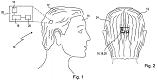
smartwigHere we have a patent filed by Sony for a sensor-laden hairpiece/wig. There are three prototypes; the Presentation Wig which has a laser pointer and allows you to change PowerPoint slides by simply pushing the sideburns – this would brighten up presentations no end ;-), the Navigation Wig which uses a GPS and vibration to direct the user, and the Sensing Wig which contains sensors to take physiological readings such as temperature and blood pressure. (more…)

‘Blue Blazes’ indeed: wearables meet the lingerie counter

[grow_thumb image=”https://telecareaware.com/wp-content/uploads/2013/10/blue-blazes.jpg” thumb_width=”150″ /]A sure sign that 1) wearables are truly on the ‘good side’ of the Gartner Hype Curve and that 2) Microsoft’s priorities are a little skewed is this item from Discovery News that Microsoft developed and tested a brassiere that measures wearer stress. It’s equipped with sensor pads measuring heart rate, respiration via an EKG sensor, skin conductance with an electrodermal activity sensor, and movement with an accelerometer and gyroscope, all sent to a smartphone app then to the researchers. The purpose: to alert to stress-related overeating. It also tweets when removed (ahem). Unfortunately the batteries powering the sensors only lasted for four hours and even the lead researcher admitted that she’s looking for another part of the body that accurately measures stress, but doesn’t require as much work. As some wag commenting on New York Magazine’s Grub Street‘s very funny take on it put it, it assumes that women wear their bras when stress overeating! Calling Sonny Vu…. Hat tip and a swirl of the cape to healthcare SME and reader Lois Drapin of The Drapin Group.

Misfit Shine goes ‘Droid, at last

Monday’s big news in the wearable sensor world was that the 10p/US quarter-sized Misfit Shine is out in an Android version, as promised back in their distant Indiegogo days before the Khosla and Founders Fund VCs discovered it. Delayed at the end of May, and reset for mid-July [TTA 30 May] then for early 2014, the Shine is now a bright spot at places like Best Buy and Target at prices from $99 to $120, though it only works on Android 4.3 or later devices and TechCrunch is reporting that early reviewers have found it crash-prone. VentureBeat raves that the Shine now has what Nike FuelBand does not–Android. It’s also far more wearable; it now comes online in the hot new ‘champagne’ and azure colors even if the initially touted jewelry-like concepts have yet to materialize.

Update 4 Dec (Breaking News): According to TechCrunch, Misfit just raised $15.2 million from Hong Kong-based Horizons Ventures. Current investors participated in the round. This now leads to a total funding of $23 million according to CrunchBase. According to AllThingsD, founder/CEO SonnyVu claims they are on track to ship 200,000 units by end of 2013 and that the funding will go to other areas of wearable sensing such as wearable feedback, identity and payments technology as well as wearable controls and gaming. Also Mobihealthnews. Are we seeing here another hype curve?

For more on wearables, AllThingsD spotlights clothing: Athos’ workout gear, Notch’s snap-on sensors and clothing, Push’s strap for weightlifters, Heapsylon’s heart-rate monitoring t-shirts and sports bras. And HIT Consultant has a nifty infographic on the future of wearable technology in healthcare which includes the new Reebok Checklight (previewed at CES Unveiled last month) and Push. (hat tip to reader Luca Sergio via Twitter @lmsergio).