TTA Celebrates USA 250! Midjourney’s body scanner promises a revolution and Butterfly a future? Hype or reality? And more!

2 -6 July 2026

An early close for a very big holiday this weekend–the 250th anniversary of United States Independence, a/k/a The Rebel Colonials Serving It Up Hot To King George III. And the UK and Europe returned this weekend’s 100 degree F temps (38 C) as a present…

Speaking of presents…our one story this week is a very deep dive into Midjourney Medical’s ‘magical’ whole-body scanner and the Butterfly Network ultrasound chips powering it. The Midjourney agreement is a substantial present to a once-promising POCUS company that was almost KO’d by the Devil of Demise after a cracked SPAC. Is it a future that Butterfly can bet on, or just another bridge to cross?

Set off fireworks (safely), drink up like a colonial, and stay cool!

Please feel free to comment on the articles and pass along this Alert. Let me know if this is worth it to you! Also check out my personal page on Substack.

Midjourney Medical audaciously promises a revolution in whole-body scanning, powered by Butterfly Network chips. Can the reality ever match the hype?

Last Week’s Headlines, from Cargo Culture to OpenEvidence   

Chutes & Ladders: Xsolis data breach affects 1.4M records, Five Eyes warns of AI-supercharged hacking; FDA closes Whoop BP warning, Centene adds HR/finance exec to board; $120M raises for Assort Health, $46M for xCures

Vinegary Must Reads This Week: Silicon Valley’s ‘Cargo Culture’; the clinical query tool explosion between OpenEvidence and general AI

Short takes: Bain report on anemic AI ROI, SVB report on women’s health, Ladder Health pedes virtual health raises $7M, an update on the Luigi Mangione trial

Amazon’s One Medical Seniors hacked by ShinyHunters, issues “final warning” on 8.8 TB of patient data

News roundup: Validic bought by ChartSpan; raises for Cadence, Prosper AI, Telepatia; Epic MyChart portal messages doubled in 5 years–study    

Perspectives: The most aggressive AI adoption in healthcare is happening off the books

Catch up with these if you haven’t

Chutes, and chutes: Microsoft’s $3B Oracle cloud leasing deal goes sideways, Defense Health Agency to replace Leidos as system integrator for MHS’ EHR, Centene offering voluntary buyouts to most employees

Tuesday 23 June–UKTelehealthcare webinar/virtual event: Keeping People at Home, Supported by Technology (this is now available on video–check the UKTelehealthcare website and LinkedIn)

Perspectives: Virtual Care, AI, and the Future of Autism Therapy

 * * *
Advertise on Telehealth and Telecare Aware
Support not only a publication but also a well-informed international community.

Contact Editor Donna for more information.

Help Spread the News

Please tell your colleagues about this free news service and, if you have relevant information to share with the rest of the world, please let me know!

Donna Cusano, Editor In Chief
donna.cusano@telecareaware.com

Telehealth & Telecare Aware – covering news on latest developments in telecare, telehealth and eHealth, worldwide.

TTA’s Here Comes Summer: two data breaches and a warning, six raises, Validic bought, Silicon Valley’s ‘Cargo Culture’, OpenEvidence scored in study, ‘off the books’ AI in healthcare, more!


Friday 26 June 2026

Summer started and the doldrums lifted. We have not one but two data breaches with a big warning from Five Eyes that AI-powered breaches are coming. Six raises from seed to Series C–including in Brazil–and Validic after many years is bought. But scrutiny is piling on AI and AI clinical tools, from the economics to Silicon Valley ‘Cargo Culture’ to OpenEvidence’s performance to ‘off the books’ AI in healthcare. We also touch on the current status of the Luigi Mangione NY State trial, 18 months after the murder of UHC’s Brian Thompson.

Please feel free to comment on the articles and pass along this Alert. Let me know if this is worth it to you! Also check out my personal page on Substack.

Chutes & Ladders: Xsolis data breach affects 1.4M records, Five Eyes warns of AI-supercharged hacking; FDA closes Whoop BP warning, Centene adds HR/finance exec to board; $120M raises for Assort Health, $46M for xCures

Vinegary Must Reads This Week: Silicon Valley’s ‘Cargo Culture’; the clinical query tool explosion between OpenEvidence and general AI

Short takes: Bain report on anemic AI ROI, SVB report on women’s health, Ladder Health pedes virtual health raises $7M, an update on the Luigi Mangione trial

Amazon’s One Medical Seniors hacked by ShinyHunters, issues “final warning” on 8.8 TB of patient data

News roundup: Validic bought by ChartSpan; raises for Cadence, Prosper AI, Telepatia; Epic MyChart portal messages doubled in 5 years–study    

Perspectives: The most aggressive AI adoption in healthcare is happening off the books

Last Week’s Headlines

Chutes, and chutes: Microsoft’s $3B Oracle cloud leasing deal goes sideways, Defense Health Agency to replace Leidos as system integrator for MHS’ EHR, Centene offering voluntary buyouts to most employees

Tuesday 23 June–UKTelehealthcare webinar/virtual event: Keeping People at Home, Supported by Technology (this is now available on video–check the UKTelehealthcare website and LinkedIn)

Perspectives: Virtual Care, AI, and the Future of Autism Therapy

 * * *
Advertise on Telehealth and Telecare Aware
Support not only a publication but also a well-informed international community.

Contact Editor Donna for more information.

Help Spread the News

Please tell your colleagues about this free news service and, if you have relevant information to share with the rest of the world, please let me know!

Donna Cusano, Editor In Chief
donna.cusano@telecareaware.com

Vinegary Must Reads This Week: Silicon Valley’s ‘Cargo Culture’; the clinical query tool explosion between OpenEvidence and general AI

More than tart takes, these come with 8 ounces of distilled vinegar! Sip slowly and savor this weekend.
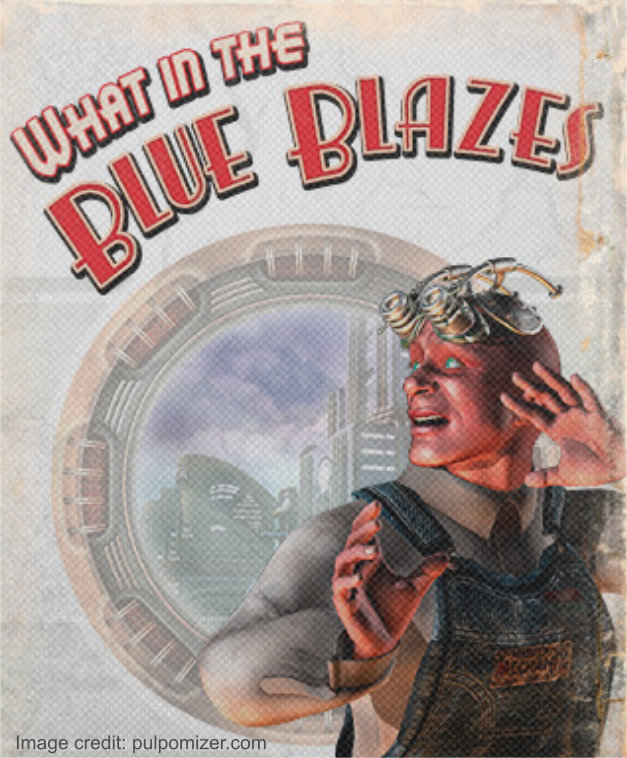
The always controversial Ed Zitron goes there. Way out there to challenge your preconceptions. If you’ve ever awakened at 3am wondering where in blue blazes AI is going, agonizing over where it fits in your platform or services, who is it really benefiting other than OpenAI and Anthropic, why VCs are so stingy because your tech isn’t AI All Over, and why despite the hype billions are going down a rabbit hole seemingly with no bottom [TTA 2 June, 25 June] –this article (not premium paywalled) is for you.

“Cargo Culture” refers to the cargo cults of the South Pacific. They originated after native contact with Westerners, usually Americans who landed in ships or built airstrips, mostly during WWII. When the Americans left, the indigenous peoples tried to recreate the “magic” of goods coming off the ship or from airplanes by creating a religion and ritual around these ‘miracles’ without, of course, the corresponding methods of delivery. Your Editor also found an IT version of this called “cargo cult programming“defined in a Wikipedia entry as “computing slang to describe the inclusion of code that serves no purpose in a program, indicating a lack of understanding of the program structure by the programmer.

Mr. Zitron’s “Cargo Culture” refers to Silicon Valley. The endlessly reinforced belief system of the interlocked software, venture capital, and private equity businesses was built on decades of mythology of endless growth and endless Christensenian “disruption”. They want to believe that there will always be hypergrowth tech companies, always another ‘disruptor’. And the money to fund them will be equally endless. (Forgotten are the failures like Theranos and the billions down the drain.)

The reality, as he painstakingly explains, is that Silicon Valley and tech are, right now, fresh out of ideas. Worse, the software industry is declining. There’s no Google Search or iPhone waiting to be plucked from the ether. There is no New Big Transformative Idea. Company growth is incremental at best, declining or failing at worst. But instead of adjusting, the mythology is ingrained, and to doubt is heretical.

Any dissension, whether corporate or media, means you are Voted Off The Island.

The AI Bubble fits neatly and virally into Silicon Valley’s Cargo Culture and need for a disruptor. It’s a viral product, it was different, it meets a need for automating processes. It makes search a lot quicker. But will LLMs and agentic AI actually change anything other than make it faster, or reduce the need to perform your own logic in building a case/article–at amazingly high expense? Other than the spend, what’s exponential about it? Everyone’s buying a lot of GPUs–heck, Oracle at Larry Ellison’s behest is betting the company on moving out of software, including that ever-so-sticky EHR–and becoming a data center constructor and lessor to Open AI and Meta lest Microsoft eat his lunch. After a certain point, the beliefs become circular and self-reinforcing. 

Mr. Zitron argues the points at length. It’s minimum a 30-minute read and not an easy one. Stay with it. It challenges a lot of premises. It will make you think differently the next time you’re pitched on a company’s miraculous AI software–or if you are a developer, understanding your customer’s needs and likely confusion. It is 100% guaranteed to make you think about Silicon Valley, their modus operandi, and how it’s inflated the whole AI bubble.

Sergei Polevikov shines a light on a recent Nature Medicine study comparing specialized clinical LLMs against the generics–and finds that the generics win. The peer-reviewed study pitted specialized clinical tools like OpenEvidence and Wolters Kluwer’s UpToDate ExpertAI against general-purpose AI tools–ChatGPT-5.2, Gemini 3.1 Pro, and Claude Opus 4.6–using three different benchmarks*. The specialized tools lost every time. What was worse was OpenEvidence’s unprofessional overreaction on social media, namely X. Instead of responding directly to Nature Medicine as a comment, then publishing a peer-reviewed paper refuting the Nature Medicine team findings, citing their own research from independent studies, conducting fresh research, even better admitting that some of the research team’s findings were valid and appreciated, their ‘Twitterstorm’ only created more PR blowback. Social media amplified the damaging reach of one academic study. (Having managed a few ‘crisis communications’ as a marketer, the worst thing that you can do is bang back in anger, though cooling corporate tempers might require a Titanic-sized iceberg of ‘splainin’.)

Mr. Polevikov’s free excerpt of his lengthy article, OpenEvidence Goes Hippocratic AI, is published on LinkedIn, but why not kick in a few $$, support his independent journalism, and subscribe to AI Health Uncut (Substack)?

The Hippocratic AI reference is to that company’s ‘bare knucks’ approach to any criticism of their platforms. 

*FTA Nature Medicine: (1) 500 MedQA questions testing medical knowledge, (2) 500 HealthBench items measuring alignment with clinicians and (3) the real clinical queries (RCQ) benchmark, built from 100 de-identified queries from physicians to a general-purpose language model in a live clinical environment. 

Holiday weekend roundup: VA asks for ‘cyberspeed’ 25% EHR budget bump, update on EHRM fraud indictment; Commure raises $70M; Innovaccer buys Caduceus, lays off staff; Doximity, OpenEvidence slugfest gets hot

A slower news week preceding the Memorial Day holiday in the US and the UK late May bank holiday.

Federal budgets for 2027 are in the Congressional washing machine, and the cycle is on ‘agitate’. VA Secretary Doug Collins has tagged a 25% increase in the EHR Modernization budget for FY 2027 over what is currently in the 2027 Military Construction and Veterans Affairs Appropriations bill –$4.2 billion versus $3.4 billion, an increase of $840 million. He testified on Wednesday 20 May to the Senate Veterans’ Affairs Committee and Thursday 21 May to the House Appropriations Subcommittee on Military Construction, Veterans Affairs and Related. Apparently, the biggest problem VA has with the much-repaired and now standardized Oracle EHR is that every VA executive director wants it now, not later. An additionally funded EHRM would speed up the cutover for VA facilities to go from ‘dial-up’ to ‘cyberspeed’ internally, in communicating with other VA hospitals, community care, and in record sharing with the military system and civilian health facilities.

Difficulties reported to date (April for four sites in Michigan, VISN 10) are around transferring health records between VA and Department of War facilities. DoW healthcare also uses Oracle, but a different version suited for their needs that has been fully implemented. 

While the House has already passed the bill at the lower budget number and sent it to the Senate, the subcommittee chair John Carter (R-Texas) during the hearing said they’re “not through with the possibility of getting you some more money”. 

VA’s implementation timeline is 19 before the end of this year (13 new and the 2020-24 six), 26 new sites in 2027 and 28 VA Medical Centers in 2028. Even sped up, there are still 90 more to go and the deployment is not expected to be complete till 2031. FedScoop 21 May, 30 April

Update on the fraud indictment of the former EHRM director, John Windom. Surprisingly, there has been little to no mainstream media coverage of the Federal charges against John Windom, who was indicted on 25 March in the Federal District Court for the District of Columbia. The three counts related to accepting cash and gifts from vendors plus failure to report them could bring a maximum of 35 years. This article on conservative news website PJ Media is the most recent (re)telling of the tale and links to nearly all the same sources this Editor included in our 3 April article. It is more colorful than our reporting but brings up an important point I overlooked: where, oh where, are the indictments of some of the vendors who doled out cash, gifts, and maybe more, and in return got prime and sub-contracts. He knew, they knew to keep quiet–‘loose lips sink ships’. Because any Federal contractor–I worked for two, Viterion Digital Health and Collaborative Health Systems, then part of WellCare Health Plans–receives compliance training on working with their Federal agency counterparts. 

Perhaps there are investigations and indictments to come, as I’ve seen in Federal Medicare fraud cases that peel like an endless onion over years. According to the VA inspector general, Mike Missal, who served from 2016 until January 2025, evidence was being gathered internally back during the Biden administration. This fits the timeline of the US Attorney requesting a grand jury be summoned then sworn in on 30 October 2025. Mr. Missal was fired along with 16 other inspectors general by the incoming Trump administration.

Since Mr. Windom was deeply engaged in the choice of Cerner for the VA EHR in 2017-2018, and in the disastrous implementation of VA Mann-Grandstaff (VISN 20) in October 2020 and four more in 2022, resulting in the rollout’s termination in 2023, Oracle would be unwise to not prepare for a few questions about Cerner’s relationship with Mr. Windom, as I wrote at the time. 

The PJ Media article also references the comprehensive article in the 27 March Spokane Spokesman-Review, which has been on the Cerner/Oracle implementation story since the implementation failure in the region’s Mann-Grandstaff VA facility. Their check of the OEHRM website as of that date confirmed that Mr. Windom was still listed as the deputy director of the Federal Electronic Health Management Office, the joint VA-DOD initiative in the role he assumed in January 2022 after the Mann-Grandstaff problems detonated and the then-Secretary reorganized the department. (Heads did not roll, but they rarely do with SES members). FTA: “The Federal Electronic Health Record Modernization Office did not respond on Thursday (26 March) when asked if Windom remains employed there.” The article by Orion Donovan Smith is a recommended read.

In the funding/M&A department

Healthcare software integrator Commure received a $70 million funding from current investors. Commure’s lead investor is General Catalyst. Commure now has $750 million raised and a $7 billion post-money valuation for its AI infrastructure development. Its subsidiary, Athelas, provides AI-based revenue cycle management and clinical workflow tools. The General Catalyst funding of $200 million plus is an interesting scheme, in that GC fronts the cost of sales and marketing and, in return, receives a share of the revenue from new customers generated by that investment, up to a fixed cap. The new funding will be used for scaling its RCM and practice management platforms, advancing the ‘shared intelligence layer’ beneath Commure’s workflows, and expanding their AI infrastructure into global healthcare markets. Release, Mobihealthnews

Innovaccer acquires CaduceusHealth, a revenue cycle management (RCM) and management services (MSO) provider. Neither transaction cost nor management transitions were disclosed. Well-funded Innovaccer ($675 million through a Series F) has been growing in AI-centric healthcare IT services mainly through acquisition. CaduceusHealth is the fifth in their creating a “comprehensive agentic stack” for health systems and provider groups in their Flow suite. Innovaccer claims to serve over 200 health systems and payers, 95% of community pharmacies, and 80 million patient lives across the US. Release Unfortunately, their growth has been matched by a reduction in staff, with 340 layoffs in the US and India. It is their third layoff in four years as it applies its own AI to automate its own processes. (We are seeing a lot of this across the board, allegedly.) FierceHealthcare

We close with a major Must Read with the OpenEvidence-Doximity battle.

OpenEvidence and Doximity are slugging it out for the same market funding–and a third competitor has just sneaked into the ring. OpenEvidence is the upstart, founded four years ago, and the best valued ($12 billion) yet private healthcare AI company on the planet Earth and is generally thought of as the up-and-coming platform for physician information. Doximity is the mature company, public with a $3.6 billion market cap, proven revenue of $645 million, and (be still my heart) profitable with an EBIDTA margin of 55% and a stunning 49% free cash flow margin. It’s been dubbed ‘LinkedIn for doctors’ but is actually much more with tools for secure telehealth, news, reputation management, and free CME.

They are mutually litigious. Both OpenEvidence (OE) and Doximity tag-team each other in product offerings, use defamation tactics and key staff poaching, and in product development, copycat each other, with Doximity generally leading development and OE following shortly thereafter. Coming up is Doximity’s new product, an in-workflow e-prescribing, prosaically called Doximity Prescribe. Based on the pattern, how long will it be before OE develops a similar product?

Where they make their money is only indirectly from users. Both are supported by a fixed source–pharmaceutical advertising. They both slug it out for physician attention. While doctors love (or hate) both, if they become too similar, the balance will tip. Into this bout steps OpenAI with a new professional product, ChatGPT for Clinicians [TTA 30 April]. Lurking near the ropes is the AI-powered iteration of Wolters Kluwer’s UpToDate peer-reviewed medical content, integrated with Microsoft and Abridge, already in 70% of the largest enterprise health systems because it’s been around forever. OE’s vulnerability may be overpromising in claiming ‘no hallucinations’ of their AI-generated medical content–a claim that is structurally impossible, and results in deficits in completeness, communication quality, and systems-based safety reasoning.

Digging through all of this is the intrepid Sergei Polevikov on his Substack AI Health Uncut. Grab a cuppa and sandwich for this one. For most of the article (Part 1 of 2!), a subscription is required. Consider it money well spent for access to some of the best investigative reporting around with plenty of backup. OpenEvidence Prescribe Coming to Your Doctor’s Office This Month?