TTA’s It’s June: Anthropic’s pending IPO, the AI Hype Curve, Oracle Health for sale, Schoenberg’s move to Amazon, Mass. sues UnitedHealthcare, Signos/H1 raises, more!

Thursday 4 June 2026

This Editor is closing and sending out Alerts a little early this week as off to an event. Most significant this week is Anthropic’s confidential, unpriced IPO filing on top of a $65B raise, a sure mark of Peak AI and the next stages of the Gartner Hype Curve. The other is an analysis of the potential market for a sell-off of Oracle Health’s EHR and what that entails–oddly coinciding with Roy Schoenberg’s move to Amazon Health. More about raises, UHG’s senior MassCare plans accused of fraud, and new Teladoc business. From last week–our Must Reads about the societal impact and the divinity of AI.

Enjoy your week and weekend!

Please feel free to comment on the articles and pass along this Alert. Let me know if this is worth it to you! Also check out my personal page on Substack.

Chutes & Ladders: MA sues UHG on Medicaid fraud, Teladoc joins Walmart’s Better Care Services, raises for Signos and H1

Breaking: Anthropic files confidential S-1 with SEC for IPO, less than one week after $65B raise. But is this Peak AI?

Selling Oracle Health’s EHR–what are the potential buyers, their odds, and price?

Breaking: Roy Schoenberg moving to Amazon to lead Health Services; Neil Lindsay to depart

Last Week’s Headlines

Weekend Must Reads on AI: its societal and economic effects, and why its developers see it as replacing God

Short takes: Garner Health’s $100M Series E; Veradigm files financial reports for ’23/’24, moved to net loss; Rovex debuts autonomous in-hospital transport robot

Post-holiday news roundup: Oracle Health acute care EHR market share crumbles to 20%–what that means; retail real estate downsizer marketing Walgreens leases; Oura files for US IPO, Swoop buys NimbleRx

Holiday weekend roundup: VA asks for ‘cyberspeed’ 25% EHR budget bump, update on EHRM fraud indictment; Commure raises $70M; Innovaccer buys Caduceus, lays off staff; Doximity, OpenEvidence slugfest gets hot


 * * *
Advertise on Telehealth and Telecare Aware
Support not only a publication but also a well-informed international community.

Contact Editor Donna for more information.

Help Spread the News

Please tell your colleagues about this free news service and, if you have relevant information to share with the rest of the world, please let me know!

Donna Cusano, Editor In Chief
donna.cusano@telecareaware.com

Breaking: Roy Schoenberg moving to Amazon to lead Health Services; Neil Lindsay to depart

Roy Schoenberg, MD MPH, the co-founder of Amwell and a past CEO, is moving effective 1 July to head up Amazon Health Services. He is replacing Neil Lindsay, who is a 15-year Amazon veteran and was senior vice president since 2021.

Dr. Schoenberg, whom with physician brother Ido co-founded American Well in Boston in 2006, can be considered one of the pioneers of telehealth. Notably, he had become less active in the now Amwell starting in June 2024 when he stepped down as president/CEO, moving to executive vice chairman. His LinkedIn profile has this board role ending this month with the announcement. He is also listed as the founder as of September 2025 of Aileen.ai, a personal health companion targeted to the senior market, and with various board positions that continue. He announced his appointment on a LinkedIn post yesterday.

From reports, Mr. Lindsay led the search for his successor. Lindsay oversaw a restructuring of AHS into six divisions last June, leading to several executive departures. One Medical’s integration and marketing has remained a struggle since 2022 and Amazon Care was discontinued in 2023. The scope of the reorganization and the status of the parts will be a considerable challenge for the good doctor.

Amazon Health Services comprise primary care (One Medical), pharmacy services (Amazon Pharmacy), and telehealth services (Direct Message Care and Video Care). All are tightly integrated with Amazon Prime. (As an Amazon shopper who has studiously avoided the expense of Prime, that has been a drawback.) CNBC, Healthcare IT News

Short takes: Owlet Dream Sock FDA clearance; Best Buy-Mass General partner for at-home care; Amazon offers Prime members deeper One Medical discount

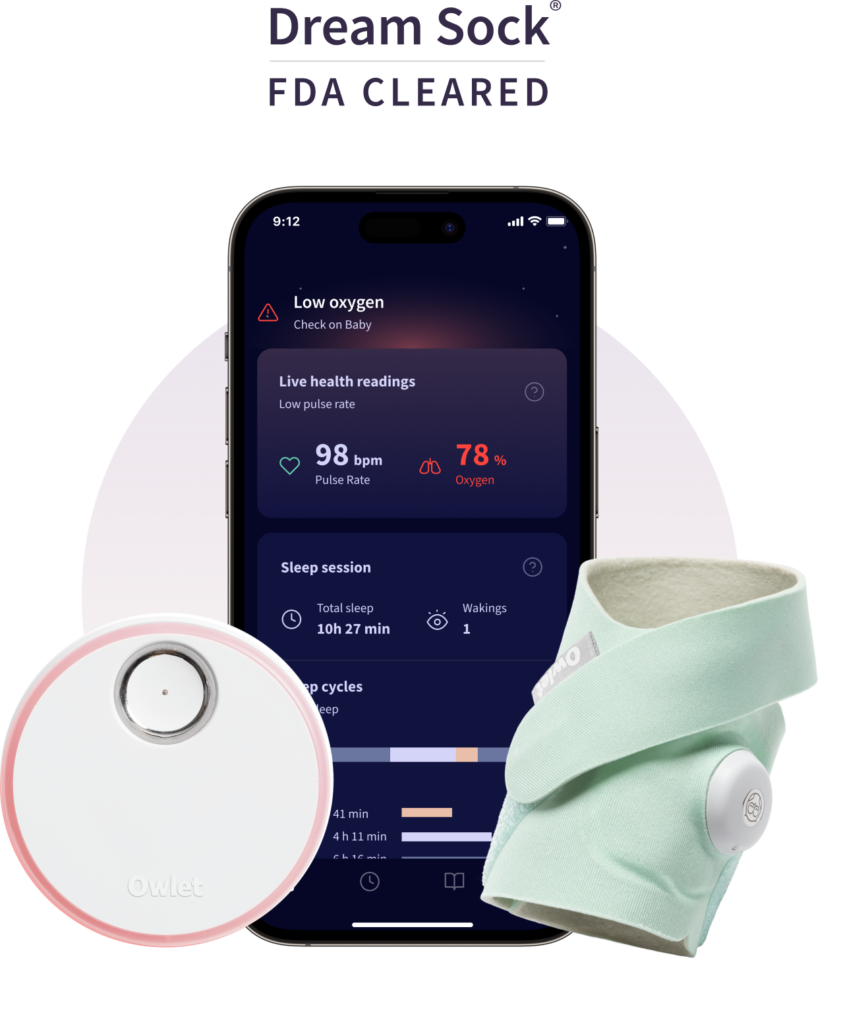
Some really good news for Owlet. The Dream Sock finally got to the mountain top and received de novo FDA clearance for pulse oximetry. To date, it is the only over-the-counter medical pulse oximetry device for the baby market. This adds to the device’s Baby’s Live Health Readings, including pulse rate and oxygen saturation level. The platform also provides Health Notifications, which send alerts to a smartphone with lights and alarm sounds if baby’s readings fall outside of preset ranges. Existing and new Dream Sock buyers will be upgraded to the new features by end of 2023. The Dream Sock is for use with infants 1-18 months and 6 to 30 pounds. Pricing observed for the current Dream Sock is in the $300 range. Owlet release

This follows FDA clearance for the prescription BabySat in June [TTA 21 June]. That is scheduled to be introduced later this year in the US only. The non-prescription Dream Duo, which combines the Dream Sock with a baby cam, will continue to be sold. 

Financially, things have improved a lot since last year. The stock as of 11 July was restored to NYSE listing, but it required a reverse split and an 18 month compliance plan, Currently, it’s trading at about $4.80 which is NYSE compliant, up from well below $1 in June. Also in July, they hired a new president and chief revenue officer, Jonathan Harris, from recently acquired air purification system Molekule. In August, they reported a Q2 adjusted EBITDA loss of $4.3 million, narrowed substantially from prior year Q2’s $16.7 million. This was achieved on lower revenue of $13.1 million versus last year’s $18.3 million. Q1 revenue was $10.7 million. Q3 will be reported on 13 November. Release  Having followed them since the ‘telehealth for the bassinet set’ days of 2012-2013, their continued independence, and their focus on baby health, this Editor continues to wish them bonne chance.

Mass General Brigham’s hospital-to-home and home care programs get a Best Buy boost. Mass General plans to integrate Best Buy’s delivery capabilities for their Healthcare at Home program in several areas. For Home Hospital acute care, Best Buy will supply the Current Health remote patient monitoring program to build out a technology-enabled clinical delivery model that connects patients to nurses, paramedics, advanced practitioners, and physicians. For Home Care, Best Buy will supply Lively Mobile Plus personal emergency response system (PERS) and leverage out capabilities such as Geek Squad to supply Mass General Brigham (MGB) patients with delivery of home-based care and logistics management for the care team. MGB plans to introduce Best Buy as part of Home Hospital in five Boston-area acute care hospitals. The program is for patients with heart disease, chronic obstructive pulmonary disease (COPD) and infections. While their Home Care operation is stated by MGB to be the largest certified provider in New England, the Home Hospital program can presently cover only 33 patients at a time. MGB’s goal is to shift 10% of inpatient care to patients’ homes over the next five years, so expanding capacity and capabilities are critical. FierceHealthcare, Mobihealthnews, MGB release

Get your One Medical now, just $99 per year or $9 a month! It’s an offer hard to refuse for Amazon Prime members. It’s half off the annual membership of $199, with additional members up to five for only $6 a month or $66 annually. What Prime members get is 24/7 virtual care access without further charge through their app that includes video chats with licensed providers plus their “Treat Me Now” service, fast care for common issues like cold and flu, skin issues, allergies, and urinary tract infections. It does not include any One Medical in-office services, if available in the member’s area. The 200 million+ Prime members were briefly offered in February a $144 membership but apparently this new incentive is not only at a deeper discount, but also longer term or permanent.

Time to make that $3.9 billion acquisition pay off. This push is clearly to build up One Medical membership, which stood at only 836,000 members at end of 2022, and build up cash flow. Amazon is not reporting on the success of the earlier discount offer. A question this Editor has–if 1 million Prime members signed up–that’s only a 0.5% rate–does One Medical have the telehealth capacity to serve these patients, especially at peak usage such as cold and flu season?

Prime members are also able to access Amazon Care, which is virtual only, cash-only by medical event asynchronous telehealth services. If a Prime member goes in person to a One Medical practice, they do take insurance. FierceHealthcare, Healthcare Dive, Amazon Prime offer page


DOJ drops appeal to block UHG-Change; more hints that FTC will be hunting big game with Amazon

DOJ has walked away from trying to stop the already-closed UHG-Change Healthcare merger. The US Department of Justice, which had appealed in November the District Court of DC approval in late September of UnitedHealth Group’s acquisition of Change Healthcare, on antitrust grounds, decided ‘enough egg on face’ and dropped its appeals court filings on 21 March. DOJ did not respond to Reuters’ report. Change is being integrated into OptumInsight and will be kept separate from the health plans. The DC District Court ruling found that DOJ did not conclusively prove its allegations of antitrust and loss of competition in services to hospitals and other providers. Statements from UHG’s competitors such as Cigna, Aetna, and Elevance (Anthem) that the acquisition would not lead them to ‘stifle innovation’ also weakened the DOJ’s case. Had the appeal been successful, it would have forced separation of Change Healthcare’s businesses, which are being quickly integrated into OptumInsight.  Healthcare Dive, Becker’s. Also TTA 4 Oct and 22 Nov 22.

Elsewhere in DC, it’s hunting season for the FTC, and its sights are fixed on Big Game called Amazon. POLITICO confirmed the speculation (or gave advance notice) [TTA 3 Mar], that FTC was building a multi-layered case beyond the Amazon-One Medical buy and warnings about failing to maintain consumer privacy [TTA 3 Mar] to include multiple practices. The POLITICO report indicates that there are at least six ongoing investigations by the FTC’s competition and consumer protection teams, with three apparently near the boiling point of action:

  • Blocking the acquisition of iRobot, famous for its Roomba robot vacuums. Amazon’s $1.7 billion acquisition has stalled with FTC rumoring action and Amazon apparently shutting down any further information. It does not have UK or EU approvals, which gives the FTC some more time to build a case. iRobot is the largest maker of robot vacuums. An acquisition would be expected to shut out competitive manufacturers marketing on Amazon such as Samsung. Their report indicates that FTC’s staff attorneys are leaning toward suing to stop the deal. Court action is expected in the next few months or sooner. 
  • Privacy investigations involving data security from their Ring camera/security system business and the Alexa voice assistant. The Alexa investigation also involves potential violations of the Children’s Online Privacy Protection Act. iRobot, Ring, and Alexa also tie into another FTC concern that Amazon is cornering the market on connected home devices.
  • Retail operations. These possibly could be around bundling services through the Prime subscription business and how competitor data is used on the Amazon platform to ‘outmuscle’ them. There is also a deceptive advertising probe around the use of the “Amazon Choice” label for certain products, including pay-to-play practices.

There is also scrutiny of how Prime and other Amazon services entice customers in with offers for expensive subscriptions, then make it extremely difficult or opaque to unsubscribe. This deceptive practice is called a “dark pattern”. Stay tuned.

What’s up with Amazon in healthcare? Follow the money. (updated)

Updated–click to see full page. Amazon is the Scary Monster of the healthcare space, a veritable Godzilla unleashed in Tokyo, if one listens to the many rumors, placed and otherwise, picked up in mainstream media which then are seized on by our healthcare compatriots.

According to CNBC’s breathless reporting, they have set up a skunk works HQ’d in Seattle. When they posted job listings, they were under keyword “a1.492” or as “The Amazon Grand Challenge a.k.a. ‘Special Projects’ team.” In late July, these ads for people like a UX Design Manager and a machine learning director with experience in healthcare IT and analytics plus a knowledge of electronic medical records were deleted. Amazon has separate initiatives on selling pharmaceuticals and building health applications to be compatible with Echo/Alexa and other smart home tech. Both have come up in the context of the CVS-Aetna merger, where buying up state pharmacy licenses cannot be kept secret (see end of our 8 Dec article) and that efforts to extend Alexa and Echo’s capabilities aren’t particularly secret.

A quick look at Bezos Expeditions, Amazon supremo’s Jeff Bezos’ personal fund, on Crunchbase reveals several healthcare investments, such as GRAIL (cancer), Unity Biotechnology (aging), Rethink Robotics, and Juno Therapeutics (cancer). Not really things easy to sell on Amazon.

Last week, Amazon reportedly hired Dr. Martin Levine, who ran integrated primary health Iora Health’s Seattle-based clinics, according to CNBC and Becker’s. They met with Iora, Kaiser, and the now-defunct Qliance about a year ago on innovative healthcare models. More breathless reporting: they are hiring a “HIPAA compliance lead.” 

What does this all mean? It may be more–or less–than what the speculation is. Here’s what this Editor believes as some options:

  • Alexa and Echo are data collectors as well as assistants–information that has monetary value to healthcare providers and pharma. To this Editor, this is the most likely and soonest option–the monetization of this data and the delivery of third-party services as well as monitoring.
  • Amazon now employs a lot of people. It is large enough to create its own self-funded health system. It’s already had major problems in the UK, Italy, and even in the US with healthcare and working conditions in its warehouses. Whole Foods’ non-union workers are prime for unionization since the acquisition (and also if, as rumored, robots and automation start replacing people).
  • A self-funded health system may also be plausible to sell  (more…)