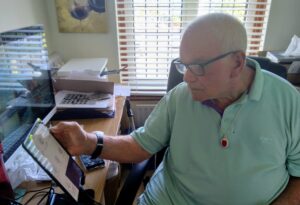
Mount Sinai Health Partners (NY) launches Babylon Health telehealth app

Mount Sinai Health Partners, through New York Telemedicine Associates, has premiered Babylon Health’s telehealth app as part of its services with five large New York health plans: Empire Blue Cross Blue Shield Commercial and Medicare Advantage; Humana Medicare Advantage; Oscar Commercial, and Cigna Commercial. The coverage of these five plans is claimed to be in the millions. Mount Sinai’s network covers Manhattan, Brooklyn, Queens, and most of Long Island.

The app includes the Babylon chatbot and the opportunity to set video consults with a doctor. The app also has COVID-19 information and a chatbot app which leads you through a self-diagnosis menu, interactive advice, and will set up an appointment to speak to a healthcare professional. Release, Babylon Health US’ page on the Mount Sinai program   This Editor will add that Mount Sinai is rather late to the party, as rival NYU Langone has been promoting their telehealth Virtual Urgent Care program for months.

The Forbes article starts off like a glossy Babylon press release, but continues on to some of Babylon’s recent and controversial press, such as Saudi Arabia’s Public Investment Fund (PIF) participating in the last $550 million investment round and the tart feedback of many UK doctors on how much ‘care’ can be pushed off onto apps like ‘GP At Hand’. Not mentioned is the controversy around the accuracy of the chatbots when it comes to giving advice, which was the subject of Newsnight and @DrMurphy11 (Dr. David Watkins), who has been raising performance issues for some time. [TTA 27 Feb]

Is a COVID-19 ‘immunity passport’ next for the UK to get back to work?

The Guardian is reporting that UK ministers are in talks with Onfido, a UK company which uses facial biometrics for identity verification. An ‘immunity passport’ would combine identity verification with a medical history on whether that person has had COVID-19. The government could use antigen tests, which show current infections, or a test that detects IgM antibodies. For past infections, the test would need to detect IgG antibodies. This passport would be several months in the future.

The question is if the tests work especially for past infections and access to reliable testing. For instance, the earliest instances of COVID-19 may have occurred in the US starting in late November. Will the IgG antibody still be present? These tests are still developing and are not widespread yet, despite many companies’ claims. Both Roche in the US and Quotient in Edinburgh have new lab-based tests that apparently have superior accuracy. Roche received emergency use approval from the US Food and Drug Administration (FDA) for their test, while Quotient is claiming 99.8 accuracy for 36,000 antibody tests a day in 35 minutes.

The process that Onfido outlined works like this:

  1. Use an app to take a facial picture that you match to your government-issued id. The app matches the two to verify your identity and can also detect if the ID is fake.
  2. Get a test to determine whether you have had the coronavirus
  3. At work, you open the app at reception and take a picture of your face that generates a QR code. This is scanned by the receptionist and confirms whether you have immunity or not.
  4. If you have a match, you can enter the workplace.

Of course this discriminates against those with smartphones, and if your facial appearance has changed. Example: if your government ID was taken with a beard and you’re now clean-shaven, in this Editor’s estimation you will have a problem. Most government IDs also look like the pictures of missing appearing on milk cartons, so what your app takes could very well not match.

It’s also unknown whether the antibodies even confer immunity–and for how long.

Contact tracing in the UK: the biggest digital health test yet?

Is uncertainty over risk of data breaches and violation of data privacy in the NHS contract tracing app the real barrier to adoption? Or is the risk more complicated–the user perception of  app reliability for them to upend their life? A person might not want to have the government on record as telling them that they were “sufficiently near” a person diagnosed with coronavirus–and also believe that the app does not provide reliable information. The person receiving the alert very well may not be infected, but the risk is that they may be compelled to self-isolate and even test with repeated alerts that may or may not be accurate.

In other words, the ‘false positive’ alert syndrome. We go back to this syndrome to understand that the real test of confidence is the perception that the algorithms will, with a good deal of confidence, screen for the number and duration of contacts of other people with symptoms, and that the complex algorithms will create a correct evaluation.

With a system that relies on about 80 percent of adoption, according to a University of Oxford team, the real factor in a successful contract tracing app may be Human Behavior– how users with smartphones perceive the app as reliable in alerting them for enough risk to self-isolate, with privacy and security lesser concerns.  UKAuthority  Hat tip to reader Alistair Appleby

Telehealth and the response to COVID-19 in Australia, UK, and US: video

Malcolm Fisk, whom our Readers know as Senior Researcher at the De Montfort University in Leicester, was kind enough to forward information on a recent video interview with André Martinuzzi of the Living Innovation Project, a Europe-wide innovation group with 14 partners ‘co-creating the way we will live in 2030’.

This 17:30-minute video covers a lot of ground on the UK response to the coronavirus (the uncertainty as of mid-April), how the UK, US, and Australia have used telehealth in response, and how telehealth can ‘stick’ after the crisis, but only if we design an inclusive infrastructure. You can view the video on the Living Innovation page by clicking on ‘View Video’ on the upper right hand side, or go directly to YouTube.

There’s a brief preview in the video of Dr. Fisk’s paper (awaiting publication, co-authored with Anne Livingstone and Sabrina Pit) on ‘Telehealth in the Context of COVID-19: Changing Perspectives in Australia, the United Kingdom and the United States’. Telehealth was very rapidly put into use for diagnosis, monitoring, and home treatment of COVID patients. Restrictions were lifted and investments made in communicating the availability of telehealth. However, the infrastructure for telehealth is strained, especially in the US with a mixed, primarily private model dependent on payers or individuals paying per virtual visit. In the UK, health trusts have encouraged the use of telephonic and audio/video models. In Australia, telehealth, particularly in remote areas, is well established. TTA will keep Readers posted on the publication of this paper. A big hat tip to Malcolm Fisk.

Has the ‘river of knowledge’ reversed its natural course? A lighter look at technology’s other effects.

A long-time TTA Reader, John Boden, takes a rueful glance at how ‘smart’ technology has not just disrupted the phone and computing markets, but has disrupted the ‘natural order’ between generations today. A virus-free look at a phenomenon that’s changed a natural dynamic.

As I am writing my experiences, and thinking about my grandparents and parents, I remember how many of the little things they taught me. It is not the big lessons I am talking about, but the details. A few examples: how to sharpen a knife; how to ground a sparkplug without getting shocked; how to tie a bowline; how to saw a board; how to chop down a tree, and hundreds of other skills. The most amazing change has taken place today. Now, so many times it is the grandchildren teaching the grandparents. The advent of technology is the cause. Cell phones, e-readers, Google, directions to anywhere from anywhere, Amazon shopping, Uber, movies, music, and on and on. All came screaming into our lives in the last decade or two, like an avalanche filling those little machines we hold in our hand.

The acquisition of the new skills needed is no longer based on the experience and hard-learned lessons that were passed down from one generation to the next, from the master craftsman to the apprentice, from parent to child, as has always been the way.

Suddenly we elders were having to learn new ways of doing things and it felt like we were drinking from a firehose. We finally gave in and bought ourselves one of those new phones we can carry around with us and flip open to use wherever we are, and then, BAM, there is a newer one, and then a newer one, and now it is much more than a phone. It is a map with a guide that tells you directions and even insists on telling you when to turn. It is a record player, a camera, a mailman that delivers immediately and you can even answer back immediately.

WHOA – WHOA – WHOA, this is too much. I cannot even get it out of my pocket before it stops ringing. Then, which button do I push to see who called? Oops, did they leave a message? Why is this screen blinking? Icon? What icon? (And what’s an icon anyway?) Do I push? Oops! Tap! Do not push! And this is just the phone part of the thing.

Where have all the dials gone? Where are the gauges with needles that told us how everything was working? What do you mean I just walk up to my car and it will know who I am and unlock the doors so I can get in? How can all this stuff that did not exist even a few years ago have so completely taken over our lives?

Ah, the instruction manual, that will explain it all! Where is it? What do you mean it is on the phone? I cannot see it. Where is it? Just go to the URL, we are told. The URL? What is that? Is it in the bathroom near the URinaL?

At about at this point that there is only one way out of the mess. Call a child or grandchild to help lead you out of this technology maze we have found ourselves in. Right now there never seems to be a skill that we have learned in our many years of experience that they need. So, today the river of knowledge seems to be in reverse of how it has been for centuries, flowing uphill.

Pretty soon our employment laws will be saying only those under the age of 16 are allowed to do this type of work!

Contact tracing app ready for Isle of Wight trial this week: Hancock. But is it ready for rollout? (updated)

Announced today was what in normal times we’d call a beta test of the contact tracing app [TTA 25 April] developed by NHSX on the Isle of Wight. Transport Secretary Grant Shapps announced it Sunday to Sky News. BBC News detailed today that council and healthcare workers will be first to try the contact-tracing app starting Tuesday at 4pm, with the rest of the island able to download it starting Thursday. Gov.UK  The Isle of Wight has approximately 80,000 households.

Update: How the Isle of Wight residents reacted to the app. BBC News

How the app works: if someone reports COVID-19 symptoms through the app, that information goes to the NHS server and the server downloads that tracking information. The app then notifies the other app users that the person has been in contact with over the past few days, contact being defined as within 6 feet for 15 minutes. This can include someone a person has sat next to on public transport. The tracking in the app is via Bluetooth LE to other mobile phones. The app then alerts contacts with the app and gives advice, including how to get a test to confirm whether or not they do have COVID-19. Users will be able order tests through the app shortly.

Use of the app is voluntary and personal data is limited to postal code and what the user opts in to. So the intent of the app is to warn and test to reduce future outbreaks, as full lockdown is not and cannot be a permanent state. Mr. Shapps stated to Sky that the goal is 50 to 60 percent of the country using the app.

Unfortunately, many of the most vulnerable–older, sicker, and poorer adults–won’t have the smartphone, much less the app, and even with the smartphone, won’t be able to download the app or use it. It’s dependent on self-reporting, which may or may not be reliable. Phones can turn off Bluetooth LE. Another consideration, and one this Editor hopes has been tested, are extremes: extreme density in population and contact areas, and extreme distance, as in rural areas. Additional from BBC News, including a short Matt Hancock clip from the Monday briefing with an almost-touch of his nose or mouth right at the start (!)

The Guardian brings up privacy concerns as well as a Health Service Journal (HSJ) report that the app was ‘wobbly’ and had cybersecurity concerns which would exclude it from the NHS’ own app store. The HSJ story quoted their source stating that the government is “going about it in a kind of a hamfisted way. They haven’t got clear versions, so it’s been impossible to get fixed code base from them for NHS Digital to test. They keep changing it all over the place”.  The reporting data also will reside on NHS servers, not individual phones, but pushes out the alert from the server.

Worldometer gives the current UK statistic as total of 190,584 with 28,734 deaths. While case diagnosis continues to increase, fatalities have been steeply declining. There is concern that COVID is yet to spike in rural areas, as cases have concentrated in Greater London, the Midlands, and the North West. New York and New Jersey alone in the US have over 456,000 cases with just under 32,900 fatalities attributed to COVID-19, 3/4 of which have been in NY–almost as much as the entire UK. (However, the fatality statistic is widely questioned as not screened for contributing causes, since there are certain incentives for attribution.)

In other NHS news, NHS Digital, the information and tech side of NHS (not the innovation unit) has named a new deputy chief executive. Pete Rose will also take on the role of chief information security officer for the Health and Care System, including live services, cybersecurity, solutions assurance, infrastructure, and sustainability.

10 years in 2 months: prognosticating the longer-term effect of COVID-19 on telehealth, practices, and hospitals

crystal-ballThis Editor recounted last night in the article below on The TeleDentists’ fresh agreements with Cigna and Anthem the observation of a former associate who has been in the thick of the remote patient monitoring wars for some years that telehealth/telemedicine has progressed 10 years in 2 months. Seema Verma, the head of the Centers for Medicare and Medicaid Services (CMS), stated to the Wall Street Journal (paywalled),  “I think the genie’s out of the bottle on this one. I think it’s fair to say that the advent of telehealth has been just completely accelerated, that it’s taken this crisis to push us to a new frontier, but there’s absolutely no going back.” Even in a short period of time, CMS-reported telehealth visits as of 28 March trebled from 100,000 to 300,000. When the April numbers are in, it would not be surprising to see it grow well into seven figures.

The genie may be out of the bottle, but what will the genie do? Genies are, after all, unpredictable, and fly around.  Out of the smoke, some educated guesses:

  • Insecure, non-HIPAA compliant audio/video platforms will be the first which should be struck from CMS approval. Zoom has become a hackfest, with all sorts of alerts from mobile providers like Verizon on how to secure your phone. (An organization of which this Editor is a member had a panel this week completely disrupted by a hacker in five minutes.) Skype’s problems are well known. The winners here will be telehealth platforms that integrate well with EHRs, population health platforms (or may be part of population health platforms), and have robust security.
  • Primary care practices and specialists, who’ve been surviving on non-F2F visits, will be adjusting their practices to patient demand, and integrating telehealth with physical visits in a way that their patients will prefer. This means a search for integration of EMRs/EHRs with secure platforms and reconfiguring areas such as care coordination. If planned correctly, this could create better management of patients with multiple chronic conditions.
  • Actual physical visits will rebound, creating financial pressure on Medicare, hospitals, and private payers. How many people’s health has declined in two-three months is key. Small practices, who may see this first, will see another level of pressure, because they will be held to their Medicare quality metrics in value-based models even if adjusted. Hospitals will also rebound–if they are able. The dark side: private payers may run the numbers and scale back on benefits for the 2021 year especially if COVID is projected to make a return.
  • Behavioral health may benefit, yet drive individual practices and a wave of retirements, or a consolidation into clinic or group settings. There’s a reason why Optum is buying out AbleTo; we may see a wave of competitor acquisitions in this area with the emphasis will be on cognitive health and short courses. Why retirements? Many psychiatric practices are still independent, concentrated geographically, and the average psychiatrist is over 50. Psychiatric EHRs are both costly and not particularly suited to practices. If faced with technological challenges, a lot of MDs and senior clinical psychologists may very well exit–threatening clinics which need MDs to legally operate.
  • Rural health’s failure accelerated. USA Today’s analysis pinpointed at least 100 rural hospitals to close within the year. They already operated on thin margins, but with COVID expenses for additional equipment, the closing down of more profitable elective procedures and dependence on Medicaid, the over 1,100 unprofitable hospitals, over half of which are the only hospital in their county, have received a body blow. HHS allocated $10 billion to rural hospitals and clinics of the $100 billion aid package, but it may be too little and too late. Becker’s Hospital Review continues to track the bankruptcies and closures. Here there are no easy solutions from the digital health area.
  • A culture of cleanliness should accelerate. If the genie pulls this out of the bottle, one major benefit will be that hospital-acquired infections will decline. Effective sanitization methods that reduce human application and scrubbing will be the ones to look at: disinfecting foggers and UV full room or area systems–or combinations of same. Cleanliness and lack of virii and bacteria may become a new metric. Look and bet on companies that can provide this, from rooms to computers/mobile tablets and phones.

Readers can help with these prognostications and especially how they will play out not only in the US, but also in the UK, Europe, and worldwide.

Anthem Blue Cross Blue Shield adds virtual dental care with The TeleDentists in 9 states

Could it be that a certain sage from New Jersey is on the money in predicting to this Editor that telemedicine has advanced about 10 years in the past two months? Anthem Blue Cross and Blue Shield (BCBS) is adding the virtual dental care provided by The TeleDentists to its plans in nine states: Maine, New Hampshire, Connecticut, Ohio, Kentucky, Indiana, Wisconsin, Colorado, and California. Through 30 June, the plans will cover virtual exams at 100 percent with no deductibles, copays, paperwork or claims to file. The virtual visit dentistry service offered by The TeleDentists is designed for urgent situations and to avoid an initial visit to the ER which can be several hundred dollars.

A member will locate a remote dentist through Anthem’s provider finder, then link to The TeleDentists’ site where the member is screened for history. A connection to a dentist then takes place quickly, in as little as 10 minutes, 24/7/365. The format is a video consult plus chat (TeleDentists uses the HIPAA-compliant VSee platform) to evaluate the plan member, then to guide on next steps. If necessary, the dentist will prescribe medications, such as antibiotics and non-narcotic pain relievers.

In the US, Anthem is #3 after UnitedHealthCare and Kaiser. It is the largest for profit insurer in the Blue Cross Blue Shield Association. In California alone, it has 800,000 members.  This adds to The TeleDentists partnership with Cigna announced earlier this month [TTA 15 April]. Releases (9) on Business Wire. Hat tip to CEO Howard Reis.

AliveCor, OMRON announce cardiac monitoring strategic alliance, equity investment

You know it’s a step towards a more normal state of affairs when this Editor can cheerfully announce something which has really nothing to do with a virus, pandemic, or something ending in 19, although there’s the expected COVID spin. Almost getting lost in All That was the announcement last week of a global strategic alliance between AliveCor, the developer of KardiaMobile, and OMRON Healthcare, the Kyoto-based cardiac health and wellness company. Cardiac monitoring was around well before this virus and with a focus on mobile monitoring, is a major up-vote for an innovative company like AliveCor.  What’s in the release is the announcement of a global alliance, technology integration, and at the very end of the release, closing of an undisclosed equity investment by OMRON Corporation (OMRON Healthcare’s parent). This is actually the second equity investment which OMRON has made in AliveCor, with the first being in March 2017 with the Mayo Clinic. Hat tip to co-founder and ever-dapper Dave Albert, MD via Twitter

The Future of Clinical Trials in the Post-Pandemic Era: HITLAB Seminar Series 6 May

Wednesday 6 May, 11am to 12 noon Eastern Daylight Time

How can virtual trials improve patient enrollment, retention, and engagement in a clinical trial? How much of the future CRO model will be defined by digital solutions? These are two questions key for many digital health companies as they expand and/or pivot their business model. Answering these questions will be the task of the panel discussing “Clinical Trials in the Post-Pandemic Era”, a free virtual midday seminar hosted by HITLAB in New York.

Panelists are: Joris van Dam, Head of Digital Therapeutics at Novartis, Natalia Kotchie, Vice President R&DS Applied Data Science Center at IQVIA, Bill Taranto, President & General Partner at Merck Global Health Innovation Fund, and Jeff Ventimiglia, Senior Vice President, Medidata Solutions (sponsor). The panel will be moderated by Professor Stan Kachnowski, Director of the Digital Health Strategy program at Columbia Business School.

Seats are limited to 1,000. Registration is necessary through Eventbrite here. Registrants will receive a follow-on email with instructions on how to access the webinar.

Optum rumored on the digital health acquisition hunt again with AbleTo virtual behavioral health

Optum, the part of UnitedHealthGroup that runs engagement, technology, and financial services for UHG, is in advanced negotiations to acquire AbleTo, a New York City-based behavioral health and virtual therapy provider, according to CNBC. Unusually, there is also a number attached: $470 million, about 10 times their forward revenue.

AbleTo is already well acquainted with Optum, as their Ventures arm provided financing in January 2019 in a corporate round. Over the past 12 years, the company has raised close to $47 million through a Series D. Interestingly, one of the early investors was Aetna, pre-CVS. Crunchbase

Optum of late has been on an acquisition tear, with first dialysis provider DaVita for $5 billion and then telehealth/remote patient monitoring company Vivify Health for an undisclosed but certainly far less amount. AbleTo is attractive not only in the context of telehealth (at last the belle of the ball!) but also for the underserved behavioral health market. Confirmation of its attractiveness? A fresh crop of competitors such as Quartet Health, Lyra, and ‘traditional’ telemedicine providers such as Doctor on Demand.

AbleTo was founded by Michael Laskoff, at one time quite the ‘face’ in the NYC digital health scene, who went on some years back to found another behavioral health company, Annum Health, focusing on alcohol addiction. AbleTo is one of the pioneers of virtual therapy, both telephonic and audio/video, using care teams of coaches and LCSWs to provide short-term cognitive therapy sessions. It is certainly an underserved market with over 50 percent of those researched citing cost and stigma to not obtain treatments, with about 2/3rds surprisingly under age 50, but not surprisingly about half with one or more chronic conditions. Most of its business is with payers and self-funded companies, although it still offers individual therapy plans.   Mobihealthnews

NHSX announces TechForce19 challenge awards (updated), COVID-19 contact tracing app in test for mid-May launch (UK)

NHSX, the group within the NHS responsible for digital technology and data/data sharing, made two significant announcements yesterday.

TechForce19 Challenge Awarded

NHSX, with the Department of Health and Social Care (DHSC) and the Ministry for Housing Communities and Local Government (MHCLG), yesterday announced the 18 finalists in the TechForce19 challenge. This challenge was set up quickly to support the problem of vulnerable, elderly, and self-isolating people during this COVID-19 quarantine to reduce actual and feelings of loneliness and lack of safety.

Like most everything around coronavirus, this was fast tracked: the challenge announcement in late March, submissions closing on 1 April, and the selection announced on 24 April. Each finalist is being awarded up to £25,000 for further development of their technology systems.

The 18 finalists include a number of familiar names to our Readers (who also may be part of these organizations): Feebris, Neurolove, Peppy, Vinehealth, Beam, TeamKinetic, Alcuris MemoHub, Ampersand Health, Aparido, Birdie, Buddi Connect, Just Checking, Peopletoo/Novoville, RIX Research & Media (University of East London), SimplyDo, SureCert, VideoVisit, and Virti. Their systems include checking for the most vulnerable, volunteering apps, mental health support, remote monitoring, home care management, and in-home sensor-based behavioral tracking. Details on each are in the NHSX release on their website. NHSX partners with PUBLIC and the AHSN Network (15 academic health science networks). Hat tip to reader Adrian Scaife

Updated 29 April. Adrian was also kind enough to forward additional information to Readers on Alcuris MemoHub (left) as a finalist in the remote care category. Partners in the test are Clackmannanshire and Stirling Health and Social Care Partnership (HSCP), East Lothian HSCP, South Tyneside Council, and Stockton on Tees Borough Council and last for about two to three weeks. Release

COVID-19 contact tracing

NHSX announced the release, in coming weeks, of a contact tracing app to track your movements around people and if you become positive for coronavirus, “you can choose to allow the app to inform the NHS which, subject to sophisticated risk analysis, will trigger an anonymous alert to those other app users with whom you came into significant contact over the previous few days.” The app is being tested in ‘early alpha’ at RAF Leeming (Computer Weekly). The app will tell users that they are OK or if they need to self-isolate. Far more controversial, if one cares about privacy, despite all the caveats. Based on the articles, NHSX is targeting a release of the app by mid-May according to the BBC, which also broke the RAF test. It will presumably acquire a snappy name before then. ComputerWeekly 24 April (may require free business registration), Matt Hancock Commons statement 22 April

CEO to CEO: TSA’s Alyson Scurfield interview with Tunstall CEO Gordon Sutherland (updated)

If you are following the changes at Tunstall Healthcare, TSA’s Alyson Scurfield’s talk with Gordon Sutherland has some significant news. The investment from Barings, M&G, and the lender group has been confirmed as a change of ownership. It could be inferred from the release, but was not explicit.

From Mr. Sutherland: “The change in ownership deal is now subject to several legal steps including a European Commission review regarding Competition Law. We expect to be able to address any issues and the deal to be signed in late June/July.” Checking back on the Charterhouse website, Tunstall is still categorized as an unexited portfolio company (or ‘unrealised’ in a more delicate term).

Another reveal in this conversation is a strategic statement that segments care and presumably the company’s direction into four parts, somewhat like Roman Gaul (which was three or five, depending on the history you’re reading):

  1. Reactive care: for instance an alarm bell or PERS press
  2. Proactive care: reactive plus social care and well checks
  3. Predictive care: sensor-based tracking in the home. Presumably this would be rules-based (i.e. time) on ADLs.
  4. Tunstall has added to this Cognitive Care or “Intelli-Care” which would combine presumably #2 and #3 along with other healthcare data from the user which would be analyzed to deliver social or health ‘nudges’. While in its ‘infancy’ according to Mr. Sutherland, this type of system would also detect changes in vital signs which require intervention.

#3 and especially #4 referred to as in ‘infancy’ leave this Editor puzzled. Back in 2006-9, the QuietCare system (still sold by Care Innovations) had changes in ADLs based on a normative model baselined over two weeks pretty much nailed down. There are more advanced systems such as CarePredict that take that motion and movement and have put it on a wrist-based sensor system that is now sold for individuals at home as well as in group living–with fall prediction and a PERS for good measure. Vital signs monitoring can also be done with other personal devices, watches, and smartphone/tablet reporting, but medical grade monitoring is another step further with far more complex integration.

Part 2 of the conversation will discuss what are the anticipated changes to health and social care service sectors and the proposed strategic direction of TSA. Hat tip to one of our Readers

Updated 25 April: A further snippet on how the new investment will play out at Tunstall is found on healthcare business intel provider Laing Buisson’s Care Markets website. In their view, the Barings/M&G investment will be “supporting the restructure, which will see the business recapitalised and debt reduced to £180m….” The rest is unfortunately only available to Care Markets newsletter subscribers, of which we are not. Again, no mention of Charterhouse.

RIP Doug Miles, founder of UKTelehealthcare

We are sad to let our readers know that Doug Miles, the founder and former Chairman of UKTelehealthcare, passed away on the 28 March 2020 a year after being diagnosed with pancreatic cancer.

Doug had worked in the TECS sector for over twenty-five years, initially as the manager of MASCOT Telecare in Merton, South London, before founding London Telecare in 2005. Doug and co-founder John Chambers relaunched the company as UKTelehealthcare in 2013 and he continued to chair the organisation until retiring in December 2017.

Gerry Allmark (UKTHC MD) said “Doug was a true gentleman of the TECS industry and will be greatly missed by me and the UKTHC team who he continued to support after his retirement. He will also be missed by his many colleagues and friends in the telecare sector.”

Our thoughts and prayers go out to his wife and family at this particularly difficult time for them.

Doing more for less in primary care – DHACA’s Wednesday webinars on 22 and 29 April

DHACA restarts our webinar series after Easter Week with a panel of three contrasting suppliers of GP process improvement (aka “total triage”) software and the NHS England expert on the topic, at 10am on Wednesday. In our first Webinar, huge potential benefits were identified from use of this software, which is particularly well suited to the requirement of the current pandemic that face:face consultations be avoided where possible.

However the benefits don’t stop there. Patients, clinicians and practice managers all benefit hugely…and I can speak from personal experience as my local surgery converted recently and has never looked back! We’ll be exploring these benefits in more detail the following Wednesday 29th April in the following webinar when users – both professionals and patients – describe their experiences of the software, and the challenges implementing it.

For more information and to book for this week’s webinar go here and for next week’s (29 April) go here.

We have more exciting webinars coming up, including self-testing to reduce face:face GP consultations further so keep an eye on DHACA’s Webinar listing for when they are published.

Medopad rebrands, pivots as Huma, acquires BioBeats and TLT, names Alan Milburn as chairman (UK)

Medopad, a London-based software developer for healthcare specializing in digital biomarkers generated by wearables and apps, has rebranded as Huma and, with the brand splash, announced the acquisition of two companies:

  • BioBeats, a London-based mental health monitoring app and wearable combination that tracksheart rate, activity, sleep, mood, and cognitive function to create a wellbeing model.
  • Tarilian Laser Technologies (TLT), based in Welwyn Garden City, is a developer of continuous blood pressure and cardiovascular non-invasive measurement technologies. Their assets include patents, software, and hardware awaiting US FDA approval.

Purchase details were not disclosed, but TechCrunch’s sources indicate a $10 million deal for BioBeats.

Joining Huma is former UK Health Minister The Right Honourable Alan Milburn as chairman of its board of directors.

Medopad announced last November a Series B raise of $25 million led by Leaps by Bayer, Bayer AG’s venture capital arm which also participated in their earlier Series A (CityAM/Crunchbase). Medopad’s focus to date has been primarily with life sciences companies to predict disease risk, condition progression, and diagnosis for chronic diseases including Parkinson’s (based on monitoring finger movements, in partnership with China’s Tencent), Alzheimer’s and diabetes. Which does make the pivot surprising, given the financing origin.

The Huma rebranding is accompanied by the usual quotes from the founder/CEO to explain the pivot from disease states to the ‘wellbeing’ sphere and Huma being reflective of humanity (see the daVinci-esque logo). The release quotes are also in Mobihealthnews Europe/UK (along with an unexplained doubling of their Series B raise; their total funding is $50 million). The release also lists offices in New York at the Genome Center on lower 6th Avenue and Shanghai. Hat tip to reader Paul Costello