What can be the long-term drivers of remote patient monitoring growth?

Is it as simple as getting simpler to use devices to collect long-term data that picks up trends and provides feedback that motivates to users? That is the surprise at the very end of this pre-HIMSS Healthcare IT News interview with Dr. Waqaas Al-Siddiq, chairman, CEO, and founder of Biotricity, a biometric monitoring and telemedicine company incorporating devices into monitoring systems for cardiac and pain management. Those of us who have worked for RPM companies know the variety of devices typically used by those monitored for chronic conditions can be stunning–and most of them aren’t easy to use for those with sight difficulties or mobility problems. Pain monitoring is especially tricky and subjective. Gaps in use are to be expected, even as these systems have become more mobile and smartphone connected. The popularity of continuous glucose monitoring (CGM) monitors such as the Dexcom G6 and Abbott’s Freestyle Libre system is a predictor–make it simple, eliminate something unpleasant, provide easy feedback, and you have a winner.

Dr. Al-Siddiq points out that we are at the early stages of monitoring for chronic disease. People with COPD, sleep apnea, and atrial fibrillation right now don’t have CGM level monitoring. There are also patients who are sent home from the hospital with no monitoring devices at all and won’t (or can’t) visit a doctor’s office. RPM organized at discharge, set up with a nurse, and connected to a doctor’s office would be ideal if the offices adopt a cohesive monitoring approach. But Dr. Siddiq adds the feedback to the user to trigger motivation, which to this Editor has been a missing element. 

So much of this is dependent on device and system design–clinical quality monitoring that’s easy to use and almost forgettable in everyday life, that provides feedback (reward experience), and that provides quality data that doesn’t overwhelm the clinician. A familiar trio to those of us who’ve been in the RPM Wars. 

Congress may extend emergency telehealth flexibilities for Medicare, high-deductible plans for five months in spending bill

The quaintly titled 2,741 page $1.5 trillion omnibus bill to fund the US government for the remainder of fiscal 2022, rolled out in the wee hours of Wednesday, includes an extension of telehealth flexibilities established under the COVID-19 public health emergency (PHE). The flexibilities extend full geographic coverage (versus rural only), location (home and medical facilities), and full payment for beneficiaries and providers, including some audio-only visits. This will apply, however, only to Medicare beneficiaries and providers, members of high deductible health plans (HDHP), and patients of rural health clinics (RHCs), and Federally Qualified Health Clinics (FQHCs). This is a five-month stopgap into 14 September. (The Federal fiscal year 2023 starts 1 October.)

The telehealth rule extension includes:

  • Practitioners such as physical therapists, occupational therapists, special therapists, and audiologists 
  • Originating sites can be anywhere in the US including the home and medical facilities
  • 1,400 Federally Qualified Health Centers (FQHCs) and 4,300 Rural Health Clinics (RHCs) can continue providing telehealth services including mental health visits
  • Waiving in-person initial visit requirement for mental health as well as postponing the in-person visit six months after receiving a telehealth visit
  • Audio-only allowed for Medicare
  • HDHPs have a continued ‘safe harbor’ to offer members telehealth services pre-deductible for the remainder of the 2022 plan year 

The vote is scheduled for the House today (9 March–still not finalized as of this writing), and to the Senate 11 March, with a concurrent short-term funding extension to give the Senate the usual time through 15 March. As of this time of writing, the floor wrangling continues with COVID-19 funding dropped and $13.6 billion in emergency non-defense aid to Ukraine added. The inclusion was cheered by ATA and ATA Action in their release; also Becker’s Hospital Review and Roll CallUpdate: the House passed the domestic portion of the bill 260-171 late Wednesday 9 March evening, and it moves on to the Senate.

Weekend short takes: ATA, APA call for permanent in-person evaluation waiver, mental healthtech raised $5.5B in 2021, Allscripts sells hospital/large physician EHRs to Harris Group for $700M, Cognizant-Microsoft extends telehealth-RPM

72 groups asking for permanent telehealth in-person evaluation waiver prior to prescribing controlled substances. The American Telemedicine Association (ATA), ATA Action, and the American Psychiatric Association (APA) plus 69 other healthcare groups have written the Drug Enforcement Administration (DEA) and the Department of Health and Human Services (HHS) to make the temporary waiver of in-person patient evaluation prior to prescribing controlled substances permanent, and to remove restrictions on patient location. The rationale is to increase access to care, specifically for mental health and substance use disorder treatment. Currently, under the soon-to-be ending COVID-19 public health emergency (PHE), mental health providers can prescribe controlled substances remotely through a telemedicine consult. The letter points out that studies confirm efficacy, clinician and dispensing would remain under current restrictions, and that DEA and HHS can work together to prevent drug diversion. Other signatories include Babylon Health, Teladoc, Zipnosis, One Medical, and Northwell Health. ATA release, ATA/APA letter.

Mental healthtech’s banner 2021 totaled $5.5 billion across 324 international deals. Industry researcher CB Insights found that:

  • Investment was up 139% versus 2020
  • Exits were also up 87% (43 versus 23). Of the 43, there were 35 M&As, five SPACs and three IPOs.
  • US companies dominated in mental health, raising $4.5 billion; EU $651 million, and Asia $289 million
  • Mega-rounds ($100 million+) totaled 15, all US and in Q4, versus four in 2020.

State of Mental Health Tech 2021 Report free download available on the CB Insights page. Mobihealthnews

Allscripts is unloading its declining hospital and large physician practice EHRs to Ottawa-based Harris Group for $700 million in a cash plus contingent deal. The Allscripts EHRs in the transaction are Sunrise, Paragon, Allscripts TouchWorks, Allscripts Opal, and dbMotion. Although the unit generated gross revenue of $928 million in 2021, its revenue was expected to decline 3-4% and EBITDA to shrink 10-15% in 2022. Allscripts is retaining Veradigm, which is growing 6-7% annually, and stated that expected after-tax proceeds of $600 million will be used for share repurchase and potential M&A related to Veradigm. Harris Group acquires and manages computer systems companies in North America, Europe, Asia, and Australia covering four sectors: public, private, healthcare, and utilities. It is owned by Toronto-based Constellation Software. HISTalk reports on the Allscripts investor call, Constellation release

Cognizant announced a collaboration with Microsoft Cloud for Healthcare to extend telehealth and remote patient monitoring (RPM) capabilities for their offerings combining remote patient monitoring and virtual health, utilizing connected devices such as smartwatches, blood pressure monitors, and glucose meters to collect and communicate patient health data to providers. Cognizant release

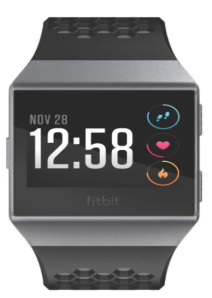
Feel the Fitbit burn (literally)–1.7 million Ionic models recalled due to battery burn hazard

It’s those lithium-ion batteries again. Reminiscent of Samsung’s exploding Galaxy Note 7 (and recently on fire Galaxy A21), Google’s Fitbit on Wednesday recalled 1.7 million Fitbit Ionic watches worldwide. In the US, there were 115 incidents reported with 78 burn injuries, including two reports of third-degree burns and four reports of second-degree burns. Internationally, there were 59 overheating incidents reported with 40 burn injuries.

The popular Ionic fitness and smartwatch sold about 1 million in the US and 693,000 internationally from September 2017 to December 2021. Fitbit stopped producing the Ionic in 2020. There are four models in four color combinations, including an Adidas edition. According to the US Consumer Product Safety Commission (CPSC) recall notice, owners should stop using the Ionic and contact Fitbit to receive pre-paid packaging to return the device. Upon receipt, owners will be refunded $299 with a discount code for 40% off five select Fitbit devices and accessories available through Fitbit’s discount store for a limited time. Original cost of the watch ranged online and at retail outlets from $200 to $330. 

The Fitbit help page has the details on where to mail the watches, refund, and discount. And disposal if one doesn’t care to return it. 

Do expect there will be some kind of a class-action suit against Google/Fitbit–the combination of injury and deep pocketed defendants is a magnet. Fox Business News

Thursday news roundup: Cigna deploys over $12B for investment, Cerner’s Feinberg to Humana board, Teladoc on Amazon Alexa, admitting Livongo problems, and XRHealth VR therapy scores $10M

Cigna’s opportunity piggybank just added $12 billion+. It’s a combination of selling off non-core businesses, share repurchasing authorization, and redeploying funds to areas such as capital investment and Cigna Ventures. This includes:

  • $5.4 billion after-tax from the sale of its international life, accident, and supplemental benefits businesses in seven countries
  • $450 million invested in Cigna Ventures, its innovation investment arm
  • An expected $7 billion for share repurchase this year from a $10 billion authorization. To date this year, Cigna has already repurchased $1.2 billion of shares.

The Cigna Ventures funding will go towards three announced areas: insights and analytics; digital health and experience; and care delivery and enablement. Originally formed in 2018 with $250 million, they now have seven VC partners and 15 direct investments, including Arcadia, Babyscripts, Cricket Health, Ginger, Omada, and RecoveryOne. 

Buried in the release is this: “…the company is not currently contemplating large-scale mergers or acquisitions” which would seem to put a tight lid on the long-rumored acquisition of parts or all of Centene [TTA 28 Jan]. (Too much wake turbulence?) But following on this, “The company intends to continue making strategic investments in innovation through targeted bolt-on or tuck-in acquisitions” which fits sell-offs, as well as investment in early-stage companies through Cigna Ventures. Also FierceHealthcare

Insurer Humana’s board expands to 14 with the addition of David Feinberg, MD, the current CEO of Cerner and future executive of Oracle, provided the merger is approved. He joins the current seven independent directors on the Humana board. Last week, Starboard Value LP, an activist investor hedge fund, reached an agreement with Humana to appoint two Starboard-backed board members starting next month and retire two incumbents. Humana limped through last year with a $14 million Q4 loss and Medicare Advantage losses to both traditional rivals and insurtechs. With over 25 years in healthcare management including CEO positions at Geisinger Health System and three divisions of UCLA Health, it’s a smart move. Release, FierceHealthcare

“Alexa, I want to talk to a doctor”–and that doc will be through Teladoc. Amazon customers with supported Echo devices, such as an Echo, Echo Dot, and Echo Show, will now be able to access Teladoc and a virtual care session 24/7. Initially it will be voice-only with audio/video to come. The release states that visits may be free through insurance or $75 direct pay. It did give a much-needed lift to Teladoc shares, which have been hammered by 76% in the past year, on the announcement and in the past few days, feeding the usual rumor mill that Amazon may be writing a check for Teladoc shares.

Teladoc has finally admitted via its annual report (SEC 10-K) that the Livongo acquisition has not been all beer and skittles. It impacted its indebtedness (page 35) and on page 52, significant insecurities on the integration of the two companies, well over a year after the acquisition.

Our failure to meet the challenges involved in successfully integrating the operations of the two companies or to otherwise realize any of the anticipated benefits of the merger, including additional cost savings and synergies, could impair our operations. In addition, the overall integration of Livongo post-merger will continue to be a time-consuming and expensive process that, without proper planning and effective and timely implementation, could significantly disrupt our business.

Healthcare IT News and HISTalk

VR physical therapy has remained a “we try harder” area of telehealth for several years, with a lot of initial promise in treating returning veterans with PTSD in de-escalating symptoms but having a hard time getting takeup. XRHealth, an early-stage company offering VR-driven physical, occupational, and speech therapies, gained a $10 million venture round backed by HTC, Bridges Israel impact investment fund, AARP, and crowdfunding on StartEngine.com and existing investors. According to Crunchbase, this is par for their course since 2016; their total of $35 million has been in pre-seed, seed, grant, crowd, and venture funding. Based in Brookline, Massachusetts with R&D in Israel, it is good to see them progress, having ‘been there and done that’ with two early-stage health tech firms.

However, their release does them a great disservice. It is, frankly, 90% nonsense in trying to position them out of the gate as “the gateway to the healthcare metaverse” and “growing the open ecosystem and providing greater access to care while reducing costs. Interoperability is key…”. This Editor had to go to their website to find out what they do. As a marketer and reporter, the First Rule of Press Releases is say what the news is, what the company does, and why it’s important in the first two paragraphs. The rest is reinforcement and expansion, with the spokesperson quote part of that and never in paragraph #2. Additional advice: don’t pick up a word now branded by Facebook (Meta). Hat tip to HISTalk

The Theranos Trials, ch. 2: bail tightened for Holmes, previewing the Balwani trial, and ‘The Dropout’

Ms. Holmes will have to pony up cash or property for her bail. Back in January, Judge Edward Davila of the US District Court ruled that Elizabeth Holmes would be free on a $500,000 bond secured by personal property. As is typical in federal cases of this type, this was based on her signature. The prosecution, perhaps being extra cautious on the possibility of flight during the time leading up to Holmes’ sentencing to 26 September, motioned Judge Davila to have it converted to cash or the equivalent in personal property. The defense agreed, perhaps mindful of the appeal deadline of 4 March with hearings in June.

Ms. Holmes does own property, though it is unknown what her remaining assets are since she never sold her Theranos holdings. Her partner and family can help her with the requirement. Mercury News (paywalled, but refresh)  The Trial, ch. 1

Meanwhile, Sunny Balwani’s trial in the same Federal District court and with Judge Davila starts next Wednesday 9 March with jury selection. Balwani was indicted in 2018 on the same charges as Holmes’ but his trial was severed from Holmes’ when her defense raised charges of abuse. Judge Davila is making moves to ensure the trial moves along and does not suffer from the juror problems experienced with the Holmes trial. Six alternate jurors will be seated versus five in the Holmes trial, where three jurors were lost at the start, raising the possibility of mistrial. Hours will be longer, 9am to 3pm Tuesdays, Wednesdays, and Fridays — including some Mondays and Thursdays. Concessions were made to Holmes with a young baby to attend to, which is not Balwani’s situation. Yahoo!News, KPIX5 San Francisco

And to those craving a true crime fiction take on l’affaire Theranos, Hulu is airing an eight-part series, entitled ‘The Dropout’, and starring Amanda Seyfried and a ‘wondrously vile’ Naveen Andrews. According to the WSJ review (free registration required) Seyfried gets the weird baritone and facial tics correctly (and correctly timed). But the reviewer notes that it’s hard to tell even from Seyfried’s excellent performance of a troubled girl/woman how she got so many older ‘sage’ men to believe in her Fraud Tech. Perhaps it was the fevered time in health tech, or as this Editor has said previously, fear of missing out or wanting to believe. We now have a generation of con artist millennials in the zeitgeist. The reviewer sums it well: “What the fraudsters also share is a counterfeit benevolence: Everyone is doing what they’re doing–and stealing what they’re stealing—for the benefit of mankind.” Yet there comes a time when the fever breaks, and the fraudsters get their comeuppance. For a lighter take, the NY Times article on clothing as reflective of character development on the show, Silicon Valley values, and Holmes’ ‘costuming’, is recommended.

Predictions, predictions, for weekend reading: is telehealth usage shrinking or growing? It depends on your perspective.

crystal-ballTwo very divergent views on the future of telehealth were published this week. Bloomberg Intelligence on the economics side is seeing nothing but blue skies for telehealth for the next five years, while predictive analytics shop Trilliant Health crunches their numbers and sees the opposite picture. Trilliant predicts the downward trend, which they first observed in their mid-2021 [TTA 30 June 2021] healthcare report, will continue except in the select area of mental health. Here are their predictions:

In Bloomberg Intelligence’s Digital Reshaping the Health-Care Ecosystem report, their projection is that telehealth by 2027 will be at minimum $17 billion of healthcare revenue. Their target numbers are $20 billion and 15% of outpatient visits with a three-year compound annual growth of 25%. This is based on claims trends they see (we don’t–see our reports on FAIR Health’s claims data) as well as revenue consensus by public telehealth companies such as Teladoc. However, as the report puts it, it cannot completely account for telehealth acquisitions by larger managed-care companies or the extension of telehealth across existing consumer and patient platforms which if anything would increase the picture. 

  • The ‘flywheel’ effect of the pandemic raised awareness of telehealth by both patients and providers
  • Payers have moved aggressively to incorporate telehealth as their members demand it: CVS Aetna with Teladoc, UnitedHealth with NavigatorNOW, Cigna with Oscar (which has $0 co-pay virtual health plans in many states), Cigna-MDLIVE, and others.
  • The ubiquity of mobile phones, smartphones and apps

From the report: “Virtual care will [increasingly] become the norm, we believe, after the pandemic pushed patients away from in-person visits. A reversion to old practices and business models appears impossible to us after the pandemic forced meaningful change across all the key constituents.”  The rest of the report covers international growth in remote patient monitoring, such as continuous glucose monitors (CGM) ($12 billion) and implantable and wearable cardiac monitors, based on similar corporate projections.

Trilliant Health’s Trends Shaping the Health Economy: Telehealth (e-doc and downloadable PDF) takes the opposite view–that telehealth usage continues to shrink inversely to in-person visits being restored.  It questions whether the “forced adoption” of telehealth over the past two years (March 2020 to November 2021) has actually changed patient and provider behaviors. Patients used it then, will they continue to use it in the future? It’s nowhere near a norm with the exception of growth in behavioral health. Demographically, utilization is uneven. Highlight findings:

  • Even during the pandemic, only 25.6% of Americans used telehealth over the tracking period
  • 46% of telehealth patients used it only once
  • The total addressable market for telehealth is <1% of the health economy and declining, because most prefer in-person care
  • Monthly usage continues to decline even with Covid variants
  • Primary care visits continue to decline as well, but telehealth does not fill that gap
  • The type of telehealth usage hasn’t shifted much, with audio-video leading the way with over 60% share
  • 57.9% of telehealth visits were attributed to behavioral health diagnoses and is growing in share–and this has not changed pre/post-pandemic
  • Between 2020 and 2021, 79% of telehealth patients had between one and four visits. But less than 3% of telehealth patients
    were “Super Utilizers” with 25 or more telehealth visits. And they’re younger–aged 21-36, female (58%), and live in high income areas.
  • The psychographics of telehealth users is interesting. They are not the ‘Priority Jugglers’ of busy moms and hipsters you’d expect, accounting for 15% of users. 30% are “Willful Endurers” who live in the “here and now” and presumably turned to telehealth when they just couldn’t ignore an illness anymore, followed at 25% by their opposites–“Self Achievers” who are very proactive about their health and wellness.
  • Most niche telehealth entrants are targeting the same discrete markets, like women, who will continue to use telehealth
  • Most providers are not equipped to continue to provide telehealth, versus retail suppliers like CVS, Walmart, and Walgreens
  • Public policy calling for permanent expansion of access is inconsistent with actual low telehealth utilization in the past two years, where in-person visits were limited, Medicare and insurance restrictions were put aside, and providers expanded availability

The report looks at all forms of synchronous and asynchronous telehealth modalities–the latter often lost in the shuffle–concentrating on synchronous audio-video and audio-only, plus asynchronous interactions such as email. This is a 69-page report worth your ponder; there are charts and graphs that lighten the load of their conclusions, which directionally seem to fit what this Editor has been seeing in since last autumn. Hat tip to Sanjula Jain, chief research officer of Trilliant. Also Healthcare IT News

Who needs Watson Health? 10 startups using AI (for real) in medical diagnostics, clinical decision making, and more

Our Readers over the years (since 2012!) have been tracking the rise–and fall–of IBM Watson Health. Now sold to Francisco Health [TTA 22 Jan], multiple companies have taken up chunks of their all-too-unwieldy mission, from oncology analytics and diagnostics to clinical decision making, and managing (and, in one case, reversing) chronic conditions. MM+M (Medical Marketing and Media) profiled ten companies–5 in diagnosis and 5 in treatment–in two articles. The first five are closer to the original Watson than the second group.

  1. Heartflow–diagnosis of coronary artery disease
  2. PathAI–machine learning for pathology in bladder and skin cancer detection
  3. Paige.AI–AI and pathology in prostate cancer detection
  4. Exo–medical imaging
  5. Proscia–dermatology diagnosis for melanoma
  6. Atropos Health–converting EHR information for clinical decision making and follow up
  7. Virta Health–prescribing food plans to people to reverse Type 2 diabetes, management via AI to doctors
  8. Sword Health–virtual care for patients with musculoskeletal (MSK) pain, managed by pairing them with digital therapy, monitoring by motion sensors
  9. Omada Health–personal interventions in chronic conditions
  10. Twin Health–sensor based monitoring and machine learning to reverse chronic diseases

Part 1 and Part 2

The shoe dropped: DOJ sues to block UnitedHealth Group-Change Healthcare merger. What’s next?

To nearly no one’s surprise, the US Department of Justice did what was reported back on 17 Jan: block UnitedHealth Group’s (UHG) bid to acquire Change Healthcare on anticompetitive grounds. Earlier today, the DOJ issued their statement in a release on the joint civil lawsuit with the attorneys general of New York and Minnesota. (This Editor finds the New York AG participation interesting, as Change is HQ’d in Nashville, Tennessee with UnitedHealth in Minnesota. The usual grounds are state interest and commerce.)

The reasons cited will also not come as any surprise to our Readers, as these objections were raised from the start in that the acquisition would give UHG an unfair advantage against their payer competition and squelch innovation. These are from the DOJ release and the complaint filed today (24 February) in the US District Court for the District of Columbia.

  • UHG is the US’ largest insurer and also a major controller of health data. Change is a major competitor to UHG/OptumInsight in health care claims technology systems, which was the basis of the American Hospital Association’s (AHA) objections.
  • The acquisition would eliminate a major competitor to UHG in claims processing. Moreover, Change is “United’s only major rival for first-pass claims editing technology — a critical product used to efficiently process health insurance claims and save health insurers billions of dollars each year — and give United a monopoly share in the market.” It would also give UHG the ability to raise competitors’ costs for that technology.
  • Hospital data accounts for about half of all insurance claims. UHG with Change would have effective control of that ‘highway’.
  • Change is also a major EDI clearinghouse, which facilitates the transfer of electronic transactions between payers and physicians, health care professionals, or facilities. UHG would have control of the EDI clearinghouse market.
  • UHG would be able to view competitors’ claims data and other competitively sensitive information through Change. “United would be able to use its rivals’ information to gain an unfair advantage and harm competition in health insurance markets.”

The plaintiffs–DOJ, New York, and Minnesota–conclude with a request of the court to 1) enjoin (stop) the acquisition and 2) award restitution by UHG and Change for costs incurred in bringing this action.

Consider this acquisition one for the books–the one embossed ‘Nice Try, But No Dice’. 

So what’s next? Here’s your Editor’s speculation.

Change is one of the ‘shaggiest’ independent companies in healthcare, in so many businesses (many acquired) that it’s hard to understand exactly what they stand for. It has extensive businesses not only in the areas above that will nix the UHG buy, but also in imaging, data analytics, clinical decision making, revenue cycle management, provider network optimization and related solutions, pharmacy benefits, patient experience in billing and call centers, funding healthcare….and that’s just the surface of a giant list. From the outside, it’s hard to see how all these parts coalesce.

In the industry, Change was long rumored to be for sale. Recently, it’s become unprofitable. It closed its FY 2021 (ending 31 Mar 2021) with a $13.1 million loss and through Q3 FY 2022 with a $24.5 million loss.

At the end of this, Change may be better advised to sell off some of its businesses, retrench, and refocus on its most cohesive and profitable areas. 

Thursday news roundup: Teladoc’s cheery 2021, uncertain 2022; DOJ deadline UnitedHealth-Change Sunday, Cerner’s earnings swan song, Humana feels the activist lash; funding/M&A for WellSky, Health Catalyst, Minded, Automata, MediBuddy

Teladoc closed 2021 on Tuesday with record revenue of $2,032.7 billion, 86% over 2020. Visits were up 38% to 15.4 million with 53.4 million paid members. Q4 revenue was $554.2 million, 45% over Q4 2020, all of which exceeded investors’ expectations. Despite moving to a positive cash flow of $194 million, Teladoc is still not profitable, with full-year losses of almost $429 million and net loss per share of $2.73, somewhat lower than 2020.

The outlook for 2022 is less certain. For the full year, they anticipate a nice rise in revenues to $2.55 to $2.65 billion but a net loss of $1.40-1.60 per share, a little more than half 2021. Paid membership they project will grow to 54 to 56 million. The stock did take a bit of a bath due to market uncertainty with Ukraine-Russia and also a lowered forecast for first quarter. Teladoc earnings release, Healthcare Dive

DOJ has till Sunday 27 February to sue to stop the UnitedHealth acquisition of Change Healthcare. The acquirer and acquiree popped their 10-day notice on 17 February through their 8-K filing with the SEC. They had previously agreed to hold their closing until after 22 February. So if the DOJ is going to block the deal, as has been reported [TTA 17 Feb], they have from today to Sunday to do it–and courts aren’t open Saturday and Sunday. Healthcare Dive, Becker’s Health IT

Cerner’s 2021 swan song kind of… honked. Their net loss for the year was $8.8 million in 2021, compared with a net income of $76.9 million in 2020. Total net earnings topped $555 million in net earnings in 2021, down 29% from $780.1 million in 2020. Cerner release, Becker’s. Meanwhile, Oracle’s acquisition high hurdles continue [TTA 11 Feb] with the Feds, passing the first mark of the Hart-Scott-Rodino Act waiting period as of 11.59pm on 22 February. Still to go is the SEC review of Oracle’s tender offer for Cerner shares.  Becker’s Health IT

Humana joins Centene in insurers forced to change by activist shareholders. Starboard Value, a hedge fund, reached an agreement with Humana that Humana would add two independent board directors backed by Starboard. The first will be named on 21 April with the second to follow. They replace incumbents who will not stand for re-election. Starboard owns 1 million Humana or 0.79% of shares, but is well known for wielding them effectively to leverage change when the business hits a pothole–Humana’s $14 million Q4 loss and Medicare Advantage losses to both traditional rivals and insurtechs.

Humana is standing by its 2022 projection of 11-15%  growth but slowing performance in large areas such as Medicare Advantage. The company has stated that they will funnel funds back into Medicare Advantage through its “value creation plan”, which sounds very much like Centene’s “value creation office”. You’d think they’d come up with cleverer names and less anodyne ‘strategies’ for extracting savings from these lemons wherever possible, including selling off assets and “optimizing its workforce”. Reuters, Healthcare Dive

And quick takes from the US, UK, and India…

WellSky is acquiring TapCloud for an undisclosed amount. WellSky is a data analytics and care coordination automation company in the acute care and home care markets, with TapCloud a patient-facing engagement and communication platform. Release

Another data analytics company, Health Catalyst, is bolstering capabilities with its agreement to buy KPI Ninja, a provider of interoperability solutions and population health analytics. Purchase price and management transitions undisclosed, though from the release it appears that all KPI Ninjas will be onboarded.

Minded, a NYC-based mental health med management company, scored $25 million in seed funding from Streamlined Ventures, Link Ventures, The Tiger Fund, Unicorn Ventures, and private individuals. They provide direct-to-patient behavioral health medications through virtual evaluations with treatment plans without in-person visits, which are still unusual in psychiatry. At the present time, it is available only in New York, New Jersey, Pennsylvania, Florida, Texas, Illinois, and California.

The founders are an interesting mix: David Ronick, who previously co-founded fintech unicorn Stash, Gaspard de Dreuzy, the co-founder of telehealth company Pager, and Dr. Chris Dennis, a multi-state licensed psychiatrist. Their rationale for founding the company does resonate with this Editor, whose brother is a board-certified MD psychiatrist, and who knows well 1) the challenges of remote therapy and 2) the scarcity of psychiatrists in most of the US beyond urban and academic areas. Release, TechCrunch, Mobihealthnews

In the UK, London-based Automata, which automates lab technology to shorten turnaround time and scale up lab capacity, along with deploying automation with contract research organizations, research labs, and blue-chip healthcare institutions, announced a $50 million (£36.8M) Series B raise. The round was led by Octopus Ventures with participation from returning investors Hummingbird, Latitude Ventures, ABB Technology Ventures, Isomer Capital as well as strategic investors including In-Q-Tel. Mobihealthnews

From Bangalore, India, virtual health company MediBuddy $125 million Series C funding was led by Quadria Capital and Lightrock India, bringing their total funding to over $191.1 million, a hallmark of a largely bootstrapped company. MediBuddy uses a smartphone app for 24/7 real-time video doctor consults and at-home lab testing covering the family and in more than eight languages, important in India which has hundreds of languages and local dialects. Great smiles on the founders too! Mobihealthnews


Extending telecare services to 800,000 more people could save the UK £14.5bn: study

An economic analysis by digital connectivity consultancy FarrPoint found that extending telecare and technology-enabled care services to more people aged 75+ could achieve benefits of  £14.5 billion over the next decade. By country, the savings are £12.3 billion in England, £1.1 billion in Scotland, £717 million in Wales, and £370 million in Northern Ireland.  The benefits are improving social inclusion, wellbeing and community resilience, alleviating bed blocking and hospital admissions which are highly quantifiable costs to the healthcare system.

Currently, 2 million people use telecare services in the UK. Based on current take-up rates of 1 in 5 (aged 75+), if this were 1 in 3, an additional 800,000 people could benefit from access to technology-enabled care across the country (eHealth Scot). Over the next decade, that group will likely grow to 1 million, totaling 3 million of the estimated 7.3 million aged 75+ in 2030 (Office of National Statistics estimate)

FarrPoint’s point of view is that the expansion of telehealth is necessary to alleviate the coming demographic crunch in the social care system to prevent a crisis. Their definition of telecare is a modest one: pendants connected to alarm centers and door, bed, and fall sensors.

Their findings are also linked with the first-ever telecare analysis across Wales for TEC Cymru, the program responsible for supporting the shift to technology-enabled care in Wales, where 67% of councils are moving from analog to digital technology for telecare services to their current 77,000 persons, mostly over 65. FarrPoint article

Caveat: we do hope they account for the downsides of VOIP and power outages cutting all telecom off to the vulnerable, all too common in the rural parts of the UK where they live [TTA 21 Dec 21].

Hat tip to Adrian Scaife, who has moved to the ‘Big T’ as Group Product Manager Housing at Tunstall Healthcare (in a smart move on their part!)

The ‘digital premium’ in the future of health, housing, and social care explored in new GGI paper

A new paper by the Good Governance Institute (GGI), Resetting the digital premium, outlines the impact of embracing digital across public services. It is about what the ‘digital premium’ is, why it matters,  and how to move forward with digital technology in the health, housing, and social care areas. For boards in these areas, it provides practical advice and guidance on finding the best ways to provide comprehensive, high-quality digital services. Andrew Corbett-Nolan, CEO of GGI, added that “This paper comes at an incredibly important time, as boards have the opportunity to use digital products with a new approach to support the move forward from the ongoing Covid pandemic.”

Funded by a grant by Legrand Care, the report explores four themes at the heart of the digital premium: place, predictive technology and population health, security and wellbeing at home, and new digital standards. It is the second paper in the series, the first published in 2020 [TTA 26 Feb 2020].

The GGI created this report using multiple methods including desktop research, interviews, roundtables with NHS and other key public, third sector, and private organizations (in the UK and internationally), with an editorial board made up of senior health, housing, and social care leaders. 

Chris Dodd, CEO of Legrand Care, noted that “I welcome this latest whitepaper from the GGI and fully support the premise that connecting digital ‘thinking and doing’ with good governance enables proper stewardship of public assets and the public interest, but in doing so we must continue to tackle the digital divide and ensure we bring all on this transformational journey. This connection grounds strategic digital issues in real accountability, not just in organizations but in new networks, systems, and collaborations between organizations on which the future evolution of health, housing, and social care depends.”

The free five-part report is available for download on the Tynetec website. A tip of our cap to Kathryn Burton of Legrand Care for this news, and Legrand Care and Tynetec for their continued support of Telehealth & Telecare Aware. Their release is here.

DOJ to block UnitedHealth-Change Healthcare buy: report

Change is controversial, at least for UnitedHealth. Healthcare Dive reported today that the Department of Justice (DOJ) is preparing a lawsuit to block UnitedHealth from purchasing Change Healthcare. Their source is a report published on a subscription financial website, Dealreporter, that their sources say that both companies will be meeting with the DOJ for what is charmingly called a ‘last rites’ meeting. Apparently, all the companies’ plans for divestitures [TTA 26 Jan] are not enough to satisfy DOJ on the antitrust issues raised not only by the DOJ, but also strongly by the American Hospital Association and the National Community Pharmacists Association.

Announced in January, the merger approval had been tabled in August and October/November, with the closing delayed accordingly, so the DOJ action resulting from their mandatory review under the Hart-Scott-Rodino Antitrust Act (HSR) was anticipated. Even in August, the delay did not bode well for this $8 billion in cash/$5 billion in debt deal.

What’s at issue here is the consolidation of data and businesses both UH and Change are in–health IT and revenue cycle management–and reduced competition that drives up costs for health systems and providers. As this Editor observed in March, OptumInsight, Optum’s data analytics unit, and Change provide a similar range of services in health IT and revenue cycle management (RCM). As one of the largest independents in these areas, Change contracted with providers and had access to the data of 1 out of 3 patients. Optum’s parent, UnitedHealthcare, is also the largest US payer. These were the factors that made those represented by the American Hospital Association (AHA) very nervous indeed [TTA 25 Mar] regarding pricing of these services–and they expressed their misgivings cogently in a seven-page letter (PDF link) to DOJ on 17 March. In their view, Change integrated into OptumInsight would reduce competition and increase pricing in RCM, claims clearinghouse and payment accuracy services, and clinical decision support services.

In DC, the view of what is anti-competitive is cyclical. The 2020 acquisition of WellCare by Centene was approved with nary a whinny. CVS-Aetna took forever because of a showboating judge, but was finally approved in 2019. Yet only two years before, the Aetna-Humana and Anthem-Cigna mergers were doomed to fail. In this administration, large mergers do not fare well; both Aon-Willis Towers Watson and Lockheed-Aerojet Rocketdyne were canceled.

Expect to hear more by end of month. 

Wednesday roundup: athenahealth acquisition closes, Tyto Care receives lung sound CE Mark, NHS’ elective care recovery plan for 6 million, NSW health secretary to Telstra Health

Bain Capital and Hellman & Friedman completed their $17 billion acquisition of athenahealth on Tuesday. The purchase was from Veritas Capital and Evergreen Coast Capital, which remain minority shareholders along with an affiliate of GIC and a wholly-owned subsidiary of the Abu Dhabi Investment Authority. athenahealth claims over 140,000 ambulatory care providers in the US, which is not much growth considering they had 88,000 in 2017 and reportedly grew to 160,000. Release 

Telehealth diagnostic monitor Tyto Care received CE Mark approval for the Tyto Lung Sounds Analyzer. It is a standalone Software as a Medical Device (SaMD) that alerts to the potential presence of an abnormal breath sound in respiratory recordings that may be wheezing in adults and children. The analysis is based on their database of clinical exam recordings. Release

Whither the 6 million waiting? The NHS intends to reduce the backlog of elective care caused by the pandemic through the Delivery plan for tackling the COVID-19 backlog of elective care. Highlights are the rollout of a new online platform called My Planned Care, as well as plans for 100 community diagnostic centres, new surgical hubs, and increased capacity to offer tests, checks, and treatments–over three years. Healthcare IT News

And in Australia, the revolving door spins. Elizabeth Koff, secretary of NSW Health, will be moving to Telstra Health as managing director effective 1 July. She succeeds Mary Foley, who will continue to be a special adviser and a non-executive director of the board. Ms. Koff has spent three decades in the state health department which manages 228 hospitals and around 127,000 staff. New South Wales was subject to severe lockdowns in 2020 and 2021, which continue to a lesser degree.  Healthcare IT News ANZ

Owlet gets back into the baby zzzzz’s market with Dream Sock and Dream Duo–but now not medical devices!

Without a splash or fuss, Owlet reintroduced its baby monitoring sock as the Dream Sock last month. Formerly known as the Smart Sock, Owlet got into FDA Hot Water in October [TTA 4 Dec 21] with their marketing the Smart Sock, which monitored sleep patterns, blood oxygen saturation, and pulse rate, as a medical device that would fall under 510(k) marketing clearance requirements, including premarket approval (PMA). The Smart Sock and Smart Duo were pulled from market on 22 November.

The Dream Sock, according to Owlet’s product page, is all about baby sleep, measuring sleep quality indicators, including wakings, heart rate, and movement. It provides a sleep quality score via a sleep coaching app. The difference between the old sock and app is that the blood oxygen saturation (SpO2) measuring capability is deleted. The SpO2 monitoring and the claims they were making were likely causes of the FDA’s warning.

The web store listing is for $299 for a Dream Sock fitting up to 18 months, with the Dream Sock Plus, which fits 0-5 years, at $359. The Dream Duo adds the Cam video baby monitor to the system for babies up to 18 months for $399. Sales are restricted to the US at this time. The products can also be found on the usual web stores.

On both the home page and on the product pages, the disclaimer statement is loud and clear:

WARNING: Owlet products are not medical devices. They are not intended for use as medical devices or to replace medical devices. They do not and are not intended to diagnose, cure, treat, mitigate, alleviate or prevent any disease or health condition, or investigate, replace or modify anatomy or any physiological process. [snip]

Digging into the website, Owlet states that they are “actively pursuing submitting a medical device application to the FDA to bring the Smart Sock technology to medical and consumer markets in the future.”

Owlet shares (OWLT:NYSE) have taken a massive value drop since it completed its SPAC with Sandbridge Acquisition Corporation and parked in the Unicorn Lot last July. It opened at $8, crested to over $10 in mid-August, then started to drop precipitously before Labor Day. It closed on Tuesday at $1.83. If only for the Cute Factor, one wishes them luck.

Friday’s really quick takes: Oracle-Cerner starts Federal reviews, Curve Health, Signify buys Caravan, and a gaggle of single name companies!

The long and winding road of Federal scrutiny–and other legal actions–begin for Oracle and Cerner. To be expected, the first hurdle is a review under the Hart-Scott-Rodino Act, by the Federal Trade Commission (FTC) and the US Department of Justice (DOJ). This should conclude by 22 February. The Securities and Exchange Commission (SEC) is also reviewing. As is routine in takeovers of public companies, there are seven civil filings by ‘supposed’ Cerner stockholders in either the District Court for the Southern or Eastern District of New York, their favorite venue, all claiming lack of information. Expect more. Kansas City Business Journal (which may be paywalled), Becker’s Health IT

New York-based newcomer Curve Health scored a $12 million Series A from Morningside Ventures with participation from Alumni Ventures and Recover-Care Healthcare, as well as returning investors Lightspeed Venture Partners, IDEO, Inflect Health, and others. Total funding is now $18 million (Crunchbase). Curve Health specializes in ‘virtual hospital’ telemedicine for skilled nursing facilities (SNFs) and community paramedicine, along with billing and health information exchange. Last July, they partnered with CareConnectMD, a California-based provider group that delivers value-based care for people living in nursing homes via its High Needs Direct Contracting Entity (DCE). Curve’s founder, Tim Peck MD, previously founded Call 9, a telemedicine/onsite service for nursing homes, which closed in July 2019 [TTA 15 May 2020] Release

Signify Health, a senior home care and value-based care provider, is acquiring ACO organizer and management services provider Caravan Health in a $250 million cash/stock deal with contingent additional payments of up to $50 million based on performance. Caravan’s founder and the current CEO will be joining Signify. It’s a move that may bolster Signify, which has had a few valuation challenges, because it expands Signify’s provider base and expands its current narrow episodes of care area (the former Remedy) into additional advanced payment models. Release, Mobihealthnews

Short short takes on single-word company news….

Expressable’s remote speech teletherapy platform closed a $15 million Series A funded by F-Prime Capital and including existing investors Lerer Hippeau, NextView Ventures, and Amplifyher Ventures. The new funding will go towards national expansion. FierceHealthcare  Hat tip to this Editor’s former colleague Amy VanStee, who recently joined them.

Balanced is a new digital platform for exercise coaching targeted to older adults. Users can modify based on assessed fitness level, input injuries, health conditions, and fitness goals. They added to an early seed round to total $6.5 million in seed funding, led by Founders Fund and Primary Venture Partners, with participation from Lux Capital and Stellation Capital. Cost for unlimited use is a gentle $20 per month. Given yesterday’s near-implosion of that expensive must-have of the aggressively fit and heavily dripping, Peloton, is fitness getting real?  Mobihealthnews

AndHealth, founded by the CEO plus veterans from CoverMyMeds, now has $57 million from Francisco Partners, with participation from the American Medical Association’s venture capital arm Health 2047, Kirkland & Ellis and Twofold Ventures. AndHealth specializes in Virtual Centers of Excellence (VCOE) programs for migraine and autoimmune disease reversal programs as an employer-sponsored benefit. Release

Berlin-based Ada extended its Series B by $30 million for a total of $120 million. Ada partners with major pharma for its AI-assisted symptom assessment app. TechEU

Nurx is merging into Thirty Madison. Nurx is primarily a provider of birth control, women’s and sexual health meds via telemedicine, while Thirty Madison specializes in telemedicine for chronic conditions. Thirty Madison was valued at over $1 billion after its Series C round in June. Nurx’s lines will be added to Thirty Madison’s menu which includes Keeps (hair loss) and Evens (GI issues). FierceHealthcare