

News roundup: (breaking) IKS Health finalizes TruBridge buy, Hims shares rise on independent Rx fills, Cala Health scores $50M, Joyful Health $22M, Tava Health $40M, actor Jeremy Renner partners with RapidSOS

Breaking: IKS Health finalized their acquisition agreement with TruBridge, Inc. Today’s (23 Apr) announcement did not contain an acquisition price, but IKS is offering shareholders $26.25 per share, a small premium above today’s close at $25.27. Both are revenue cycle management (RCM) companies and will strengthen capabilities in the rural and community hospital markets. Since TruBridge is publicly traded on Nasdaq with 14.91 million shares outstanding, the deal is a minimum of $391.4 million, considerably less than the rumored $675 million [TTA 15 Apr]. TruBridge’s largest shareholders (27%) have agreed to terms, but it is subject to the usual regulatory reviews with an expected closing in Q3. Otherwise, the press release is short on details, but IKS will finance the TruBridge buy with debt financed by Citibank, JP Morgan Chase, and Deutsche Bank.

The unstoppable Hims & Hers notches another rise with wider GLP-1 med access. Hims announced a deal with Eli Lilly to fulfill Zepbound prescriptions via Lilly Direct. It also permits its providers to prescribe medications that are fulfilled by independent pharmacies, which essentially opens Hims up to all GLP-1 drugs, with restrictions of course.

Once largely wedded to compounded weight loss drugs, to the point of running commercials on 2025’s Super Bowl that their obesity drugs are priced “for profits, not patients”, Hims & Hers has flipped the script in less than a year to be the online prescriber of nearly all brand name weight loss drugs. This started about five months after the Super Bowl when FDA finalized the ban on compounding those drugs. Pretty soon Hims was inking deals, starting with Novo Nordisk in May 2025 to prescribe Wegovy and fulfill through NovoCare Pharmacy. In March, they settled their long-running legal tiff with Novo when they agreed to drop their just-debuted compounded pill to sell Novo’s Wegovy and Ozempic in both pill and injectable versions.  (The newest Lilly weight loss med, Foundayo, is only available DTC from them and commercial insurance/cash pay only.) Hims is up to $28/share. Sherwood News

News of raises for some interesting companies came thick and fast the latter part of the week
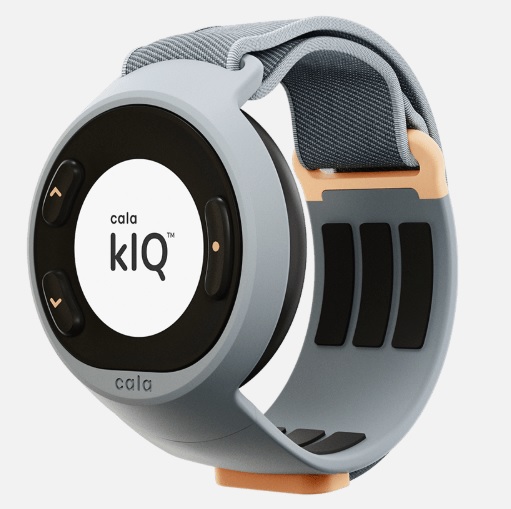
Wearable neuromodulator developer Cala Health gained $50 million in an unlettered raise. Unusually, it had a sole funder, Trinity Capital. Cala has developed the only FDA-cleared 510(k) wearable for action hand tremor in people with essential tremor and Parkinson’s disease. The funding will be used to scale commercial distribution and product development. The kIQ device uses transcutaneous afferent patterned stimulation (TAPS), which reduces hand tremors by measuring a patient’s tremor pattern and delivering individualized nerve stimulation. Prior rounds were in 2024 ($50 million), $77 million in 2021, and a $55 million Series B in 2019. Trinity Capital release, Mobihealthnews

Joyful Health, a financial operating system for providers, raised a $17 million Series A for a total of $22 million. It is designed as a claims denial intelligence and recovery infrastructure to work within an existing revenue cycle management system and connect claims data. The round was led by CRV with participation from seed investors XYZ Venture Capital, Designer Fund, Inflect Capital (the healthcare investment arm of Vituity, the largest physician-owned partnership in the United States), and Go Global Ventures (led by Commure founder Diede van Lamoen). Providers lose over $125 billion annually in lost revenue from unpaid or denied claims.  Joyful Health blog, Yahoo Finance

Back in the popular stomping grounds of telemental health, Tava Health raised a $40 million Series C. Tava, based in Salt Lake City, markets a  behavioral health platform to providers, employers, and health plans. It also announced three new products: Symphony for providers, TavaCare for the employer market, and Tava Guide for health plans, health systems, and care coordinators. Approximately 5,000 mental health providers are a part of the Tava Health network. Investors were led by Centana Growth Partners with participation from Catalyst Investors, Blue Heron Ventures, Peterson Ventures, and Springtide Ventures. Tava has raised $73 million since 2020 with its last raise in 2024. Yahoo Finance (release), Behavioral Health Business, Mobihealthnews

And an interesting partnership

Popular actor Jeremy Renner is partnering with public safety and first responder platform RapidSOS NYC (!)-based RapidSOS originally specialized in the technical aspects of public 911 systems and then developed integrations to link data from over 350 million connected devices, apps, and sensors directly to 911 centers and first responders. Increasingly, these integrations are AI-powered and even incorporate drones. Mr. Renner relates very well to first responders, having his own near-death experience on New Year’s Day 2023 where his snowcat machine rolled over and crushed him, breaking 38 bones along with blunt chest trauma. He is the focus of a 30-second documentary leading up to next Wednesday’s (29 April) premiere of Behind the Emergency. He is not only helping to tell their development story from his experience, but also as a partner plus investor. Mobihealthnews 
News roundup #2: why Walgreens is considering selling to a PE, December fundings, 2024’s surprises, M&A ’25 predictions, Transcarent buying Accolade for $621M

Why would Walgreens sell out to a private equity investor, reportedly Sycamore Partners? This news leaked early in December to the Wall Street Journal that this PE would either buy Walgreens Boots Alliance (WBA) in whole, in parts, or with partners [TTA 10 Dec 2024]. This MedCityNews article gathers the speculation from multiple financial executives, and the answer is a resounding Maybe.

  • Primary care was a losing bet–and their retail pharmacies are challenged by new models like Amazon Pharmacy and Cost Plus.
  • It will take about $9.2 to $10 billion, which is a lot for Sycamore to pony up. But it’s a bargain from what PE giant KKR offered in 2019– $70 billion.
  • Sycamore may have competition for buying WBA.
  • The 12,000 store network is now seen not as an asset, but a liability, not only for pharmacy but also for retail goods.
  • Sycamore may be more interested in the retail and e-commerce sides of Walgreens versus healthcare. For instance, WBA company Boots in the UK has leveraged its beauty business to nearly the prominence of health in their stores.
  • A private company may have more power to swiftly make the changes that Walgreens needs, versus a company having to report quarterly to shareholders. 

There was the usual rush to announce fundings by December’s end, a refreshing change from 2023’s end. MedCityNews helpfully rounded up five of the last-minute closings:

  • Already noted: Oura’s $200 million plus funding for a Series D from Dexcom ($75 million) and Fidelity Management. Our earlier reporting noted total financing at $223 million and the valuation at $5 billion.
  • Cleerly’s $106 million Series C led by Insight Partners. Cleerly developed AI-assisted detailed phenotyping of coronary artery disease.
  • Remodel Health gained $100 million in a funding led by Oak HC/FT and Hercules Capital. Remodel works with employers and employees to build and access Individual Coverage Health Reimbursement Arrangement (ICHRA) plans.
  • Cala Health raised $50 million from Vertex Growth Fund and Nexus NeuroTech Ventures. Cala is a bioelectronic medicine company which developed FDA-cleared, noninvasive devices for hand tremors.
  • Soda Health’s $50 million Series B, led by General Catalyst, is in the hot sector of ‘food as medicine’. Soda provides a ‘smart benefits’ card to use at approved retailers for food, health products, and pharmacy benefits.

2024 had its share of surprises in this two-part Mobihealthnews roundup. No surprise for our Readers in that GLP-1 drugs for weight loss went to radioactive-level hot (but this Editor predicts a collapse in 2025). The failure of retail clinics such as Walmart Health and VillageMD surprised many in the industry–as well as Optum shuttering its telehealth business. Developing: menopause and autoimmune health (and their relationship)–and food as medicine. On the insurance side, the troubles of the Medicare Advantage health plan model multiplied, not moderated. And AI? On top of everything, but you maybe shouldn’t develop your own LLM. Part One, Part Two

Predictions for 2025 mergers and acquisitions center on consolidations. There’s little foo-foo or froth in this Mobihealthnews article– instead, lots of New Reality. Many pandemic-born startups will die quiet deaths in sales, shotgun marriages, and shutdowns. Much caution in any M&A. The emphasis is on interoperability, which is widely defined as acquirer-acquiree and a clearly presented integrated value proposition to customers. Their industry leader panel cannot agree whether M&A will accelerate as a result of changes at FTC (Lina Khan’s departure and a new chair) or slow down. And at least one leader believes that Medicare Advantage will stabilize and recover.

But one buyer plays it high and wide in ’25–the deep-pocketed Transcarent, agreeing to buy Accolade for $621 million in 2025’s First Big Deal. Accolade is also in enterprise care navigation, as well as providing virtual primary care, specialist consultations, and patient advocates. It went public on Nasdaq in 2020. Transcarent’s offer is $7.03 per share in cash, an approximately 110% premium over the company’s closing stock price yesterday 7 January. The funding is coming from General Catalyst (!) and Glen Tullman’s 62 Ventures. Accolade will go private at the closing, expected to be Q2 following shareholder and regulatory approvals, and be integrated into Transcarent. The combined Transcarent will have 1,400 employer and payer clients. Release, Healthcare Dive

Four ‘moonshot’ health tech startups aiding cognition and brain health (podcast)

This 30 minute podcast interviews four tech entrepreneurs in the StartUp Health Health Transformers accelerator/funding ‘moonshot’ program. Their focus is on technologies designed to improve brain health and address issues around cognitive impairment and disease.

  • Amir Bozorgzadeh, CEO & Co-founder of Virtuleap, a Lisbon-based company that uses VR and gamification in the Enhance VR brain training app for a daily cognitive workout of short, intense, and fun games
  • Kate Rosenbluth, PhD, Chief Science Officer & Founder at Cala Health, Cala Trio is a wrist-worn stimulator that reduces hand tremor for people with essential tremor (ET). Up until this therapeutic device, the only option for ET was a stimulator inserted in a key portion of the brain. 
  • Maor Cohen, CEO & Co-founder of n*gram health, uses immersive digital experiences and augmented reality delivered via smartphone and tablet for assessment, evaluation, and improvement in older adults with cognitive impairment.
  • Mark Cavicchia, RC21X co-founder. RC21X has developed two brain and human performance assessment tools, Roberto and RC21X. These provide brain performance trend data that can be used in healthcare, for monitoring treatment and recovery plan effectiveness, as well as industrial safety.

All these businesses are well along in proven technology and funding, a trend we’ve been finding with accelerators that once specialized in startups barely out of seed and still proving their models. Cala Health, for example, we noted in 2016 with its $18 million raise, but has been around since 2013. RC21X, once Home Base, also has been around since 2013.

The podcast is hosted by India Edwards and Logan Plaster. Mr. Plaster, StartUpHealth’s media director, and this Editor worked together on an article about the late Viterion Digital Health in his previous venture with Telemedicine Magazine

Mo’ money! Over $600 million in funding washes into digital health

[grow_thumb image=”https://telecareaware.com/wp-content/uploads/2016/03/Looney-Tunes-Were-in-the-Money.jpg” thumb_width=”150″ /]The unicorns may be getting gored, the bloom off the rose in health tech funding, and it’s a ‘hangover’ from 2015, but both January and February wound up being strong months for digital health funding, with over $600 million to companies in various stages. Mobihealthnews racks up the wins, leading with MindMaze (recovery for stroke patients) $100 million in February, Pear Therapeutics (digital tools + pharmaceuticals) with $20 million and Cala Health (hand/wrist tremor treatment) with $18 million. In remote patient monitoring, Vivify Health raised $17 million completing a 2014 round for $23 million and interestingly will use some of this funding to develop an IVR (interactive voice response) solution (Mobihealthnews 25 Feb). They don’t total in insurer Oscar which had a massive raise of $400 million bringing their funding over $765 million, not that far from Unicorn Territory–probably a good idea as they have some dizzying goals like 1 million members in five years from its current 145,000 members in New York and New Jersey, adding Texas and California. The caution on Oscar is that they are heavily dependent on narrow networks and exchange business that may be unsustainable. But if you sign up, you get a Misfit Flash tracker and access to their mobile app! Digital health funding in February reached $197 million (Mobihealthnews)