


A family practice physician in eastern Oklahoma was disciplined by the state medical board for using Skype on initial mental health consults. Skype is not approved by the board for telemedicine; other factors were that the patients were not physically seen at any point and that they were prescribed controlled substances (including narcotics). Three of the patients died while under care but the deaths were not attributable to Dr. Trow. It is easy to score the doctor for what could be seen as bad practice in telemedicine, but a mitigating factor is his practice in a remote area of the state and the distance of the patients. Joseph Kvedar, MD of the Center for Connected Health/Partners HealthCare reviews the situation (more…)
Robotic leg prosthesis controlled by thigh muscles
An experimental prosthesis which redirects the nerves from the thigh muscle to a lower robotic leg, and translates them into knee and ankle movements, is a major advance that makes the prosthesis more like a natural leg in walking and navigating stairs. According to MedPageToday, “the system links nerves in the thigh — including some for missing muscles in the lower limb — to a processor that decodes the signals and guides the motion of the prosthesis.” The nerve data helps to eliminate mechanical errors that can cause falling. The robotic leg is being developed with an $8 million grant from the US Army (more…)
Tablets as ‘socializers’ for older adults
Long-time reader and now guest contributor John Boden of ElderIssues LLC and developer of the LifeLedger, reasons that if young children can use tablets fairly meaningfully, so can older adults at home or in senior communities. This is adapted from one of his series of ‘Caregiver Tips’ available via opt-in at caregivertips@elderissues.com.
Socialize With Technology: Tablets and iPads
If babies can use iPads, so can the very old.
Tablets and iPads are everywhere – EXCEPT – with nursing home patients.
This must be the season for me to have “aha!” moments. Last month it was while reading “Still Alice” and this month it was while visiting a nursing home where Sue told me she liked playing Scrabble but it was hard to find people to play with.
I am sure it is hard in a nursing home where you have to find another patient (more…)
Magnetic microbots can be delivery ‘trucks’ for meds
The research on magnetically activated and controlled microbots for drug delivery and biopsies continue. The latest research from South Korea has designed ‘cages’ to carry drugs that are effectively the closest microbots have to a delivery truck form factor for delivery to the brain or eyes. The tradeoff is tininess versus more capacity; more drugs, more effectiveness. Published in Advanced Materials (link to full text PDF), short summary in PopSci, very long and thoughtful article on how nanobots work in IEEE Spectrum by French scientist-pioneer Sylvain Martel of École Polytechnique de Montréal, who projects their first use will be to fight cancer. Hat tip to Contributing Editor/Editor TANN Ireland Toni Bunting.
Telehealth Soapbox: Medical device tax finally under fire; implications many (US)
[grow_thumb image=”https://telecareaware.com/wp-content/uploads/2013/09/gizmodo-the-top-10-rube-goldberg-machines-featured-on-film-rube-goldberg.jpg” thumb_width=”180″ /]A key part of the Rube Goldberg (or Heath Robinson)-esque funding of the Accountable Care Act (ACA, a/k/a Obamacare) is a punitive medical device tax of 2.3 percent levied on gross sales (not profits) of hip, knee, cardiac implants, many dental materials, diagnostics such as scanners, radiotherapy machines, catheters and more. Since it went into effect on 1 January, it has raised $1 billion according to the Medical Imaging & Technology Alliance, the Advanced Medical Technology Association and the Medical Device Manufacturers Association in July–for a program that does not start till 2014. According to The Hill, senior Senators Orrin Hatch, Barrasso and Hoeven are pushing for a repeal amendment to be attached to the stopgap spending bill. The reasons why the tax deserves to be tossed out on its ear are: (more…)
An Alzheimer’s diagnosis test that could have profound telecare implications
Significant progress on early diagnosis of Alzheimer’s is reported today by Fierce Diagnostics. The Cognoptix test involves a laser eye-scanning device and an ophthalmic ointment, according to their website, designed to spot telltale beta-amyloid proteins in the lens of the eye.
The excitement in the article is about the possibility of increasing drug sales; the ability to deploy drugs to delay progression of the disease would clearly be very important. However, whilst perhaps less commercially significant, there would be some huge benefits (more…)
All seven of Supra’s 18th Birthday Golden Keys now active – get ready to vote!
[grow_thumb image=”https://telecareaware.com/wp-content/uploads/2013/09/gold_key.png” thumb_width=”150″ /]With the last of SupraUK’s golden keys located, all the recipients have now contributed community project proposals in preparation for voting which begins on 14th October (ends 31st October) for the recipient of the £18,000 prize from SupraUK.
See the key recipients and their proposals here…
…and spare a though for the keysafe, which comes well down the exciting-technology ranking and so is often overlooked in discussions and presentations on telemonitoring, although it is a critical element in providing an emergency response to alerts raised by that technology.
Relax, it’s (not) just a breathing monitor headset
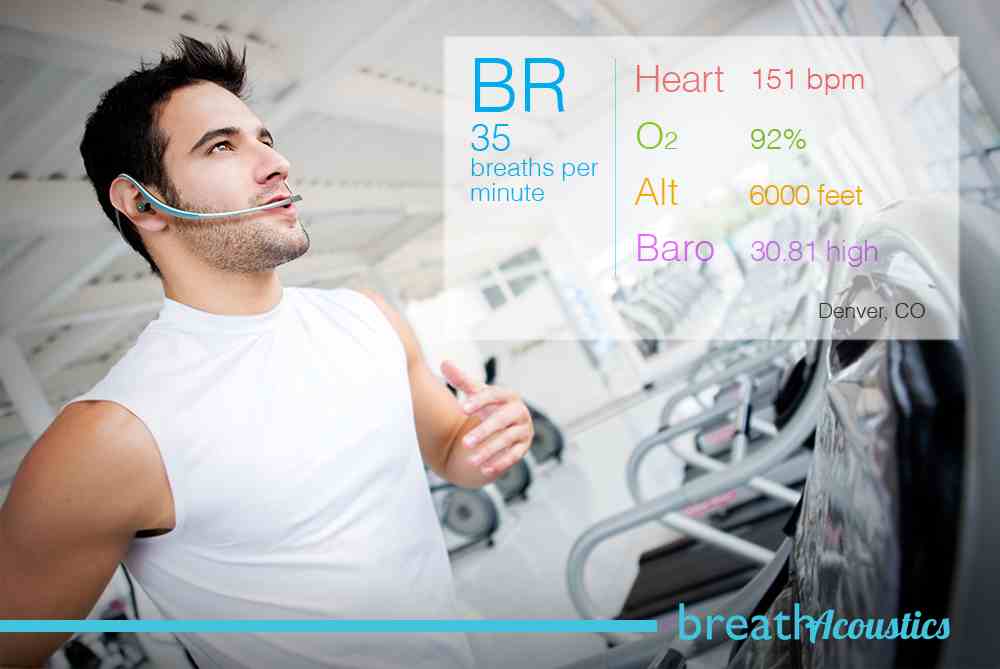 A headset which monitors the quality of your breathing is being developed by BreathResearch, a San Francisco Bay area start-up.
Combined with a mobile app, the ‘Breath Acoustics’ headset listens to your breathing and analyzes the patterns. Sensor-based breath monitoring may be a less commonly monitored biometric pattern but recent studies suggest it could be used to detect stress levels, bacterial infections and other conditions. The headset also presents other biometric data, including heart rate, pulse oximetry, and respiration. (more…)
An encouraging Australian RCT combining self-care and telemonitoring
A paper just published in the Journal of Telemedicine & eHealth (Volume: 19 Issue 9) entitled “Telehealth Remote Monitoring for Community-Dwelling Older Adults with Chronic Obstructive Pulmonary Disease” makes refreshing reading for those of us who still believe that a well-designed implementation of telehealth brings immense health benefit to those with chronic long-term conditions.
The authors, Kristen De San Miguel, Joanna Smith, and Gill Lewin, all from Western Australia describe a small RCT using Docobo kit that involved (more…)
Google Glass-assisted operation: another first?
Although we previously reported on the first operation performed using Google Glass, Solar News claims this week that Spain hosted the first Google Glass assisted operation, in Madrid.
Dr. Pedro Guillen performed a chondrocyte transplant (a procedure used to treat cartilage injuries) in the knee of a 49-year-old male. The entire procedure was streamed live via the glasses, to an audience of 150 doctors in the United States, Europe and Australia.
Apart from providing videoconference capability, Julian Beltran, CEO of Droiders, the company that built the software, says Google Glass opens a world of new tools to surgeons as they work. “You can see in the prism the arthroscopy and perform the surgery without having to move the head to the right. For example you can see pictures, educational videos, remember how to perform a surgery, see an x-ray, consult the interaction of medicines or information you need. Everything connected to the internet,” he said.
Droiders say they have plans to build new software which will also help doctors to check the patient´s heart rate just by looking to their faces.
Thanks to Prof Mike Short for alerting me to this.
Tynetec sale?
Following our earlier post about Bosch ending sales of their Health Buddy and (temporarily?) exiting the telehealth market in the UK, comes another unattributable suggestion that Tynetec have been purchased by Legrand whose website proclaims them to be “The world’s leading manufacturer of wiring devices and cable management systems.”
There’s some clear and fascinating synergy there which looks potentially very exciting for the world of remote monitoring…however as yet there is nothing confirmed in the media, so watch this space.
Bosch to can Health Buddy, withdraw from telehealth in UK – temporarily?
On September 6th, Bosch announced a tie up with Remedy Health Media [TTA 10 Sep] “to launch remote patient monitoring products designed for tablets and smartphones”, which suggested that it would not be long before they stopped selling their purpose-built telehealth hardware.
Now TTA has heard from a reliable source that they are telling their customer organisations that they are going to withdraw (more…)
DrChrono and Sermo’s ‘Blue Blazes’ moments
[grow_thumb image=”https://telecareaware.com/wp-content/uploads/2013/08/blue-blazes.jpg” thumb_width=”150″ /]Neil Versel in his personal blog Meaningful HIT News notes meaningful lapses in accuracy and good communications taste from two reputable companies targeted to US medical professionals. DrChrono is a mobile ambulatory EHR tweeting about ‘cashing in’ on the HITECH Act–the program that rewards practices for achieving stages of Meaningful Use with EHRs. Sermo is a physician social networking platform that has staged a contest called ‘The Pro Football Injury Challenge’ where one will go ‘head-to-head’ with other doctors in ‘making predictions about how injuries will affect pro athletes this season.’ This Editor felt in her comments below the article that this promotion’s communication crossed the line into, on the usual two-second read, a message that it is OK to ‘play for glory’ and win prizes out of players’ real pain, injury and career disaster–a misbegotten effort to gamify real-world medical situations ostensibly for learning. Yes, both have sound messages at the core, but how they were communicated…regrettable. Both DrChrono and Sermo are nominated for ‘Blue Blazes’ because, to paraphrase Neil, ‘what are their marketers thinking?’ What do you think? And this Editor would be more than open to comments from representatives of these two companies. DrChrono and Sermo, what are you thinking?
Editor’s Update: Sermo has provided an important response and clarification blazingly fast in their blog here. (more…)
Queensland Government to invest $31m in telehealth
The health minister of Queensland, Lawrence Springborg, has announced that the Queensland Government will invest $31m in telehealth over the next 4 years, according to a report in Brisbane Times. It seems the spend will be primarily in remote consultation systems. The minister has said that the $30m of remote consultation equipment deployed by the previous government of Anna Bligh had largely failed to deliver, but has admitted that some of these are used for carrying out up to 25 consultations a day.
Read the full article here.
Telehealth and Broadband in Australia
Australia appears to be in the midst of a debate on the cost of building a national broadband network. According to the NBN Co which is buildng the network, the aim is to provide broadband to every home, school and workplace by the end of the next ten years. Nick Ross writing in ABC’s website suggests that just the ability to deploy telehealth and telecare nationally over such a network would save Australia enough money to more than pay for the network.
The arguments for deploying telehealth in Australia are no different to those in other parts of the developed world. The Australian healthcare budget is 10% of GDP (9% in UK) and growing at twice the rate of GDP, according to the very comprehensive article.
With a $967 price tag for a single night’s hospital stay, the economic benefit identified for using telehealth to monitor patients at home after earlier release from hospital or to avoid hospital admission altogether are very familiar. Add to that the use of telecare to allow older people to stay in their own homes for longer and Nick Ross’s article has covered all the elements for supporting telehealth and telecare.
Read the full article here.
Google ‘moonshots’ aging (and death) with Calico
[grow_thumb image=”https://telecareaware.com/wp-content/uploads/2013/09/360_cover_0930.jpg” thumb_width=”150″ /]Calico is the new Google-ism for a new and apparently separate company which will focus on health and wellbeing, concentrating on aging and associated diseases. Announced yesterday, it will be headed by Arthur D. Levinson, Chairman of both Genentech and Apple, who plans to remain in both day jobs. It’s way outside of Google’s main business model, but in sync with the (failed) Google Health PHR, the potential of Glass in medicine and their relationship with Cornell NYC Tech, which until 2017 is in substantial space in Google’s sprawling downtown Manhattan building; one of the latter’s tech entrepreneurship hubs is ‘healthier life’. Google is also willing to spend floods of money on this without any ROI in the foreseeable future–even the driverless car has a far closer horizon to reality. Other than the release, pretty much copied on Gizmag, Google is Mum. TIME’s cover story next week is only partly available without subscription but the cover (left above) is priceless. Along with it is an interesting bit of speculation on Mr. Levinson’s potential conflicts of interests in this third for him venture which are of perennial interest to the Federal Trade Commission (FTC).



Most Recent Comments