


 Withings USA expands monitoring into clinical care services. Withings’ reach from devices into clinical care is definitely something unusual, as it’s rare that a device developer gets into the messy care space, much less with a ten-year commitment. Here Withings, with the Withings Medical Group, is entering care for Original Medicare beneficiaries via CMS’s new ACCESS Model (Advancing Chronic Care with Effective, Scalable Solutions). ACCESS is a ten-year CMS Innovation Center model that pays providers on chronic disease management outcomes. It launched on 5 July.
Withings Medical Group will concentrate on cardiovascular, kidney, and metabolic health (CKM), beginning with hypertension, diabetes, and obesity. The medical group’s care team will work with the beneficiary’s primary care providers to build an individualized care plan for each member. The Withings Medical Group teams can also prescribe and adjust medications and support the beneficiary on lifestyle changes.
From the release: “This focused scope reflects a deliberate, clinically rigorous approach to entering care, and it marks only the beginning of a broader ambition for how Withings supports health over the long term. It also aligns with the ACCESS Model’s ten-year, phased approach to testing whether outcome-aligned, technology-supported care can improve outcomes for Medicare beneficiaries nationwide.”
In the UK, two Commons committees have urged the Health Innovation Minister to cancel the contract for the NHS Federated Data Platform (FDP). The developer, Palantir, has come under fire in both the UK and US on its ties to defense and security agencies in those countries and with Israel. Palantir contracted with NHS England starting in 2023. The Commons committees objecting to Palantir to Health Innovation Minister Preet Kaur Gill are the Health and Social Care Committee and the Science, Innovation and Technology Committee. They are urging using a contractual break in February 2027 to term the contract, seek another contractor, or develop one in the UK. The concerned Members cross parties and are joined by the trade unions and 100 NHS data and technology specialists, who have separately objected to the FDP in a letter to Health Secretary James Murray.
The FDP is a key part of NHS digital transformation to facilitate storage and analysis of health datasets to improve planning, patient care and hospital operations. But the concerns apparently are more political, targeting Palantir and alleging that its defense and security contracts will discourage patients from allowing their medical information to be used. If we in the US shared similar concerns, Microsoft, Meta, AWS, and Oracle wouldn’t have a single healthcare contract. Computing UK
IKS Health wrapped up its TruBridge buy last Thursday for $557 million. The acquisition, announced last April, closed a quarter earlier than expected. IKS is a healthcare software company for administration and documentation, with TruBridge an EHR and revenue cycle management (RCM) provider to primarily rural hospitals. The combined company now has a US customer base of 150,000 clinicians and 2,000 healthcare organizations. IKS Health is traded in India with US operations in Dallas. The TruBridge acquisition is their third this year, financed with $600 million over five years in debt sourced from Citibank, JPMorgan Chase and Deutsche Bank. TruBridge shareholders received $26.25 in cash per share as offered in April. The release is singularly unrevealing on whether TruBridge will continue as a separate product line, nor on any operational/management continuity. It is another example of consolidation and ‘line extension’ between similar companies. MedCityNews
If it’s midyear, it’s time for a preliminary CMS Physician Fee Schedule draft. ATA ACTION has an early review of its telehealth and technology changes proposed by the Centers for Medicare & Medicaid Services (CMS) that affect physicians serving Medicare beneficiaries. From the release (PDF):
- Telehealth: In addition to changes to extend existing telehealth flexibilities, CMS proposes adding five codes to the Medicare Telehealth List, clarifying critical care consultation code descriptors, creating two new telehealth modifiers, and allowing physicians to bill for telehealth services involving residents when either the teaching physician or resident is in the room with the beneficiary.
- Remote Patient Monitoring: CMS proposes tightening guardrails and recalculating payment for remote patient monitoring (RPM) and remote treatment monitoring (RTM) services. Key changes include restricting RTM billing to patients with an established relationship with the billing practitioner, requiring a separately reportable initiating visit tied to the start of monitoring services, prohibiting use of third-party remote monitoring companies, lowering monitoring valuations, and potentially consolidating current CPT codes into four new G-codes (two RPM, two RTM) covering initial setup and monthly monitoring/management.
- Technology-Enabled Care: CMS is seeking broad feedback on modernizing Medicare reimbursement for technology-enabled care, with particular interest in primary care, care management, capitated payment models, and AI.
- New–Software as a Medical Service (SaMS): Aligning with the OPPS proposed rule, CMS introduces a new category – Software as a Medical Service – defined as algorithm-based clinical decision-support software with clinical or diagnostic functionality (excluding remote monitoring and prescription digital therapeutics). SaMS providing secondary analysis of lab data would shift from the Clinical Laboratory Fee Schedule to the Physician Fee Schedule.
- Merit-based Incentive Payment System (MIPS) Improvement Activities: CMS proposes two new technology-focused improvement activities: clinician use of AI to improve patient care, and use of interoperable clinical decision support.
Whether these survive to the Final PFS is dependent on comments, Congress, and budgets.
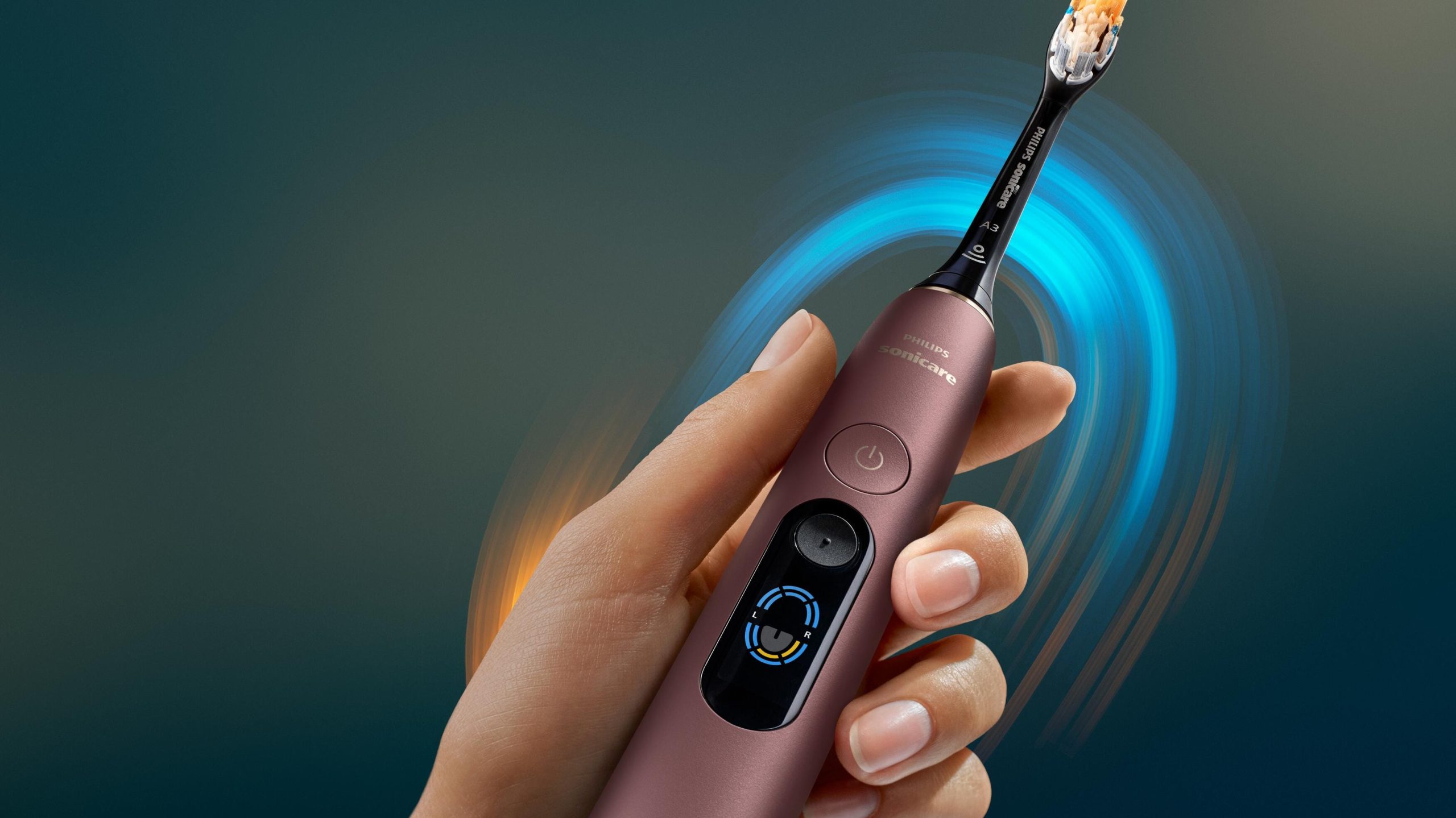 And now we have AI for our electronic toothbrush. Philips goes AI in its latest model, the Philips Sonicare DiamondClean 9900 Prestige. It uses built-in, on-device AI and spatially aware guidance to track brushing. There’s a 12-segment “Mouth Map” on the handle, with a light ring that gives real-time visual feedback on your coverage, pressure, and scrubbing habits. For those of us who like to press down, the SenseIQ sensor automatically adjusts intensity so we aren’t so bad. It has eight modes and three intensities, a bit more than their top-of-the-line existing Sonicares. And it comes in five premium colors! Well, well…as a faithful user of my Philips Sonicare toothbrush since a rather extensive dental ‘remodeling’ a few years ago, and guilty of sometimes being a bit sketchy about my completeness, I am somewhat dismayed that to be au courant, I will need to acquire this new model…but it won’t be available till this fall in the US and Europe. Release, Mobihealthnews



Most Recent Comments