TTA’s Blooming Spring 5: Hinge Health’s IPO, 23andMe bought by Regeneron, sans Lemonaid, WeightWatchers’ future, debuts of Smarter Technologies and Fuze Health, VA EHR update, more!


23 May 2025

The major news this week was the Hinge Health IPO, the first for digital health in two years–but the downside was that it was at a lower valuation. Denouements abounded with most 23andMe genetic assets bought by Regeneron, without a drink of Lemonaid. WeightWatchers’ time may have passed, new heads for Calibrate and Oak Street, and two more ‘arranged marriages’, Smarter Technologies and Fuze Health. An update on the VA EHRM in the budget. Masimo’s recovering, as is Ted of Strata-gee

Remember our soldiers, sailors, airmen, and Marines who have passed on this Memorial Day. Our Monday newsletter will be on Tuesday.

News roundup 22 May: an inflight ‘save’ and AliveCor’s KardiaMobile, rolling out the VA/Oracle EHR in ‘waves’, Fuze Health formed from LetsGetChecked/Truepill, hacking and ransomware 92% of PHI data breaches (A renaming of a 2024 ‘arranged marriage’–can it be saved?)

News roundup: Hinge Health public @$32/share, lower valuation. Is WeightWatchers game over? Calibrate replaces CEO, new prez for Oak Street, NMC gets ‘Smarter’ rolling up 3 portfolio companies, another splash of investor ‘cold water’ (The first health tech IPO in 2 years and ‘smushing’ when they can’t)

Update: Masimo’s website status and an analysis of the Sound United sale (Getting up and running post-attack, but what happened?)

23andMe sold to Regeneron for $256M in court-supervised bankruptcy, sans Lemonaid. And is it worth it? (We come up with a number, it’s likely)

From last week: UnitedHealth Group changed out CEOs suddenly. The new one is a surprising ‘blast from the profitable past’ but that didn’t stop Mr. Market from taking the stock down down down. Another blast involves Elizabeth Holmes’ partner Billy Evans fronting a diagnostic testing- in-a-box startup.”Surprise, surprise!” No surprise that Holmes lost her appeal of an appeal–nor Omada Health filing for an IPO. Unfortunately, our investigator on all things Masimo met his own surprise walking on a sunny day–fortunately, Ted’s on the mend. More about BCIs with Apple integration, a chronic pain management startup, Parkinson’s data, two good raises, and what payers pay to keep their execs safe.

Short takes: Synchron BCI integrates with Apple devices, Shields Health partners with Duke on specialty pharmacy, raises for Cohere Health, Olio (More BCI action with Apple getting into it)

Theranos’ revenge? Holmes’ partner Billy Evans founds a startup for diagnostic testing, denies it is ‘Theranos 2.0’; Holmes loses Federal rehearing appeal. (Is Holmes advising long distance? Letters from a Texas Jail?)

News roundup: Omada Health files for IPO, UPMC-Redesign partner on chronic pain management, OK and PA AGs warn 23andMe users to delete data, Verily to build Parkinson’s dataset, what payers paid for exec security (Omada follows Hinge. But the last is surprising–between a lot and a little)

This just in: UnitedHealth Group CEO Andrew Witty steps down immediately, replaced by former CEO Stephen Hemsley (updated 15 May) (UHG may change out CEOs, but continues to be hammered by Mr. Market)

Best wishes to Strata-gee’s Ted Green on a fast recovery! (Ted, our ace Masimo investigator, was put rather suddenly in a bad place…use your eyes when you drive!)

* * *
Advertise on Telehealth and Telecare Aware
Support not only a publication but also a well-informed international community.

Contact Editor Donna for more information.

Help Spread the News

Please tell your colleagues about this free news service and, if you have relevant information to share with the rest of the world, please let me know!

Donna Cusano, Editor In Chief
donna.cusano@telecareaware.com

Telehealth & Telecare Aware – covering news on latest developments in telecare, telehealth and eHealth, worldwide.


To leave the email alerts mailing list either use the ‘Unsubscribe Here’ link at the bottom of this email (if you can see it) or email Editor Donna.

Update: Masimo’s website status and an analysis of the Sound United sale

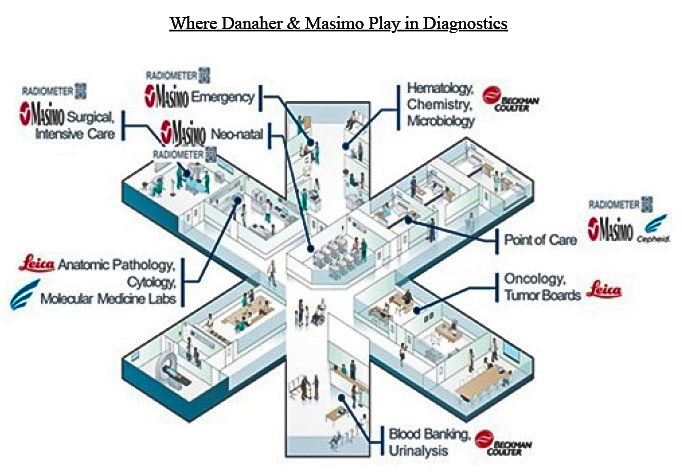
Things are apparently a lot more together for Masimo online. Their website structure has settled down since their cyberattack at the end of April brought down their websites, then by 6 and 13 May, a confusing and partial restoration [TTA 7 May]:

  • A new Masimo site at https://www.masimo.com/ that leads with Professional Health with a tab at the top for Consumer Health. Professional Health opens a series of sub-tabs leading with Technology and Products. A tab for Masimo Audio does not appear unless you open Consumer Health, leading to pages for their brands Bowers & Wilkins, Denon, and others. A new feature is at the top right with a dropdown for multiple languages/countries, including English and French for Canada, UK English, French, Spanish, and German. The footer is where the detail is for customer support, legal, investors, and internal links to pages–but not Audio. One drawback this Editor sees is that once on the foreign sites, you are unable to return to the US English website as the dropdown does not link back to the US.  
  • Entering masimo.com still redirects you to the Canadian shop domain and pages that feature the pulse oximetry device and app (SafetyNet Alert) monitoring prescribed opioid usage for difficulties in breathing (respiratory depression). Clicking on support features only ‘hearables’ and opioid safety–an educated guess is that this supports a specific Canadian initiative and is maintained for that only. Clicking on the tabs above will lead you to the new masimo.ca website pages which have no mentions or links back to opioid information. 

The investigation into the cyberattack that brought all Masimo IT systems down is ongoing. What is not known is 1) the type of the attack, 2) acknowledgement of the extent of the attack, and 3) any lasting damage to their internal systems, databases, and manufacturing systems. This Editor will be waiting to see if the new Masimo will be transparent with customers, investors, and the press as to what happened, the remediation of their systems, and securing their IT. Customers will need reassurance that their continuous monitoring and patient-worn monitoring devices are secure. Moreover, Health and Human Services’ Office of Civil Rights (HHS-OCR) requires reports of data breaches affecting or potentially affecting protected health information (PHI). I will also be waiting to see if their consumer health wearables bounce back and go back on sale (they are currently unavailable)–after winning their fights with Apple, it would be a shame if this investment is abandoned. 

More on this in Strata-gee 15 May. More good news–Editor Ted Green is recuperating and back at his desk, if only part-time. He has been invaluable for his inside looks at Masimo’s endless drama over the past few years. Thank you for the hat tip to TTA at the end of this article!

Masimo’s Sound United sale–the good and the not-so. Ted digs deep into the sale of Masimo’s ill-starred Sound United unit.  As we reported previously, Samsung’s Harman International unit picked it up for $350 million in cash, a mere one-third of its 2022 purchase price of $1.025 billion–a “shockingly low valuation for such great brands” such as Marantz, Denon, Bowers & Wilkins, Polk, Boston Acoustic, and others. Clearly, a sale was the desire of the new sheriffs running Masimo, Politan Capital, and shareholders, but a 66% haircut is still shocking. The share price rose prior to the annual meeting, but is now lower, likely from the cyberattack and uncertainty around tariffs affecting Masimo’s mainline medical device manufacturing.

Harman is the home of other storied audio brands such as Harman/Kardon, JBL, AKG, Mark Levinson, Arcam, and Revel. While a small part of giant Samsung, it is not puny in revenue, ending their 2025 at $10.2 billion. Because Strata-gee and Ted focus on the audio business, there is an extensive discussion here on how the Sound United brands will fit into the Harman portfolio and whether they will expand Harman’s business which has been rather flat. For Harman, consumer audio is their growth opportunity, from premium audio to headphones, and they just bought a quality group. The downside is that some of the brands collide in their market segments, notably B&W and Revel in the audiophile segment and Denon and Marantz versus ARCAM and JBL in audio video receivers (AVR). Interestingly, their largest segment is automotive electronics: car audio, telematics, and digital cockpits. For a more complete analysis, catch Ted’s Strata-gee article, ‘Temper Your Enthusiasm’, here.

Short takes: both Clover and Oscar in the black; Aetna prez booted after 11 months; Ava-VSee bedside robot; updates on Change, OneBlood ransomware, Masimo proxy fight

Clover Health’s milestone–a first-ever profitable operating quarter. Not only that, but it was an impressive turnaround from the prior year. With results in their Q2 operating net income of $7.2 million, versus a $28.9 million loss in 2023, these results were far more favorable directionally than the adjusted EBITDA which was $36.2 million versus $9.9 million for the prior year. Insurance revenue was also up 11% to $349.9 million, attributed to member retention and an improved medical cost ratio (MCR) of 71.3%, down from 77.9% in the prior year. Additional revenue from other operations, such as the recently introduced Assistant AI, is minimal. The 2024 forecast stays ‘in the clover’ with raised forecast revenue of $1.35 to $1.375 billion and adjusted EBITDA of $50 million to $65 million. Also helpful is their lifted Star rating from 3 to 3.5 for 2025. FierceHealthcare, Clover earnings release

Rival Oscar Health also stayed Back in Black for the second quarter running–CEO Bertolini wouldn’t have it any other way (or else–see below right). Q2 net income rose to $56.2 million which was a a $71.7 million improvement versus prior year. Adjusted EBITDA also nicely improved to $104.1 million, a $68.6 million improvement. Revenue increased to $2.2 billion, a 46% increase over the prior year. Their MCR went down .9 points. The overall forecast for the year wasn’t provided. Membership was up over 600,000 in their main business of individual and small group insurance, with Bertolini pointing out that this was powered by plan growth in 80% of the states where they operate. Oscar exited Medicare Advantage at the end of 2023, and is shifting to marketing ICHRA, or individual coverage health reimbursement arrangements that permit small businesses to offer employees individual health plans subsidized by employer contributions. After this year, the 58,000 members left in the unprofitable Cigna co-branded small group program will exit [TTA 10 May]. Oscar release, FierceHealthcare

Back in Mr. Bertolini’s old stand, Aetna, results weren’t so cheerful–and their president walked the plank after less than one year. The reorganization announcement was made on the earnings call yesterday, effective immediately. CVS Health CEO Karen Lynch will oversee the daily operations of the health benefits segment along with Aetna’s CFO. CVS VP/chief strategy officer Katerina Guerraz will move over to become Aetna’s chief operating officer.

What initiated it: while health benefits’ revenue stayed in the black, going the wrong way were operating income decreasing 39.1%, the medical benefits ratio (MBR) soaring to 90% from 86% in prior year and the medical loss ratio (MLR) going up to 89.6% from 86.2%. These were attributed to increased utilization, the decline in Medicare Advantage Star ratings, Medicaid acuity, and a revised risk adjustment in the individual exchange business. Something in this immediately doomed now former president Brian Kane, who joined only last September. His last post was at Humana as chief financial officer and leader of their primary care business. CVS Health release, FierceHealthcare, Healthcare Finance

Marrying robots with telemedicine, VSee is partnering with Ava Robotics to create an autonomous robot for telepresence use in hospital intensive care units. This would enable remote emergency physicians to be present at the point of patient care, interact with patients, consult with onsite staff and make treatment decisions. The projected market is smaller regional hospitals and ICUs.  VSee already markets telemedicine carts and portable diagnostic and home care kits. Availability is not disclosed. VSee release, Mobihealthnews

VSee also announced a partnership with Wichita, Kansas community health provider Stand Together for its Aimee telehealth services. Telehealth at their centers will be available to participants for a monthly charge of $4.99 or a single virtual urgent care appointment for $9.99. VSee release

Ransomware strikes again. Non-profit blood donation organization OneBlood was hit on 29 July by a despicable ransomware attack that disabled much of its blood collection services for over 250 hospitals in the southeastern US. They continued to operate at reduced capacity and called for donors of O positive blood, O negative blood and platelet donations. The perpetrator, ransom demands, and breached information were not disclosed. On Monday 5 August, systems were partially restored in time for Tropical Storm Debby’s assault on many southeastern states. From a OneBlood spokesperson: “Our critical software systems have cleared reverification and are operating in a reduced capacity. As we begin to transition back to an automated production environment, manual labeling of blood products will continue. Additionally, we are beginning to return to using our electronic registration process for donors.” DataBreaches.net, FierceHealthcare, HealthcareITNews

Hard-hit Change Healthcare is still playing games with reporting to HHS’ Office of Civil Rights (OCR). Parent UnitedHealth Group reported the ransomware shutdown and data breach to OCR, a full five months after its occurrence. The number reported is the OCR minimum of 500, when it is well known that it affected millions of patients. UHG started direct patient notification on 31 July after weeks of delay, but stated to OCR that they are still determining the number of individuals affected. Provider notifications started in late June [TTA 21 June]. This followed after a hostile dispute earlier that month where UHG tried to push patient notifications onto providers, which HHS decided was 100% UHG’s responsibility. [TTA 5 June]. OCR FAQ update, HealthcareITNews

Masimo and activist shareholder Politan Capital continue to slug it out down to the 19 September shareholders meeting. Back in mid-July, Masimo postponed the meeting, originally scheduled for 25 July. At that time, Masimo filed a complaint in the US District Court for the Central District of California against the two Politan representatives on their board of directors plus Politan’s two nominees that proxy materials contained false statements and violations of the Exchange Act. The suit added that board member Quentin Koffey, also Politan’s chief investment officer, was secretly conspiring with a plaintiffs’ bar law firm currently in litigation with Masimo.

The latest revelation per Strata-gee 7 August: Politan’s countersuit in the Delaware Court of Chancery states that the charges filed by Masimo in the District Court are based on ‘unnamed sources received from a third-party opposition research firm…’ and Masimo’s outside counsel does not know the identity nor ever spoke to the sources. This was filed against CEO Joe Kiani, independent director Craig Reynolds, and director Bob Chapek as a breach of Delaware law.

To date, Masimo has not confirmed their sources to the Delaware court. 

As previously reported [TTA 17 July], the proxy fight was triggered by the value of the company, reduced substantially after Masimo’s snakebit 2022 acquisition of Sound United’s consumer audio brands, Politan’s move to control the company, and kick out the CEO Joe Kiani.  The fight on the Masimo board of directors for two open seats pits the Masimo slate of CEO Joe Kiani and outside candidate Christopher Chavez, against Politan’s Darlene Solomon and William Jellison. Politan already holds two seats and with a win of two additional seats will control the company. Masimo plans to sell the consumer audio and healthcare (baby monitoring) businesses to another unnamed investor, retaining their professional healthcare and pulse oximetry products.

Stay tuned to the next episode of this soap opera.

Follow up roundup: Amwell to reverse stock split to avoid delisting (updated), Amazon Clinic folded into One Medical, Amedisys divesting to close UHG deal, latest on Steward Health’s antics and $7M spying, Masimo’s shareholder fight (latest)

Amwell will reverse stock split to fix their pending delisting on the NYSE. The board of directors approved on 28 June a 1 for 20 reverse split. This will remedy their non-compliance with NYSE regulations requiring an average closing price of above $1.00 over a consecutive 30 trading-day period [TTA 5 Apr]. Shareholders approved the move at their meeting on 18 June. The NYSE notice was given on 2 April and the reverse split will happen at the market open on 11 July, well within the six-month window. Amwell Class A shares closed yesterday at $0.27 so that condensing 20 shares will bring the share price around $5.40. Amwell’s 2024 is forecast with revenue in the range of $259 to $269 million and adjusted EBITDA in the (less) red between ($160) million to ($155) million, with no breakeven in sight until 2026. Their Q1 posted a $73.4 million net loss. Amwell has also released 10% of staff since the palmier days of 2023. Amwell, like Teladoc, continues to struggle in a stand-alone urgent care model that is now obsolete. Release, Healthcare Dive

Update 11 July: Amwell shares opened today at $6.52, and as of midday were trading at $7.51. So short term, the reverse split is working to plump up the shares.

Amazon says goodbye to Amazon Clinic by folding it into One Medical. This should come as no surprise to Readers who noted the  May departure of Clinic’s general manager Nworah Ayogu, MD to VC Thrive Capital with no replacement or search. Amazon’s announcement on 27 June was typically upbeat in renaming the service as One Medical’s Pay-per-visit telehealth. The improvements they claim are:

  • Pay-per-visit telehealth for 30+ common but minor conditions, like pink eye, the flu, or a sinus infection
  • A One Medical monthly or annual membership plan that includes on-demand virtual care and same or next-day appointments at 150+ One Medical primary care offices
  • More affordable–messaging/asynchronous visits are now $29, formerly $35, and video visits at $49, formerly $75. 

The catch–existing Clinic members have to log into One Medical to access their records and the service. Amazon is also propping up One Medical through Prime membership, offering a better deal at $99/year and non-Prime individuals for $199 per year. Amazon does not disclose users, growth, or revenue for either Clinic or One Medical. Healthcare Dive

The long-delayed UnitedHealth-Amedisys home health deal moves closer to closing. Amedisys and UHG’s home health operation under Optum will be divesting some of their locations to VitalCaring Group to avoid Department of Justice anti-trust concerns. The divestiture is contingent on the acquisition closing, now projected in second half of this year. The number of locations was not disclosed though earlier speculation had estimated it at 100. UHG’s offer to acquire Amedisys was made in June 2023 for $3.3 billion in an all-cash deal. It would be additive to its earlier $5.4 billion buy of LHC Group, now part of Optum. With the divestiture, analysts do not see any impediments to a closing, though it had faced opposition in Oregon in March and DOJ opposition since it was announced. This Editor remains sanguine about a successful closing. After UHG won versus DOJ in the Change Healthcare acquisition, “DOJ has a long memory, a Paul Bunyan-sized ax to grind, and doesn’t like losing.” Expect a few more impediments tossed in their direction over the next months. FierceHealthcare , Zack’s Research

The latest episodes in the continuing soap opera of Steward Health involve both Optum and James Bond moves on their critics. Optum had offered back in March to buy their practice groups under Stewardship Health, which stalled with first the Massachusetts Health Policy Commission (HPC), then their bankruptcy. That offer is now off, leaving Steward in the lurch. It was critical to $75 million of Steward’s debtor-in-possession (DIP) financing as recently as 13 June [TTA 14 June]. The deal would have been problematic anyway for Optum as they are under DOJ scrutiny not only for Amedisys but also because Optum controls or has arrangements with 10% of US physicians, 90,000 to date. Healthcare Dive They also settled recently with DOJ for $20 million on Optum Rx’s filling orders from a mail-order pharmacy in Carlsbad, California between 2013 and 2015 for Schedule II drugs: opioids, benzodiazepines, and muscle relaxants. Healthcare Dive

Adding to Steward’s piles of misery are the latest revelations that Steward financed a $7 million spy operation on their critics. This loony aspect to the Steward endgame involved contracting with UK investigators on surveilling a critical former executive, a British financial analyst, and a Maltese politician to find compromising actions between 2018 and 2023. The investigations were allegedly authorized and prioritized by Steward’s top executives while Steward struggled to pay bills for its hospitals and practices. Payments to the investigators were routed through Steward’s Malta operation against their critics in Malta and elsewhere. Steward at the time was embroiled in a dispute around their management of hospitals in Malta, which was eventually investigated and terminated by a Maltese court last year.

One example: the UK firm Audere “collected embarrassing personal information and photographs of a former Steward employee after Steward feared he would leak financial information to its auditor.” Another was the investigation and harassment of a British financial analyst, Fraser Perring, critical of Steward’s actions in its dealings with Medical Properties Trust (MPT). He was followed, his home CCTV was disabled, his home was broken into, family members and his partner were followed. Perring was also being smeared on Twitter through an account set up by Audere. There is much more on this in OCCRP’s report, published (paywalled) in the Boston Globe and Times of Malta. OCCRP’s full report and findings are here. FierceHealthcare

Electronics, audio, and medical device company Masimo continues to fight a hostile activist investor, Politan Capital Management. In December 2023, Masimo notched a significant win via the International Trade Commission versus Apple’s Series 6 and later Watches that forced Apple to disable its pulse oximetry (SpO2) sensors and software that violated Masimo’s smartwatch patents [TTA 28 Dec 2023]. Politan descended on Masimo in April accusing CEO and chairman Joe Kiani and others of mismanagement, including the 2022 acquisition of Sound United’s audio brands. It won two seats on the Masimo board of directors at the last shareholders’ meeting and is demanding two more seats at this year’s meeting on 25 July which would give it effective control.

The latest in the proxy fight is that the chief operating officer, Bilal Muhsin, will depart after 24 years at Masimo if Joe Kiani is forced out. The brief conditional resignation was sent to Masimo’s lead independent director, Craig Reynolds. Mentioned in the resignation was that he would refuse to work with Quentin Koffey, a Masimo director and chief investment officer of Politan Capital. More letters like this may be coming as reportedly Masimo management has urged employees to sign similar letters. Strata-gee, MedTech Dive  

Politan was the investment group that upended Centene Corporation and ousted most of Centene’s board plus 25-year CEO Michael Neidorff in 2022 shortly before his death on 7 April 2022 [TTA 18 Dec 2021]

Update: 300 engineers in Masimo’s healthcare division expressed specific support for Joe Kiani against Politan and Quentin Koffey in an open letter. “We wish to convey our deepest concern if Quentin Koffey and Politan Capital take control and Joe Kiani is removed. We are committed to Masimo because of the vision and innovation he pushes and drives us to deliver. The prospect of losing our founder and CEO threatens to derail the progress we have made and jeopardize the future of Masimo.” They also expressed that they may leave. “We, the undersigned from Masimo Healthcare Engineering, wanted you to be aware that we may not continue with the company if Joe Kiani is replaced by Quentin Koffey and Politan Capital.” This follows on other letters written by international regional managers and presidents in June also stating their support and warning that they may leave if Kiani leaves. The annual shareholder meeting is scheduled for 25 July.   MedTech Dive

However, Masimo is also embattled on other fronts: earlier in June, DOJ and FDA announced their investigation of problems with their Rad-G and Rad-97 SpO2 devices leading to a recall and the SEC is investigating potential accounting irregularities and internal control deficiencies. MedTechDive