

Babylon Health exits last NHS hospital contract as a ‘distraction’, looks to US market for growth

Babylon Health’s rollercoaster ride continues. Today’s news was that their last of three NHS Trust contracts, with Royal Wolverhampton NHS Trust (RWT), was ended by Babylon two years into a ten-year contract. This follows the end of two other contracts that drew a fair amount of controversy (see our index here)–the 2020 one-year Royal Berkshire NHS Foundation Trust with an accident and emergency triage app that was discontinued by Babylon, and with University Hospitals Birmingham NHS Foundation Trust (UHB) for a virtual A&E app that was ended in July.

In the UK, Babylon will continue its GP At Hand service that took over a GP office in Fulham, London in 2016. It now currently covers about 155,000 patients. It will also maintain the AI-based chatbot used for triaging patients. GP At Hand is not profitable. GP practices work on a flat fee per patient that averages £155 ($183) per patient per year.

Babylon and RWT contracted in 2021 for a digital-first primary care service that would cover 55,000 patients, with a patient portal that would enable them to view their health records and view appointments. The app would also monitor conditions and like the AI chatbot, help to diagnose illness and actions. Babylon is ending the ten-year contract after two, which would make it 2023.
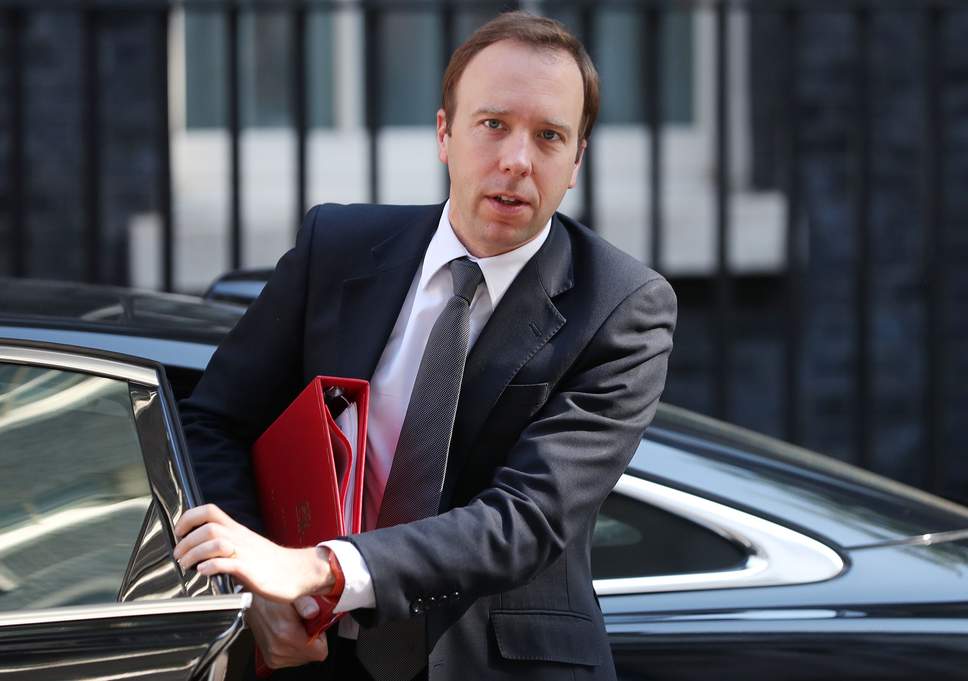
From the bubbly Digital Enthusiasm of former Health Minister Matt Hancock (left) in 2018 to the storm around @DrMurphy11, a GP who raised performance issues with the Babylon chatbot that escalated to BBC Two’s Newsnight in February 2020, founder and CEO Ali Parsa is now in an unenviable position in two countries. He 1) has semi-exited the UK market, 2) ruthlessly cut costs to the bone because the stock is down 90%, and 3) shifted to the far larger but unforgiving market of the US. The bright spot here is that US patients covered have already topped 6 years of effort in the UK. Parsa has now moved to the US.

Parsa noted in a recent results call [Seeking Alpha-Ed.] with analysts. “Those two or three small NHS contracts that you refer to—and those are not our significant primary-care contracts— those are marginal contracts for us, more in that category of contracts where we could not see a significant contribution to our profit margin,” he said. “And they also had a rather small contribution to our revenue. And therefore we saw them as a distraction and terminated those contracts.”

This Editor has previously noted Babylon’s layoffs/redundancies of at least 100 staff to save $100 million by Q3, which we are now in. Expansion in the US has to take place with static staff to make goal. And as to the US being unforgiving: VCs are snapping their capacious purses shut, Mr. Market’s gone into rehab, and inflation is shrinking healthcare budgets from providers to payers to self-insured companies. The Big Kahunas with Big Bucks–CVS Health, Allscripts, UnitedHealth Group, Amazon, Walgreens, Walmart–and out-of-left-field players like Option Care Health bidding on Signify Health, are snapping up, as we’ve earlier put it, “healthy health tech companies at the right (discounted) price that fill in their tech gaps”. And making life difficult for single players like Babylon Health. Wired. And a snappy hat tip to HISTalk.


Mount Sinai Health Partners (NY) launches Babylon Health telehealth app

Mount Sinai Health Partners, through New York Telemedicine Associates, has premiered Babylon Health’s telehealth app as part of its services with five large New York health plans: Empire Blue Cross Blue Shield Commercial and Medicare Advantage; Humana Medicare Advantage; Oscar Commercial, and Cigna Commercial. The coverage of these five plans is claimed to be in the millions. Mount Sinai’s network covers Manhattan, Brooklyn, Queens, and most of Long Island.

The app includes the Babylon chatbot and the opportunity to set video consults with a doctor. The app also has COVID-19 information and a chatbot app which leads you through a self-diagnosis menu, interactive advice, and will set up an appointment to speak to a healthcare professional. Release, Babylon Health US’ page on the Mount Sinai program   This Editor will add that Mount Sinai is rather late to the party, as rival NYU Langone has been promoting their telehealth Virtual Urgent Care program for months.

The Forbes article starts off like a glossy Babylon press release, but continues on to some of Babylon’s recent and controversial press, such as Saudi Arabia’s Public Investment Fund (PIF) participating in the last $550 million investment round and the tart feedback of many UK doctors on how much ‘care’ can be pushed off onto apps like ‘GP At Hand’. Not mentioned is the controversy around the accuracy of the chatbots when it comes to giving advice, which was the subject of Newsnight and @DrMurphy11 (Dr. David Watkins), who has been raising performance issues for some time. [TTA 27 Feb]

Babylon Health fires back at critic @DrMurphy11; Dr. Watkins–and Newsnight–return fire (UK)

Last month, this Editor took note of the Twitterstorm around Babylon Health on the issues raised surrounding diagnosis of women’s cardiac symptoms. @DrMurphy11, who has been raising performance issues with the Babylon chatbot for the past three years, ran a test on the app. First using a male patient, then a woman, with identical cardiac symptoms, the app returned two different diagnoses: the man was advised to go to an ED on an emergency basis and given information on a heart attack, the woman to her GP in six hours and given information on a panic attack.

@DrMurphy11 came out earlier this week to BBC Two’s Newsnight’s Emma Barnett on a profile of ‘healthcare juggernaut’ Babylon as Dr. David Watkins, a consultant oncologist. You can see him on YouTube here (at the 1 minute and 3 min. 30 mark). He demonstrates the response of the chatbot, using as the patient an older male smoker with chest pains. The chatbot advises him that he might have either gastritis or ‘sickle cell crisis in chest’–and to go to his GP in 6 hours. What is far more likely than sickle cell with this history is, of course, a heart attack, as a consultant cardiologist, Dr. Amitava Banerjee confirmed on the program. Dr. Banerjee has also been critical of Babylon’s chatbot on cardiac diagnosis and Health Secretary Matt Hancock in his visible advocacy of Babylon in the NHS alone (at 6 min.) According to Dr. Watkins, he has been documenting chatbot problems to the MHRA and the CQC since 2017, and the problems haven’t been fixed.

Timed with the Newsnight piece, Babylon fired back with a press release labeling Dr. Watkins a “troll” and stating that only 100 of his 2,400 tests demonstrated any concerns with the chatbot. According to the release, Babylon’s staff “have attempted to start a positive conversation with this anonymous person. We have invited him in to start a dialogue, to test our AI, and to meet with the senior doctors who build our products” without response. Babylon has also cited that all of Dr. Watkins’ trials were theoretical tests and cites millions of real uses without a single report of harm, that it meets regulatory standards in five countries including use in the NHS, and that its real life users are highly satisfied (85 percent at 5 stars).

At 6:48 to 12:40 in the video, Newsnight’s Emily Maitlis grills both Babylon’s Dr. Keith Grimes and Dr. Watkins. She brings up that Babylon’s former head of regulatory affairs, Hugh Harvey, had stated that no one has assessed how well the app works. Dr. Watkins also counters Babylon’s non-contact claim that he contacted one of the Babylon leadership members back in 2018 on chatbot problems. Dr. Grimes responded to Ms. Maitlis’ remark that founder Ali Parsa is not a doctor that over 600 doctors work for Babylon. This Editor will leave it to Readers to decide what side won, or if it was a draw. Also Mobihealthnews global edition. (For US Readers, Newsnight and Ms. Maitlis conducted the exclusive, disastrous–for Prince Andrew–interview on his relationship with the late Jeffrey Epstein.)