


 Updated. Add fax machines to the Endangered Device list. The news that Health Secretary Matt Hancock has banned the NHS from purchasing new fax machines starting in January 2019, with a full phaseout of use by 31 March 2020, was this past weekend’s Big News in the UK health sector. This is to help force adoption of paperless methods such as apps and email, which is a noble intention indeed.
The remaining prevalence of fax machines in the NHS became a cause célèbre after the Royal College of Surgeons in July estimated that over 8,000 fax machines were still in use. The RCS takes credit for nudging trusts to ‘Ax The Fax’. Guardian
This Editor presumes that Secretary Hancock does not possess a printer, or find the need to print his records even for convenience–or posterity. (One wonders what he’s carrying in that folder or brief…) I also presume that he has never heard of electrical outages, data breaches, malware or ransomware which may make print records suddenly quite needed.
The Road to Perdition is Paved With Good Intentions. A wonderfully tart take on Mr. Hancock’s Fax Obsession is contained in Monday’s NHSManagers.net newsletter from Roy Lilley. He looks at why NHS offices and practices have stayed with fax machines–and the absurdity of such a ban when trusts and practices are attempting to squeeze every penny in a cash-strapped, failing environment:
- It’s point to point and legally binding not only in medicine, but in law and finance–even in the US
- They are on the desk, easy to use–requiring only plug in to power and a phone line, fax toner, and paper
- They don’t need IT support
- Compared to computers, printers, and internet service, they are wonderfully cheap
And paper-free isn’t a reality even in the US with EHR, tablets and smartphones widely used. Even HHS and CMS in the US require some paper records. Confidentiality and hacking–especially when tied to computer networks–are problems with fax, but the same can be said for computer networks. Oh, and if your systems are attacked by ransomware, it’s awfully handy to refer back to printed records and to be able to communicate outside of computer networks.
Mr. Lilley also points out that ‘No 18’, as he dubs the Secretary of State for Health, actually has no power to enforce his edict with trusts or GPs.
This Editor predicts a thriving market in used and bootleg fax machines–“check it out”, as the street hustlers say!
 NeuroPace, which developed an implanted brain-responsive neuromodulation system for patients with refractory and drug-resistant epilepsy, announced the result of their nine-year long-term treatment study.
 Joan Hall, the mother who inspired the creation of the stylish wearable PERS,
  What better way to introduce this new feature than with a picture of a Raymond Loewy-designed 1947 Studebaker Starlight Coupe, where wags of the time joked that you couldn’t tell whether it was coming or going?
 Canary Care, which entered administration in late August, has been reorganized and continues as Canary Care Global Ltd, remaining in Abingdon. The purchaser in the pre-packaged sale, as Readers learned
 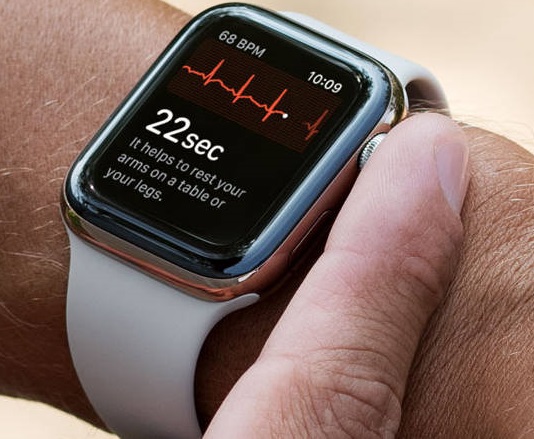 Zimmer Biomet, a musculoskeletal medical device company, is partnering with Apple to use the Apple Watch with an iPhone 6s and above in tracking the pre-surgery and post-operative recovery process for patients with hip and knee replacements. Zimmer is using the mymobility app developed with Apple to track patient-reported feedback, provide patient education and guidance, and share continuous health and activity sensor-based data with care teams. The aim is to improve the standard of care and patient outcomes after these surgeries.


Most Recent Comments